In a significant move to address escalating atrocities in East Africa, the United Nations Security Council has officially sanctioned four high-ranking commanders of Sudan’s Rapid Support Forces (RSF). This decision follows harrowing reports from UN experts. These experts claim the paramilitary group’s actions in Darfur carry the “hallmarks of genocide.”
The sanctions come as the RSF continues its brutal conflict with the Sudanese military. This war has ravaged the nation since early 2023. The latest blacklisting targets commanders specifically involved in the violent takeover of el-Fasher. This city is the capital of North Darfur. It fell to the paramilitary force on October 26, 2026, after a prolonged and bloody siege.
The Fall of el-Fasher: A Humanitarian Catastrophe
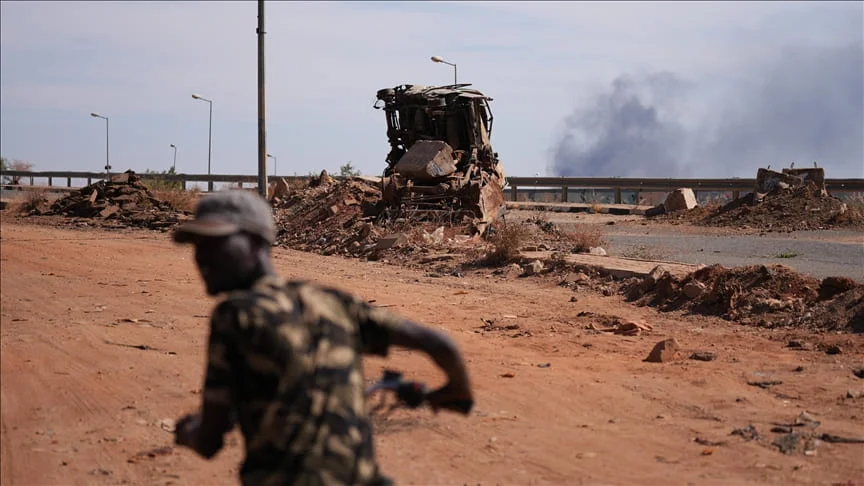
El-Fasher was once the final stronghold of the Sudanese army in the vast western region of Darfur. However, after an 18-month siege, the RSF launched a final onslaught.
This resulted in a mass casualty event that shocked international observers. UN-backed human rights experts recently detailed a campaign of mass killings. These killings were designed to bring about the “physical destruction” of specific non-Arab communities in the region.
The statistical reality of the takeover is grim. According to official UN reports:
- Civilian Fatalities: UN officials estimate that several thousand civilians were killed during the final assault.
- Displacement: Only 40% of the city’s 260,000 residents managed to escape the violence. This means roughly 104,000 people fled, while 156,000 remained trapped or missing.
- The Missing: Thousands were wounded during their flight. The fate of the remaining population remains largely unknown as communications were severed.
Profiles of the Sanctioned: The Faces of the Conflict
The UN Security Council committee monitoring Sudan has imposed immediate travel bans and financial freezes on four key figures. These individuals are accused of leading some of the most violent episodes of the civil war.
1. Abdul Rahim Hamdan Dagalo
As the brother of the overall RSF leader, Gen. Mohammed Hamdan Dagalo, Abdul Rahim is a pillar of the paramilitary’s leadership. Evidence reviewed by the UN committee reportedly includes footage of Dagalo at a base in el-Fasher on the day of the takeover. In the video, he is allegedly seen ordering his fighters to “take no captives” and to “kill everyone.” His role is considered foundational to the RSF’s operational strategy across Sudan’s border regions.
2. Lt. Gen. Gedo Hamdan Ahmed (Abu Nashuk)
Ahmed served as one of the primary generals during the siege. He was identified alongside Dagalo in video footage from October 26. The UN committee links this specific date to the most concentrated mass killings of civilians in the city. His tactical leadership on the ground was essential to the RSF’s territorial gains in North Darfur.
3. Brig. Gen. Al-Fateh Abdullah Idris (Abu Lulu)
Known infamously as “The Butcher of el-Fasher,” Idris is described by the UN as a “key perpetrator” of ethnic violence. The committee cited videos showing Idris boasting about the execution of over 2,000 people. Reports state he was filmed smiling while executing unarmed men who were begging for mercy. Many of these videos were shot and shared by the paramilitary forces themselves as a form of psychological warfare.
4. Tijani Ibrahim Moussa Mohamed (Al Zeir Salem)
Mohamed is a field commander who also appeared in digital evidence on the day of the takeover. He is held responsible for coordinating ground-level operations. These operations led to widespread civilian displacement and the systematic destruction of non-Arab neighborhoods.
Systemic Violence: Sexual Assault and Ethnic Targeting
The UN committee’s report extends beyond battlefield statistics. It details a systemic campaign of terror designed to fragment the social fabric of Darfur. The violence reportedly included:
- Targeted Executions: Forces specifically focused on members of non-Arab tribes, mirroring the patterns seen in the early 2000s.
- Widespread Sexual Violence: Multiple reports emerged of gang rapes. These were often committed in front of the victims’ relatives to maximize psychological trauma and shame.
- Kidnappings for Ransom: The RSF allegedly targeted medical staff and aid workers. They held them for financial gain while the city’s healthcare infrastructure completely collapsed.
Historical Context: From Janjaweed to RSF
To understand the current crisis, one must look at the history of the RSF. Formed in 2013, the group grew out of the Janjaweed militias. These were the same groups that conducted a scorched-earth campaign across Darfur in the early 2000s. That campaign led to previous international accusations of genocide.
Experts, including former US diplomats, argue that the RSF’s current tactics are a direct continuation of the Janjaweed’s legacy. Some analysts have urged the UN to go further than individual sanctions. They suggest the entire group should be designated as a terrorist organization. This would cut off their global support networks and financial pipelines more effectively.
The Impact of UN Sanctions
While individual sanctions are often criticized as being “too little, too late,” international observers suggest this is a vital step. It marks the UN reasserting its role in the region. By naming specific commanders and documenting their crimes, the UN is building a foundation for future legal accountability. This could eventually lead to prosecutions through the International Criminal Court (ICC).
The financial freezes are designed to achieve three main goals:
- Disrupt Funding: These measures prevent commanders from accessing international bank accounts used to purchase weaponry and supplies.
- Restrict Movement: The travel bans ensure that those accused of war crimes cannot find safe haven or enjoy luxury in foreign nations.
- Signal International Intent: These actions show the warring parties that the world is documenting their actions in real-time and will not ignore the atrocities.
The Path to Peace: A Fragile Future
The situation in Sudan remains one of the world’s most severe humanitarian crises. With the RSF now in control of the North Darfur capital, there are fears that the violence will spread further. Border regions and neighboring states are already seeing an influx of refugees who have lost everything.
The UN and various international partners are using these sanctions as a leverage point. They hope to push for an immediate ceasefire. However, both the RSF and the Sudanese military remain dug in.
The road to a peaceful resolution appears long and fraught with difficulty. The primary concern remains the millions of Sudanese civilians caught in the crossfire. Many are currently facing famine-like conditions alongside the constant threat of violence.
Conclusion: Accountability as a Deterrent
The blacklisting of these four commanders serves as a stark warning. By exposing the “hallmarks of genocide” in el-Fasher, the United Nations is making it clear that the era of anonymous atrocities is over. While the conflict in Sudan is far from resolved, the documentation of these crimes ensures that the perpetrators will find no ease.
As the siege of el-Fasher ends and a new, darker chapter of occupation begins, the focus shifts. The international community must now see if the RSF will heed these warnings or continue their campaign of “physical destruction.” Regardless, the path to justice for the people of Darfur has been formally initiated.
READ MORE: Ethiopia Election Crackdown Escalates as Addis Standard License Revoked