
Under the relentless glare of the East African sun, Muhammad Mohamad Ismail, a dedicated farmer in Somaliland, performs a daily ritual of survival. He meticulously digs trenches around his orange and papaya trees, creating shallow basins designed to trap every precious drop of moisture.
For Ismail, this is not just farming; it is a battle against a changing climate. After losing more than half of his harvest to persistent dry spells, he knows that his livelihood depends on making the most of a rapidly diminishing resource.
“We have a water borehole with a small channel that gradually directs rainwater into it during the rainy season,” Ismail explains. “However, due to climate change, we are now facing an increasing water shortage. We are no longer receiving the same amount of rainfall as before, and there is little to no rain.”
Ismail’s story is a microcosm of a much larger crisis unfolding across the Horn of Africa. As drought conditions intensify, the regional agricultural sector the backbone of the economy is at a breaking point. However, a new international partnership may offer a glimmer of hope for a more sustainable future.
The Human Cost of Water Insecurity
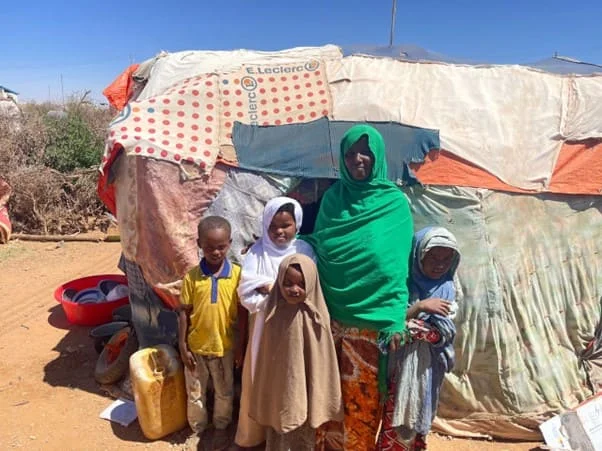
Water shortages are no longer a seasonal inconvenience in the region; they have become a structural threat. According to recent data from the World Food Programme, approximately 4.4 million people nearly a quarter of the population in Somalia and Somaliland are currently facing severe food insecurity. The tightening grip of drought has turned once-fertile lands into dust, leaving families struggling to find their next meal.
For farmers like Faysal Omar Salah, the impact is visible in the withered stalks of his fields. This year’s harvest was particularly meagre, leaving his family with very little to sell or consume. “We only planted a small amount of beans towards the end of the rainy season, but even that withered as the drought intensified,” Salah laments. This cycle of planting and failure is depleting the financial reserves and the spirits of local agricultural communities.
The Economic Backbone Under Threat
Agriculture is more than just a source of food in Somaliland; it is an economic engine. The sector contributes up to 25% of the nation’s Gross Domestic Product (GDP) and employs a vast majority of the rural population. When the rains fail, the entire national economy feels the shockwaves.
The challenges are multifaceted:
- Variable Rainfall: Traditional “Gu” and “Deyr” rainy seasons have become unpredictable.
- High Evaporation Rates: Intense heat quickly dries up surface water before it can be used for irrigation.
- Outdated Infrastructure: Many farms rely on ancient irrigation methods that lose a significant percentage of water to seepage and evaporation.
A New Strategic Partnership: Looking to Israeli Expertise
In a significant diplomatic and developmental shift, Somaliland officials are looking toward Israel for solutions. Following Israel’s decision to recognize Somaliland’s sovereignty, the two nations have begun a partnership centered on technological exchange. Israel is globally renowned for its “desert bloom” miracles, having successfully turned arid landscapes into highly productive agricultural zones.
The hope is that Israeli expertise in desalination, wastewater recycling, and precision agriculture can be tailored to the specific needs of Somaliland’s farmers. This is not just about bringing in new machines; it is about a fundamental shift in how water is managed, stored, and distributed.
The Arrival of New Technology: Training the Next Generation
The transformation has already begun on a human level. A pioneering group of 25 Somaliland water workers has commenced an intensive training program. These technicians are learning the fundamentals of high-efficiency water management, preparing for a future where every liter of water is accounted for.
Expectations are high as Israeli experts are slated to arrive in the region shortly. Their mission involves the installation of state-of-the-art technology, including:
- Smart Drip Irrigation: Systems that deliver water directly to the roots of plants, reducing waste by up to 90%.
- Atmospheric Water Generators: Technology that can extract moisture from the air, providing a consistent source of drinking and irrigation water even in dry climates.
- Enhanced Borehole Sensors: Digital tools that monitor groundwater levels in real-time to prevent over-extraction.
Climate Resilience: Beyond the Immediate Crisis
While the immediate goal is to save the current season’s crops, the long-term objective is climate resilience. For Somaliland to thrive in the 21st century, its agricultural sector must move away from a total reliance on rainfall.
Experts suggest that a “hybrid” approach is necessary. This involves combining traditional knowledge like Ismail’s trenches—with modern data-driven techniques. By creating a national “water grid” that utilizes recycled urban water for rural farming, Somaliland could potentially stabilize its food supply regardless of weather patterns.
Conclusion: A Path to Food Sovereignty
The struggle of farmers like Muhammad Mohamad Ismail and Faysal Omar Salah serves as a poignant reminder of what is at stake. When water disappears, so does the future of the youth and the stability of the nation. However, the emerging partnership with Israel represents a bold step toward self-sufficiency.
If Somaliland can successfully integrate advanced water technologies into its agricultural landscape, it will do more than just survive the drought. It will set a precedent for other arid nations across the globe. The journey from hand-dug trenches to digital irrigation is long, but for the people of Somaliland, it is a journey they are ready to take.
READ ALSO: Ghana Urges Zelensky to Release Ghanaian POWs in Ukraine Amid Global Trafficking Crisis