
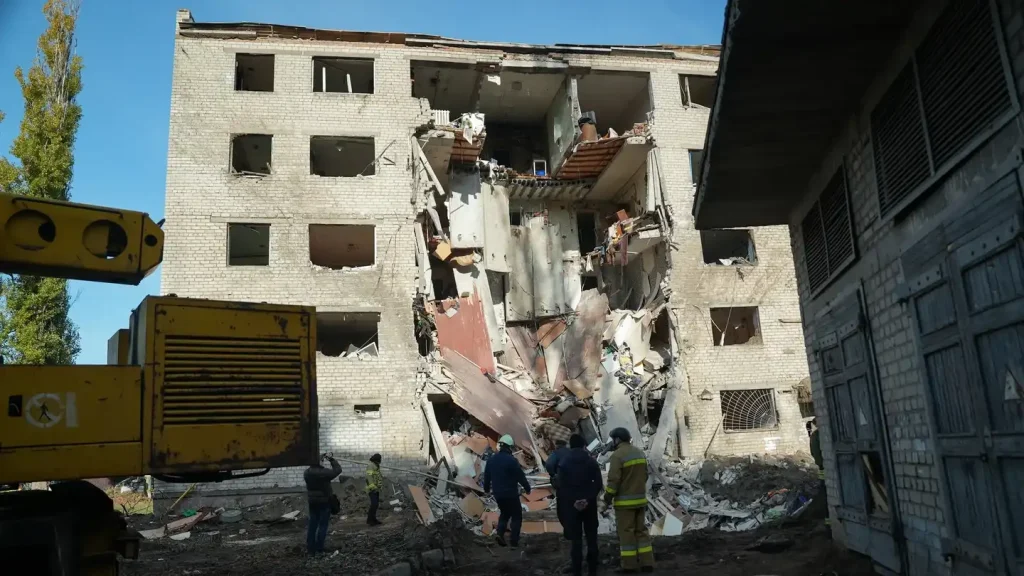
The silence of the night in Ukraine was once again shattered as a fresh wave of Russian strikes hammered the eastern and southern regions of the country. Overnight, drones and missiles rained down on urban centers, turning residential districts into scenes of chaos. As the sun rose, the true scale of the destruction became clear, revealing a heavy toll on civilian life and essential infrastructure.
From the battered streets of Kharkiv to the freezing homes in Zaporizhzhia, emergency crews have been working tirelessly to pull survivors from the rubble. This latest escalation highlights the ongoing vulnerability of civilian areas despite the best efforts of national defense systems.
Tragedy in the East: Residential Kharkiv Under Siege
In the eastern region of Kharkiv, the assault was particularly brutal. Regional authorities confirmed that the strikes targeted residential districts, areas where families were asleep in their homes. At least 14 people were injured during the bombardment. Among the casualties was a seven-year-old boy, a fact that has sparked profound local grief and underscored the indiscriminate nature of the targeting.
The damage in Kharkiv was widespread. Multiple apartment buildings suffered direct hits or were severely damaged by the resulting shockwaves. Local infrastructure, including roads and utility lines, was torn apart as missiles and drones found their marks.
Emergency crews were on the scene within minutes of the first explosions. They faced a harrowing task: navigating through thick smoke and falling debris to reach those trapped inside burning buildings. Fires broke out across several parts of the city, lighting up the night sky as firefighters battled to prevent the flames from spreading to adjacent blocks.
The Southern Front: Zaporizhzhia’s Infrastructure Crippled
While Kharkiv struggled with the immediate aftermath of the strikes, the city of Zaporizhzhia to the south faced a different but equally dire set of challenges. The same wave of attacks struck the region with devastating precision, leaving at least nine people wounded.
The structural damage in Zaporizhzhia was extensive. Local officials reported that the following were affected:
- 19 apartment blocks sustained damage to roofs, windows, and structural walls.
- Private homes in the surrounding areas were leveled or scorched.
- Two major shopping centers were hit, turning hubs of local commerce into twisted metal and shattered glass.
Beyond the immediate physical destruction, the strikes dealt a heavy blow to the city’s utility network. A critical hit on local infrastructure caused a sudden and widespread failure in the heating system. Consequently, approximately 500 homes temporarily lost their heating in the middle of the night. This loss of warmth created an immediate humanitarian crisis for residents forced to endure the cold while their homes lay in ruins.
The Defensive Struggle and the Rescue Effort
Throughout the night, the sound of sirens was accompanied by the rhythmic thud of anti-aircraft fire. Ukrainian air defenses were active across both regions, working to intercept the incoming swarm of drones and missiles. While officials confirmed that a significant portion of the assault was intercepted, they admitted that the defense systems failed to prevent widespread civilian damage.
The sheer volume of the attack appeared designed to overwhelm existing protections. Where missiles slipped through, the results were catastrophic. This has led to renewed calls for more robust defense capabilities to shield non-military targets from such high-intensity aerial campaigns.
Despite the danger of secondary strikes, rescue teams did not waver. They worked through the night under the glare of floodlights, using heavy machinery and their bare hands to free residents trapped under collapsed ceilings.
The bravery of these first responders has become a focal point of local resilience, as they continue to extinguish fires and clear the mountains of debris left behind by the missiles.
Nuclear Stability: Monitoring the ZNPP
Whenever Zaporizhzhia is mentioned in the context of aerial strikes, global attention inevitably turns toward the Zaporizhzhia Nuclear Power Plant (ZNPP). Given the intensity of the overnight attacks, concerns regarding potential radiation leaks or structural damage to the facility were immediate.
However, the International Atomic Energy Agency (IAEA) and local authorities have provided a measure of reassurance. They confirmed that:
- The ZNPP was not directly affected by this specific wave of strikes.
- There has been no reported increase in radiation levels in the vicinity of the plant.
- The situation at the facility remains stable and under ongoing monitoring.
The IAEA remains on the ground, ensuring that the critical safety systems of the plant are not compromised by the surrounding conflict. While the city itself burns, the nuclear facility remains, for now, a zone of precarious stability amidst the chaos.
Conclusion: A Nation Enduring the Unimaginable
As the fires are finally extinguished in Kharkiv and Zaporizhzhia, the long process of recovery begins. The physical scars on the cities—the broken glass, the charred walls, and the cold radiators will eventually be repaired. However, the psychological impact on the survivors, especially the injured children, remains a heavy burden for the nation to carry.
The overnight strikes serve as a grim reminder of the daily reality for millions of Ukrainians. Even as air defenses improve, the threat from the sky continues to disrupt lives and destroy homes.
The resilience of the rescue teams and the ongoing monitoring of nuclear safety offer small glimmers of hope, but the path ahead remains fraught with danger.
READ ALSO: Diplomatic Tension Spikes as Senegal Condemns Morocco’s Jailing of Football Fans