In a move that has sparked widespread criticism regarding religious freedom and political repression, Ugandan President Yoweri Museveni directly intervened to cancel a church service. The mass, scheduled at the historic Rubaga Cathedral in Kampala, aimed to honor and pray for the health of long-time opposition leader Kizza Besigye.
Besigye’s wife, Winnie Byanyima, who serves as the executive director of UNAIDS, confirmed the cancellation on Monday. This development marks a significant escalation in the state’s handling of political dissent following the contentious 2026 general elections. Byanyima reported that the Archbishop of Kampala, Paul Ssemogerere, received a direct phone call from the President instructing him to halt the proceedings.
The Sanctuary Under Siege: Why the Mass Was Canceled
The planned service at Rubaga Cathedral was not a political rally, but a spiritual gathering. Supporters and family members intended to pray for Besigye’s deteriorating health and his eventual release from prison. However, the President viewed the gathering through a different lens.
According to Byanyima, Museveni claimed the mass was “political” in nature. He stated that he needed to “investigate” the intentions behind the prayer before allowing it to proceed. This justification has raised alarms among human rights advocates. They argue that the state is now extending its reach into the private spiritual lives of its citizens.
Byanyima condemned the state’s actions, noting that the government now considers it normal to infringe upon the fundamental right to worship. Even as worshippers began to gather at the cathedral, the doors remained metaphorically closed to the specific intention of the day, signaling a chilling precedent for religious institutions in Uganda.
Kizza Besigye: A Rivalry Spanning Decades
To understand the weight of this cancellation, one must look at the long-standing history between Museveni and Besigye. Kizza Besigye was once Museveni’s personal physician during the bush war that brought the current government to power in 1986. However, for over 25 years, Besigye has stood as the President’s most persistent political challenger.
The 2024 Abduction and Treason Charges
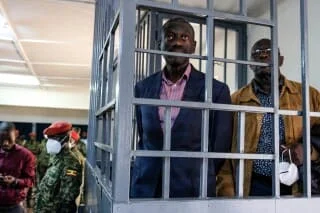
The current saga began in November 2024. Reports indicate that armed men abducted Besigye in Nairobi, Kenya. He vanished for several days before resurfacing in a Ugandan military court. Since then, authorities have held him in jail for approximately 15 months on charges of treason.
The state alleges that Besigye plotted to overthrow the government, a claim his supporters vehemently deny. During his 15-month incarceration, his health has reportedly declined. Despite numerous appeals, the courts have repeatedly denied him bail, keeping the 70-year-old veteran politician behind bars indefinitely.
The 2026 Election: A Backdrop of Repression
The cancellation of the mass occurs in the wake of Uganda’s seventh presidential election under Museveni’s rule. At 81 years old, Museveni sought to extend his four-decade-long presidency amidst an environment that observers described as highly restrictive.
The election period featured:
- Total Internet Blackout: Authorities cut off digital communication to prevent the coordination of opposition protests.
- Widespread Arrests: Security forces detained thousands of activists and opposition supporters.
- Military Involvement: The heavy presence of armed forces in urban centers created an atmosphere of intimidation.
Winnie Byanyima has been vocal about the conditions of the election, suggesting that Museveni’s goal is to see Besigye “die in prison.” She links the ongoing prosecution and the recent abduction directly to the state’s desire to neutralize any viable challenge to the President’s seventh term.
The Rise of Muhoozi Kainerugaba and the “Iron Fist”
A central figure in the post-election crackdown is the army chief, Muhoozi Kainerugaba, who is also the President’s son. Kainerugaba has become notorious for his provocative social media presence and his uncompromising stance on the opposition.
In the week following the 2026 polls, the army chief publicly welcomed the killing of 30 opposition members. He further noted that the state had arrested over 2,000 others to maintain “order.” This public endorsement of lethal force against political rivals has deepened the rift between the government and civil society.
With the army chief taking such a hardline stance, the space for peaceful protest and even peaceful prayer has nearly vanished. The state’s military apparatus appears fully integrated into the political strategy of the ruling party.
The Silence of the Opposition: Bobi Wine in Hiding
While Besigye languishes in prison, Museveni’s other major challenger, Bobi Wine, has also been silenced. Following the election results, Bobi Wine went into hiding to avoid the fate of his contemporaries. His absence from the public eye highlights the extreme risks faced by those who seek to provide an alternative vision for Uganda.
The disappearance of Bobi Wine and the imprisonment of Besigye leave the Ugandan opposition in a state of decapitation. Without its primary leaders, the movement struggles to organize against the recent legislative and executive actions that supporters call “autocratic.”
Conclusion: The Future of Faith and Freedom in Uganda
The intervention in the Rubaga Cathedral mass is more than just a canceled event; it is a symbol of the shrinking democratic space in Uganda. When a President feels compelled to “investigate” a prayer for a sick man, the boundary between the state and the church has effectively dissolved.
For the people of Uganda, the message is clear: no space is truly neutral, and no institution is beyond the reach of the President’s phone. As Kizza Besigye remains in custody with failing health, the international community and local human rights groups continue to watch with growing concern.
The question remains whether the 2026 election cycle will lead to a period of stability or if the continued repression of icons like Besigye will only fuel further unrest.
READ ALSO: Ramadan Under Canvas: Morocco’s Flood Survivors Face a Month of Hardship