
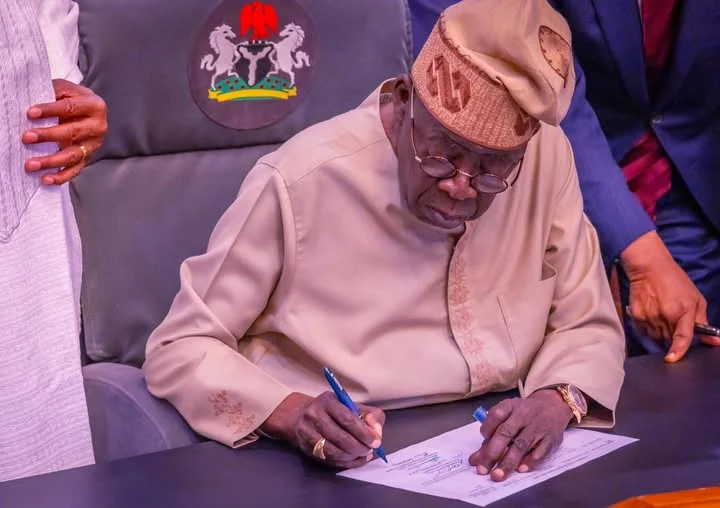
In a significant move that reshapes the financial landscape of Nigerian politics, the National Assembly has officially cleared the path for a massive surge in campaign financing.
Under the newly minted Electoral Act 2026, presidential candidates including incumbent President Bola Ahmed Tinubu and his future challengers—are now permitted to spend up to ₦10 billion on their campaigns.
The revised legislation, which received presidential assent on February 18, 2026, marks a 100% increase from the ₦5 billion limit set by the 2022 Act. Lawmakers defended the move as a necessary adjustment to “prevailing economic realities” and the skyrocketing costs of logistical operations in a high-inflation environment.
The New Financial Thresholds: Who Can Spend What?
The ₦10 billion presidential cap is the headline, but the financial “level up” extends across every tier of elective office. The National Assembly argued that the previous limits were no longer realistic for candidates covering vast constituencies.
Campaign Spending Limits at a Glance
Senate Leader Opeyemi Bamidele emphasized that while the caps are higher, they remain statutory limits. These limits are intended to regulate financing while acknowledging the “inflationary pressures” that have hit every sector of the economy, including political marketing.
ALSO READ: UN Investigation Suggests Genocidal Acts in the Fall of Sudan’s El-Fasher
Strengthening Integrity: Tougher Penalties for Misconduct
It’s not all about the money; the 2026 Act also sharpens the teeth of electoral law. To curb perennial issues like vote-buying and result manipulation, the legislation introduces much stricter penalties for offenders.
- Vote Buying & Impersonation: Under Section 125, offenders face up to two years in prison, a fine ranging from ₦500,000 to ₦2 million, or both.
- Frustrating Technology: Section 60(6) takes a hard line against officials who “willfully frustrate” the electronic transmission of results. Presiding officers found guilty face six months in jail or a ₦500,000 fine.
- Bureaucratic Delays: Section 74(1) mandates that Resident Electoral Commissioners (RECs) must release certified documents within 24 hours of payment. Failure to do so carries a mandatory two-year prison sentence with no option of a fine.
Codifying the Digital Shift: BVAS and IReV
One of the most critical aspects of the new framework is the formalization of technology that was previously subject to legal debate. Section 47 now makes the use of the Bimodal Voter Accreditation System (BVAS) compulsory for all elections.
Furthermore, Section 60(3) mandates the electronic transmission of results to the INEC Result Viewing Portal (IReV). Bamidele clarified that while IReV is not a collation platform, it is an essential transparency tool. It is designed to allow Nigerians to monitor results in real-time directly from polling units.
“The making of this new regime is a collective work involving critical stakeholders—CSOs, INEC, and development partners. It is not a unilateral effort of the parliament, but of Nigerians at large.” — Senate Leader Opeyemi Bamidele
The 2027 Timetable and the Ramadan Controversy
While the legal framework is now set, the timing of the upcoming general elections has already sparked a heated national conversation. INEC recently announced the following dates for the 2027 General Elections:
- Presidential & National Assembly: February 20, 2027
- Governorship & State Houses of Assembly: March 6, 2027
The schedule has drawn sharp criticism from Muslim groups and various stakeholders. They pointed out that these dates coincide with the holy month of Ramadan. Critics argue that holding elections during a period of fasting and intense religious devotion could impact voter turnout and logistical efficiency.
What Happens Next?
The Electoral Act 2026 is designed to reduce post-election litigation and enhance the credibility of the ballot box. However, with the spending caps now doubled and the 2027 countdown officially underway, the focus shifts to oversight.
The Nigerian public and international observers will be watching to see how INEC monitors these massive budgets. Ensuring a level playing field for all candidates will be the ultimate test of this new legislation