
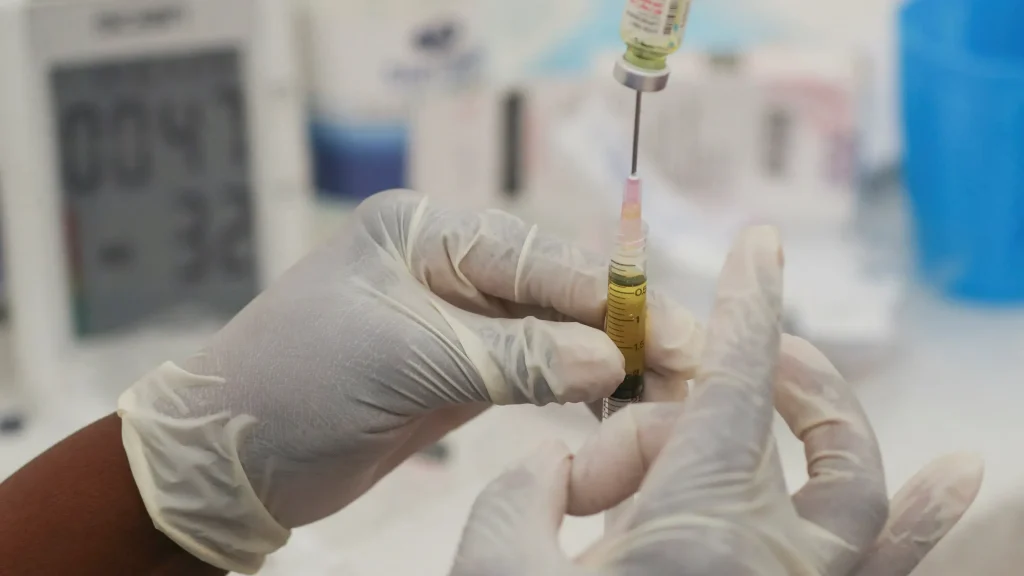
In a historic move for public health, Zimbabwe has officially launched a national program for lenacapavir. This revolutionary, long-acting drug is designed for HIV prevention.
Consequently, this initiative positions Zimbabwe as one of the first countries globally to roll out the twice-yearly injection. It signals a major shift in Africa’s strategy to eliminate AIDS as a public health threat by 2030.
Health and Child Care Minister Douglas Mombeshora presided over the official launch this Thursday in Epworth. During the ceremony, he described the event as a pivotal milestone. “If a health solution is too complicated, people simply won’t use it,” Mombeshora stated. He highlighted the drug’s potential to overcome barriers that have historically hindered prevention.
A Breakthrough in Prevention Science
Developed by Gilead Sciences, lenacapavir represents a significant technological leap. Unlike traditional Pre-Exposure Prophylaxis (PrEP), which requires a daily pill, lenacapavir is a subcutaneous injection. Users only need this treatment twice per year.
Why Lenacapavir is a Game-Changer:
- Exceptional Efficacy: Clinical data suggests the drug is nearly 100% effective in preventing infection.
- Adherence Solutions: It eliminates “pill fatigue” and adherence lapses common with daily oral regimens.
- Privacy and Stigma Reduction: The twice-yearly schedule offers users greater discretion. This protects them from social stigma often associated with daily medication.
The Medicines Control Authority of Zimbabwe (MCAZ) approved the drug in November 2025. This cleared the way for rapid implementation. Health experts believe this innovation will be transformative for those who struggle with frequent clinic visits.
Strategic Rollout and Targeting
The initial phase of the program is designed to reach those most vulnerable to new infections. Funded by the U.S. government (PEPFAR) and The Global Fund, the rollout will initially span 24 sites nationwide.
The program aims to reach over 46,000 high-risk individuals in its first stage. Priority groups include:
- Adolescent Girls and Young Women: This demographic remains disproportionately affected by new infections.
- Sex Workers: A group that faces high incidence rates and significant barriers to healthcare.
- Vulnerable Populations: Individuals in high-transmission areas lacking stable access to daily measures.
“Innovation in prevention matters because it must fit into real life,” Minister Mombeshora emphasized. By providing a “discreet, long-acting option,” the government hopes to protect those previously left behind.
Zimbabwe’s Progress in the HIV Fight
Zimbabwe’s adoption of lenacapavir is built upon decades of successful public health initiatives. Although the country carries a high burden with 1.3 million people living with the virus, it has become a model for effective intervention.
The Road to 95-95-95
Zimbabwe is among the few nations to have already achieved the UNAIDS 95-95-95 targets. This benchmark means:
- 95% of people living with HIV know their status.
- 95% of those diagnosed are receiving antiretroviral treatment (ART).
- 95% of those on treatment have achieved viral suppression.
The country’s progress is even more stark when viewed historically. In the early 2000s, HIV prevalence peaked at 34%. Today, that rate has plummeted to approximately 12%.
Community Leadership and Impact
The success of the lenacapavir rollout depends heavily on community advocates like Melody Dengu. A resident of Epworth and a prominent leader, Dengu was among the first to receive the injection this month.
“I have already referred 12 other people to come and get injected,” Dengu shared during the launch. Her proactive stance reflects a broader readiness to embrace technologies that simplify healthcare. For many, the shift from daily pills to a twice-yearly shot is “the next best thing to a vaccine.”
Financial Backing and Global Equity
The implementation of this program is a testament to international cooperation. Since 2003, The Global Fund has invested nearly $1.8 billion into Zimbabwe’s response. For the 2024–2026 cycle, an additional $437 million was approved to support tools like lenacapavir.
This launch is part of a landmark agreement to provide the drug at no profit in resource-limited countries. This ensures that cutting-edge technology reaches Sub-Saharan Africa at the same time it becomes available in high-income nations. It is a critical step forward for global health equity.
Next Steps for the National Response
As Zimbabwe moves into the next phase, the focus will shift to monitoring long-term adherence. Furthermore, health authorities will work to integrate lenacapavir into a comprehensive “prevention toolkit.” This toolkit includes condoms, voluntary male circumcision, and existing oral PrEP.
ALSO READ: Niger Secures $91 Million IMF Boost: Economic Growth Projected at 6.7% for 2026