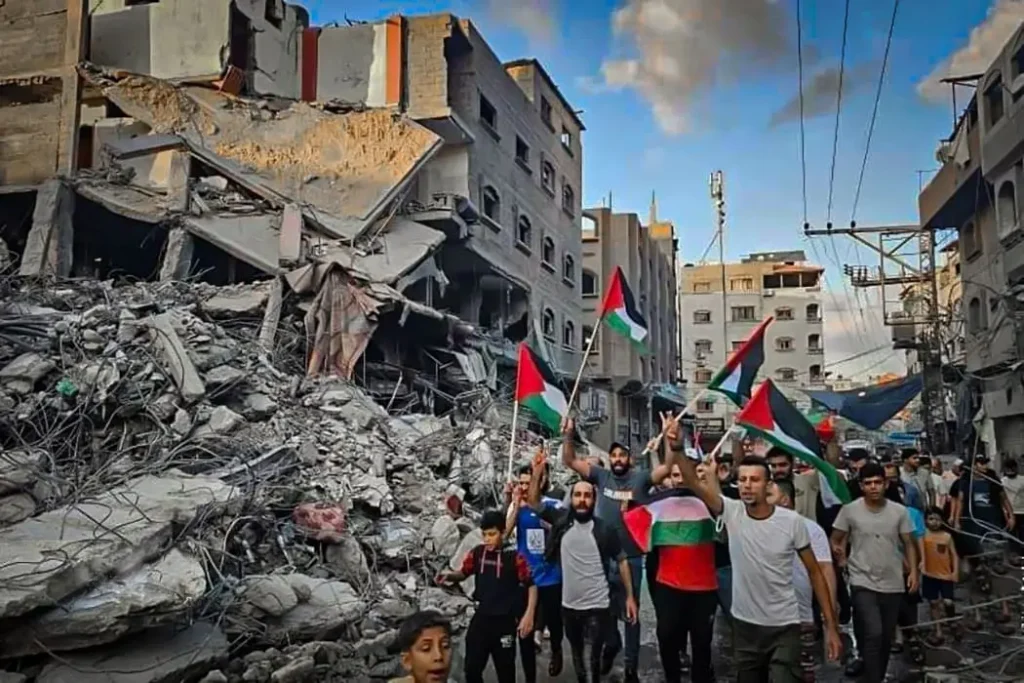
International diplomacy reached a major milestone this Thursday. United States President Donald Trump hosted the inaugural meeting of the “Board of Peace“ in Washington, D.C. This high-level gathering marked the formal start of a massive global effort to stabilize and rebuild the Gaza Strip. After two years of intense conflict, the territory faces extensive destruction.
During the summit, nine participating nations committed an initial $7 billion toward reconstruction efforts. Furthermore, President Trump announced that five countries have agreed to provide personnel for a new International Stabilization Force (ISF). This coalition represents a central pillar of the Trump administration’s strategy to replace traditional peacekeeping models with a direct, board-managed approach.
A Strategic Foothold in Rafah
The administration’s plan involves a phased entry into the territory, starting in the south. Specifically, the stabilization force will first deploy to the city of Rafah. Washington intends to use this southern hub as the primary base for the first wave of infrastructure projects and humanitarian logistics.
President Trump expressed a highly optimistic outlook for the territory’s future. “We will help Gaza, we will straighten it out, and we will make it successful and peaceful,” he stated during the meeting. Moreover, he suggested that this model combining private-sector oversight with military stabilization could serve as a blueprint for other global conflicts. He noted that “other spots will come up” where the Board will “take care of a lot of things.”
The Financial Challenge of Reconstruction
While the initial $7 billion pledge is a substantial starting point, it represents only a fraction of the total capital required. Current estimates suggest that roughly $70 billion is needed to fully restore the Palestinian territory. Consequently, the Board of Peace, which President Trump chairs personally, is designed to oversee the disbursement of these funds.
The creation of this body has met with varying degrees of enthusiasm. While approximately 50 countries attended the Washington summit including major Western powers like the UK, Germany, and Switzerland many participated only as observers.
Diplomatic Friction and the United Nations
A primary point of contention among global leaders is the relationship between this new Board and the United Nations. Several major powers and key Western allies have expressed hesitation about joining the Board officially. Their concerns center on whether this new organization is intended to bypass or undermine the existing authority of the UN.
This tension was highlighted when a UN spokesperson noted that Washington has paid only $160 million toward the more than $4 billion it owes the world body. However, President Trump suggested that the UN itself is a target for “re-founding” efforts. “We’ll work again with the United Nations and bring it back to health,” Trump remarked, hinting that his vision involves both aesthetic and structural changes.
Renovating the Global Institution
A recurring theme in the President’s remarks was the physical state of the United Nations headquarters in New York. As the world body’s largest financial contributor, the U.S. intends to push for significant physical renovations.
- Aesthetic Standards: Trump wants to see the UN buildings “fixed up physically” so they do not look like they are in “disrepair.”
- Institutional Potential: He noted that while the organization has “tremendous potential,” it requires a complete overhaul to meet his standards for beauty and efficiency.
The “Board of Peace” Model: A Shift in Policy
The establishment of the Board of Peace signifies a departure from traditional multilateralism. By creating a specific group of nations that report to a central board, the Trump administration is applying corporate governance principles to international crisis management.
For the nations that have officially joined, the promise of a “successful and peaceful” Gaza is a powerful motivator. For those standing on the sidelines, the question remains whether this board can achieve lasting peace where previous efforts have struggled.
Looking Ahead: Next Steps for the Coalition
As the Board of Peace moves into active operations, several milestones remain:
- Force Deployment: Finalizing the logistics for Indonesian, Moroccan, and other partner troops to enter Rafah.
- Fundraising Expansion: Closing the $63 billion gap between current pledges and the total estimated cost of reconstruction.
- UN Negotiations: Determining how the Board will coexist with the UN’s existing humanitarian agencies.
This new chapter in Middle Eastern diplomacy will likely be defined by the tension between Washington’s “peace through reconstruction” model and the established global order.
MORE NEWS: Niger Secures $91 Million IMF Boost: Economic Growth Projected at 6.7% for 2026