
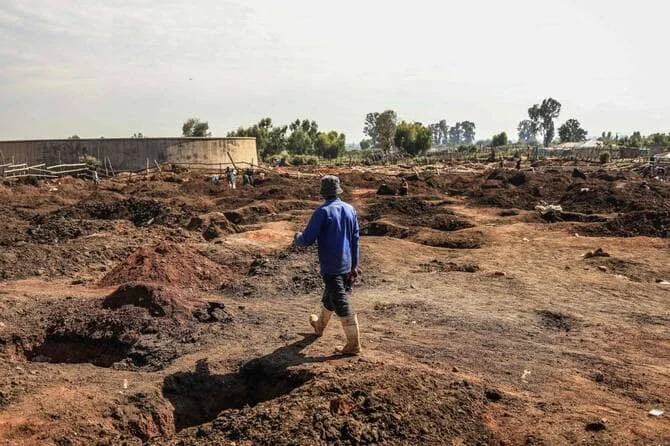
South Africa’s mining heartland is in mourning following a heartbreaking update from the historic city of Kimberly. On Friday, officials announced that five diamond miners who have been missing since Tuesday are now presumed dead. The workers were trapped deep within the Ekapa mine after a catastrophic “mud-rush” devastated a section of the facility.
The disaster unfolded more than 800 meters (approx. 2,625 feet) below the surface. During the early hours of Tuesday morning, a massive surge of liquid mud and rock debris swept through the mine shaft with incredible force.
This sudden event instantly severed all communication lines with the underground team. Since then, families and colleagues have endured an agonizing wait, hoping for a miracle that has yet to arrive.
The Grim Shift from Rescue to Recovery
South Africa’s Minister of Mineral and Petroleum Resources, Gwede Mantashe, arrived at the disaster site on Friday to evaluate the ongoing operations. During a somber press conference, he addressed the harsh reality facing the specialized emergency teams.
“The possibility of finding life is minimal,” Mantashe stated. He explained that the mission has officially transitioned from an active rescue operation to a somber recovery effort. Furthermore, the Minister confirmed that a formal investigation will begin immediately.
This probe seeks to determine if the mudslide was preventable. Investigators will also scrutinize whether the mine adhered to the nation’s strict safety protocols regarding ground stability.
Mine Operators and Unions Seek Answers
Despite the government’s grim assessment, the mine’s operator, Ekapa Minerals, continues to handle the situation with extreme sensitivity. The company has officially suspended all production at the affected shaft to ensure every available resource is redirected toward the recovery effort.
In a public statement, Ekapa’s General Manager, Howard Marsden, noted that while the time elapsed since the initial collapse is a major concern, the team is “not giving up hope” until every possible corner of the shaft is searched. However, labor organizations are taking a firmer stance.
The National Union of Mineworkers (NUM) and the National Union of Metalworkers of South Africa (NUMSA) are demanding full transparency. Specifically, they want to know if early warning signs of ground instability were reported by workers but overlooked by management.
Mining Safety: A Record Year Marred by Loss
This incident is particularly painful because it interrupts a period of unprecedented safety improvements within the South African mining sector. Earlier this month, the Minerals Council South Africa celebrated a significant milestone: a record low in fatalities across the industry for the previous year.
While the loss of five lives is a profound tragedy, the industry has historically been much more dangerous. In 1994, the country saw nearly 500 mining-related deaths.
By 2025, that number had dropped to 41, the lowest in recorded history. This long-term decline is the result of the “Zero Harm” campaign. This initiative is a vital partnership between the state, labor unions, and private corporations to modernize equipment and enforce rigorous safety inspections.
The Enduring Legacy of Kimberly’s Diamonds
Kimberly is far more than just a city; it is a global icon of the diamond industry. Its legendary status began in the late 1800s with a massive diamond rush that forever changed South Africa’s economic landscape. For over a century, the “Big Hole” and the surrounding mines have been synonymous with the world’s most precious stones.
Today, South Africa remains a titan in the global mineral trade. The country is a leading producer of gold and diamonds and holds the title of the world’s top producer of platinum.
However, extracting these riches requires digging to extreme depths. For the 470,000 people employed in the sector, the Kimberly tragedy is a painful reminder. Even with modern technology, the dangers lurking beneath the earth remain a constant reality for those who fuel the nation’s economy.
ALSO READ: The Empathy Divide: Are Women Truly More Empathetic Than Men?