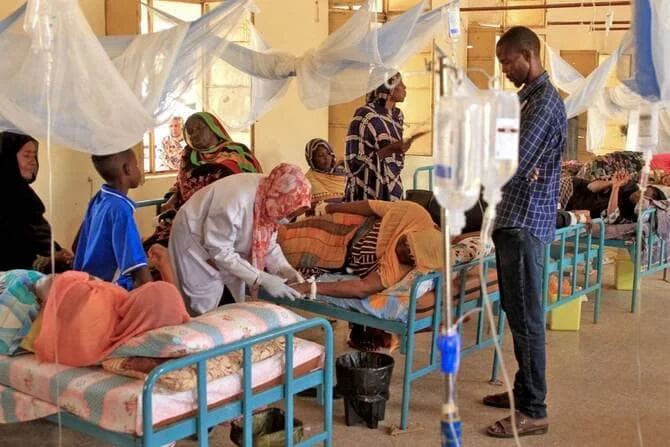
The corridors of Akobo Teaching Hospital serve as a grim map of the current state of South Sudan. As internal conflict continues to tear through the nation’s fabric, this medical facility has become a focal point for the human cost of war.
However, the hospital itself is struggling to survive the very crisis it is tasked with managing. It stands as one of several institutions across the country currently buried under a massive volume of casualties. Today, it operates with resources that have been stretched beyond the breaking point.
A Resource Vacuum in a War Zone
The disparity between the need for medical intervention and the available capacity at Akobo is staggering. At the heart of the surgical department is a single surgeon. This lone individual is responsible for the lives of dozens of patients, many of whom arrive with complex, life-threatening injuries.
When one considers the precision and time required for trauma surgery, the presence of only one specialist creates a dangerous bottleneck. This shortage translates directly into lost lives and prolonged suffering for the local population.
Beyond the lack of personnel, the physical supplies required to run a hospital are vanishing. Essential items ranging from sterile bandages and anesthetics to clean water and electricity—are now described as “thin on the ground.”
Key Challenges Facing Hospital Staff:
- Active Fighting: In regions where conflict is constant, supply lines are frequently cut off.
- Minimal Resources: Staff are forced to perform complex procedures with the bare minimum of equipment.
- Trauma Influx: The primary influx consists of patients with severe gunshot wounds requiring intensive, sterile post-operative care.
The Voices of the Afflicted
The victims filling the wards are often those who have the least to do with the political machinations fueling the violence. One anonymous survivor recently recounted the terror of being caught in a targeted strike.
This individual had recently returned to South Sudan from Kenya, seeking nothing more than a reunion with family. After attending a local celebration, the festivities were abruptly shattered by a sudden attack.
The victim’s testimony highlights a recurring theme: the blurring of lines between combatants and non-combatants. “I don’t know how to hold a gun,” the survivor remarked.
This narrative suggests that various armed factions are bringing the fight directly to the doorsteps of the civilian populace, rather than keeping it on a traditional battlefield.
Medical Perspectives from the Frontline
The clinical staff at Akobo provide a systematic view of the trauma passing through their gates. Nhial Bih, the Head Nurse at the hospital, has observed a diverse array of injury patterns that tell the story of the war’s progression.
While some patients were wounded at the front lines, a significant portion of the caseload consists of families attacked within their own homes. Bih specifically noted instances of a mother and young boys who were shot at their residence.
These are not casualties of accidental “crossfire” in the traditional sense; they represent direct hits on domestic spaces. According to the staff, aerial bombardments by government forces have also contributed to the influx of mangled bodies. Consequently, the civilian population is being squeezed by both ground incursions and strikes from above.
A Legacy of Internal Strife in South Sudan
To understand the desperation at Akobo, one must look at the broader political decay of the world’s youngest nation. South Sudan achieved independence fifteen years ago, a milestone met with global hope.
Unfortunately, that optimism was short-lived. The country quickly descended into a brutal civil war driven by the rivalry between two dominant figures: Salva Kiir and Riek Machar. What began as a political power struggle between leaders has devolved into a multi-factional war that has displaced hundreds of thousands.
The state of Jonglei, where Akobo is located, has become a primary theater for this power struggle. As the army clashes with forces loyal to the former vice president, the geography of the state has been transformed into a series of tactical zones. Residents remain trapped in the middle as towns are captured and lost.
The Official Stance: “Stay Out of It”
The government’s response to the civilian toll has been met with heavy scrutiny. Nyamar Lony Thichot Ngundeng, the information minister for Jonglei state, has publicly addressed the dangers facing residents.
Her rhetoric, however, places a significant burden of safety on the civilians themselves. She urged residents to flee areas of active combat, suggesting that injuries sustained during these periods are simply “counted as crossfire” and are “not intentional.”
The minister’s logic posits that once a clash begins, any civilian remaining in the vicinity is effectively assuming a risk. However, many displaced families find it difficult to reconcile this with the reality of being bombed in their homes.
By urging civilians to “stay out” of the crisis, the administration frames the violence as a private dispute an impossible task when the dispute is being settled in the public’s backyard.
The Massive Scale of Displacement
The statistics provided by international observers like the United Nations underscore the magnitude of the catastrophe. Since the escalation of fighting in December, approximately 280,000 people have been forced to abandon their homes in Jonglei state alone.
This mass migration creates a secondary humanitarian crisis:
- Lack of Shelter: Families have nowhere to stay as they flee combat zones.
- Food Insecurity: Displaced populations lack access to consistent nutrition.
- Medical Risk: Wandering through a landscape where the “front line” is constantly shifting increases the risk of injury.
For the staff at Akobo Teaching Hospital, these numbers represent the faces of the people they cannot save. The facility remains a lonely outpost of hope in a region defined by fire and steel. Without an end to the political stalemate and a massive infusion of medical aid, even that hope is beginning to hemorrhage.
READ ALSO: Robert Duvall, Legendary ‘Godfather’ and ‘Apocalypse Now’ Star, Dies at 95