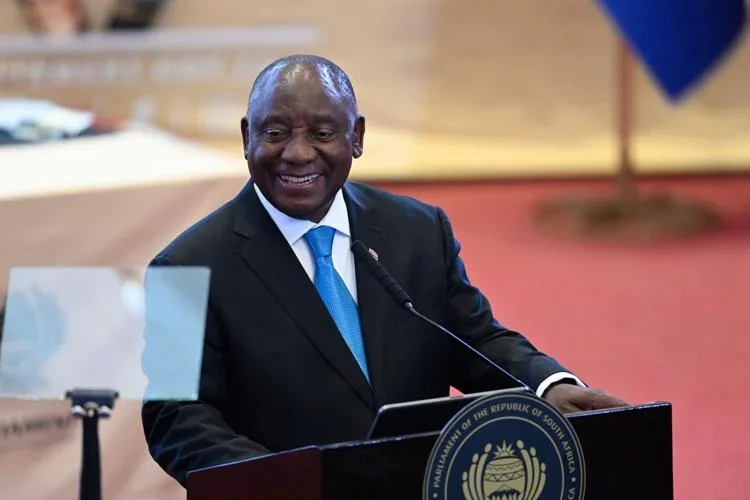
In a major escalation of its war on crime, South Africa will begin a nationwide military deployment within the next 10 days. Acting Police Minister Firoz Cachalia announced the timeline on Tuesday, February 17, 2026, confirming that the South African National Defence Force (SANDF) will support police in “hotspot” provinces where gangs and illegal syndicates have overwhelmed local law enforcement.
The decision comes as the country grapples with an average of 64 murders per day. President Cyril Ramaphosa, in his recent State of the Nation Address (SONA), declared organized crime the “most immediate threat” to South Africa’s democratic and economic stability.
The Strategic Deployment Plan
According to Minister Cachalia, the logistics of the operation were finalized following a high-level meeting between the National Commissioner of Police and the Chief of the Army. The military units are being mobilized to act as a “force multiplier” in areas where specialized criminal networks have taken root.
How the Military Will Support Police
The strategy involves the army providing perimeter security, conducting high-visibility patrols, and managing checkpoints. This allows specialized police units to focus on:
- High-stakes raids: Entering gang strongholds with tactical backing.
- Complex investigations: Focusing on syndicate leadership rather than street patrols.
- Safe execution of warrants: Operating in neighborhoods previously considered too dangerous for standard police.
The Three Combat Zones
While the deployment was initially focused on two major hubs, the government has expanded the mission to include a third critical province. Each region presents unique challenges that traditional policing has failed to resolve.
1. Western Cape: The Cape Town Gang War
Units will target high-density areas like the Cape Flats, where violent drug gangs are engaged in deadly turf wars. These gangs often use high-caliber weaponry, outgunning local precinct officers. The military presence is intended to disrupt supply lines and provide an intimidating deterrent to open street warfare.
2. Gauteng: The “Zama Zama” Crisis
In South Africa’s financial heart, the military will focus on illegal mining syndicates known as “Zama Zamas.” These groups operate in former gold fields around Johannesburg and have been linked to a rise in local homicides, house robberies, and massive infrastructure sabotage.
3. Eastern Cape: Extortion Rackets
Added to the list this week, the army will support efforts in Gqeberha and Mthatha. These areas are struggling with entrenched protection rackets. Criminal syndicates have been targeting schools, medical clinics, and construction sites, demanding “protection fees” and bringing public services to a standstill.
A Threat to Democracy: Why Now?
The decision to send in the infantry is a dramatic shift in policy. For years, the government resisted involving the military in domestic matters. However, President Ramaphosa now emphasizes that criminal networks are a structural threat to the nation’s survival.
“Organized crime is now the most immediate threat to our democracy, our society, and our economic development,” Ramaphosa told Parliament.
Beyond the staggering loss of life, the government is concerned about the “criminalization of the economy.” Extortion in the construction sector and the theft of infrastructure, such as copper cables, have cost the country billions in potential investment, stifling job growth in early 2026.
Backlash: “Soldiers are Not Police”
Despite widespread public support from citizens exhausted by violence, the move has faced sharp criticism from opposition leaders. The primary concern is the difference in training between a soldier and a police officer.
Mmusi Maimane, leader of Build One South Africa (BOSA), argued that a military presence is a “plaster on a deep wound.” He noted that while the army can clear a street, they lack the investigative skills required to build legal cases that keep syndicate leaders behind bars.
Summary of Key Concerns
| Category | Description of Risk |
| Training Gap | Soldiers are trained for combat, not for civilian de-escalation or forensic evidence collection. |
| Sustainability | Critics fear that once the army withdraws, gangs will return to fill the vacuum. |
| Financial Cost | The deployment will cost hundreds of millions of Rand, diverting funds from permanent police recruitment. |
Lessons from Past Deployments
This is not the first time the SANDF has assisted the police. In 2019, “Operation Lockdown” saw troops sent into the Cape Flats. While the murder rate dropped temporarily, the peace did not last.
However, the 2026 plan is reportedly more “intelligence-led.” Unlike previous missions, this deployment is intended to be surgically integrated with the National Anti-Extortion Task Team. The hope is that the army can hold territory while the police dismantle the financial backbones of the syndicates.
Conclusion: A High-Stakes Gamble
The next 10 days will be a critical test for the Ramaphosa administration. If the army can successfully stabilize hotspots like the Cape Flats and the East Rand, it may provide the “breathing room” necessary for the South African Police Service (SAPS) to undergo much-needed reforms.
The success of this “ring of steel” will determine not just the safety of the streets, but the very stability of the South African state in 2026 and beyond.
Exiled Imam Mahmoud Dicko Calls for Peace in Jihadist-Stricken Sahel