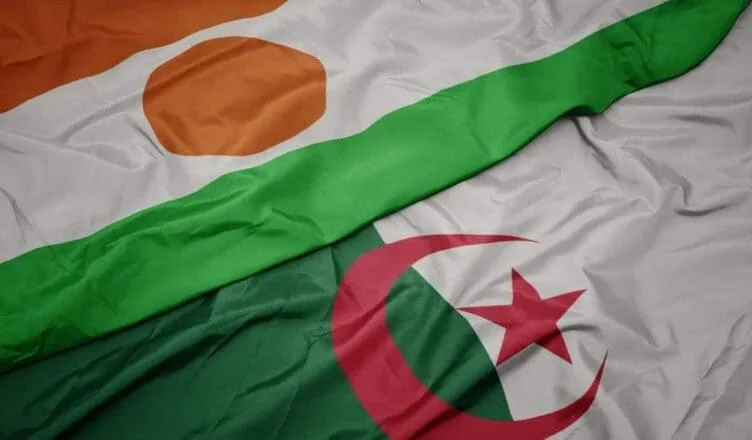
In a move set to reshape the energy landscape of North and West Africa, the military leadership of Niger and the government of Algeria have declared a formal end to a period of diplomatic friction.
General Abdourahamane Tiani, head of Niger’s military administration, met with Algerian President Abdelmadjid Tebboune on Monday to signal the start of a “new dynamic” between the two nations.
The center-piece of this renewed partnership is the revival of the Trans-Saharan Gas Pipeline (TSGP). This ambitious infrastructure project aims to connect the vast gas reserves of Nigeria to the Mediterranean coast of Algeria, crossing directly through Niger’s territory.
Bridging the “Abnormal Chill”: A Diplomatic Reset
The meeting in Algiers served as a powerful symbolic gesture. President Tebboune described the visit as the conclusion of an “abnormal period of chilliness.” This “chill” refers to a series of high-stakes diplomatic disputes that had previously paralyzed regional cooperation.
The relationship soured significantly in April 2025 after a series of border incidents. Tensions peaked when Algeria intercepted and destroyed a drone originating from Mali. This incident triggered a domino effect within the Alliance of Sahel States (AES) a security pact comprising Niger, Mali, and Burkina Faso. In a show of solidarity, all three nations recalled their ambassadors from Algiers, prompting Algeria to respond in kind.
However, Monday’s summit suggests that economic necessity is now outweighing past grievances. By focusing on shared energy goals, both leaders are attempting to pivot away from the security-heavy discourse that dominated 2025.
The Trans-Saharan Gas Pipeline: A 4,000km Ambition
The Trans-Saharan Gas Pipeline is one of Africa’s most significant energy undertakings. While it has been discussed for over 15 years, the project has faced numerous delays due to funding shortages and regional instability.
Technical Specifications and Timeline
- Total Length: Approximately 4,000 kilometers (2,485 miles).
- Starting Point: Warri, Nigeria.
- Transit Zone: Through the heart of Niger.
- Termination Point: Hassi R’Mel, Algeria (connecting to existing pipelines to Europe).
Following the conclusion of the holy month of Ramadan, engineers and officials are scheduled to begin the initial technical steps of construction. The project had seen a surge in momentum in early 2025 before the diplomatic falling out, and both nations are now eager to regain that lost time.
Economic Support and Social Investment
Beyond the pipeline, President Tebboune pledged comprehensive support for Niger. Currently, the landlocked nation is grappling with severe economic difficulties and international sanctions. Algeria’s commitment includes a diverse range of developmental projects aimed at improving the daily lives of Niger’s citizens.
Key Areas of Cooperation:
- Healthcare: Algeria has promised to fund and staff new medical facilities in Niger.
- Education: Plans are in place for scholarships and the construction of vocational training centers.
- Infrastructure: Aside from the pipeline, discussions are ongoing regarding road connectivity to facilitate smoother trade between the Sahara and the Sahel.
A Fragmented Regional Security Landscape
While the “New Dynamic” with Niger is a success for Algerian diplomacy, the broader regional picture remains complex. Algeria is currently navigating a delicate balancing act with the other members of the Alliance of Sahel States.
Last week, Algeria sent a high-level delegation to Burkina Faso to discuss joint ventures in mining and hydrocarbons. This suggests a broader strategy by Algiers to reintegrate with the Sahelian military governments.
However, relations with Mali remain deeply strained. Authorities in Bamako continue to accuse Algeria of maintaining unauthorized ties with armed groups operating along their shared border a charge Algiers consistently denies.
Strategic Implications for Europe
The resumption of the pipeline is not just an African story; it is a global one. As Europe continues to seek alternatives to Russian gas, the completion of the Trans-Saharan Gas Pipeline would provide a direct, high-capacity link to Nigerian gas. By positioning itself as the primary gateway for West African energy, Algeria solidifies its role as an indispensable energy partner for the Mediterranean region.
For Niger, the pipeline represents a vital source of “transit revenue.” The fees paid by Nigeria and Algeria to move gas through Niger’s territory could provide the military junta with the financial cushion needed to stabilize the domestic economy and fund public services.
Conclusion: A Precarious but Promising Path
The Algiers summit marks a turning point for the Sahel and the Maghreb. By prioritizing the 4,000km pipeline, General Tiani and President Tebboune are betting that shared prosperity will act as a buffer against future military and diplomatic clashes. As construction preparations begin after Ramadan, the world will be watching to see if this “new dynamic” can survive the volatile politics of the Sahara.
READ ALSO: Tunisian Courts Sentence Five for Deadly 2023 Synagogue Attack