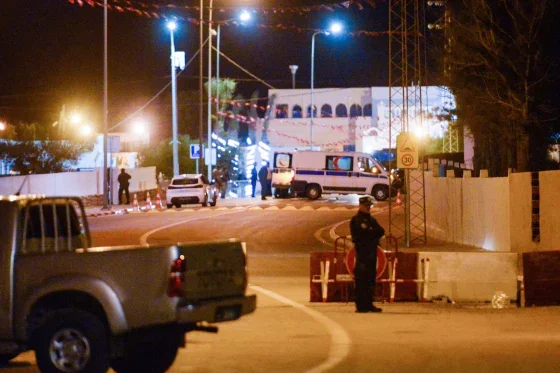
A Tunisian court has officially sentenced five individuals in connection with the tragic May 2023 shooting at the Ghriba synagogue on Djerba island.
The assault, which shocked the international community and targeted a historic site of Jewish pilgrimage, resulted in the deaths of five people. On Monday, legal representatives confirmed that the defendants received prison terms ranging from one to fifteen years.
This judicial ruling marks a significant milestone in Tunisia’s efforts to provide accountability for the violence. The proceedings scrutinized the logistics and support networks surrounding the primary assailant, a National Guard officer who was killed by security forces during the event.
The Verdicts: A Breakdown of the Sentences
The court’s decision reflected varying degrees of involvement, from direct complicity to peripheral association.
- The Maximum Penalty: The most severe sentence of 15 years was handed to a defendant who remains at large. This individual was tried in absentia for high-level involvement.
- The Accomplices: A second defendant received seven years in prison.
- Complicity in Homicide: The fiancée of the gunman was sentenced to eight years. The prosecution argued that her close proximity to the attacker and prior knowledge made her an active participant in the conspiracy.
- The Peripheral Sentences: A student was sentenced to three years, while the attacker’s sister received a one-year term.
Legal counsel for several of the defendants, including attorney Nizar Ayed, noted that the defense intends to appeal these rulings. They argue that the evidence linking some individuals—specifically the student—to the attacker’s violent intent was circumstantial at best.
Chronology of the Djerba Assault
The violence occurred on May 9, 2023, coinciding with the annual Lag BaOmer pilgrimage. This event typically brings thousands of Jewish visitors to the island, making it a high-profile target for extremist activity.
The Port Killings
The violence began at the island’s naval port. The assailant, an active member of the National Guard, turned his weapon on his colleagues. He killed three fellow officers before seizing a vehicle and additional ammunition to proceed to his secondary target.
The Synagogue Shooting
Upon arriving at the Ghriba synagogue, the officer opened fire on security personnel and pilgrims gathered outside.
The attack claimed the lives of two civilians:
- Aviel Haddad: A 30-year-old Tunisian-Jewish national.
- Benjamin Haddad: A 42-year-old French-Jewish national and cousin to Aviel.
In the ensuing shootout, multiple security officers were wounded. Two later died from their injuries, bringing the final death toll to five, excluding the perpetrator.
The “Lone Wolf” vs. Organized Cell Debate
One of the most contentious points during the trial was the classification of the attacker. Attorney Nizar Ayed characterized the assailant as a “lone wolf,” suggesting he radicalized independently without the direct backing of a larger terrorist organization.
However, the sentencing of his family and associates suggests the court found evidence of a support system. The defense maintains that many were simply victims of circumstance. For example, the mother of the sentenced student expressed her family’s devastation, claiming they had merely rented a room to the officer.
“Our generosity backfired on us,” she stated to the press. “We had no idea of his plans. We are a simple family, and now we are paying for someone else’s crimes.”
The prosecution, however, presented evidence suggesting that those close to the gunman ignored red flags or provided logistical assistance that facilitated the movement of the weapon used in the killings.
Tunisia’s Jewish Heritage and the Ghriba Synagogue
The Ghriba synagogue is not just a place of worship; it is a global heritage site. Believed to date back over 2,000 years, it houses one of the world’s oldest Torah scrolls. The annual pilgrimage to Djerba is a rare moment of multicultural visibility in the region, bringing together Tunisian Jews, the diaspora, and local Muslims.
Demographic Shifts
Tunisia once boasted a vibrant Jewish population of over 100,000. Following decades of migration, the community has shrunk to approximately 1,500 residents. The vast majority live on the island of Djerba. This small but resilient community relies on state protection to maintain its religious traditions.
Security at the synagogue is usually extremely tight, which is why the breach by a member of the National Guard a person tasked with protecting the site was particularly traumatic for the residents.
Conclusion: The Road to Appeal
As the legal teams prepare their appeals, the ruling serves as a stark reminder of the security challenges facing Tunisia. While the court has sought to provide justice for the Haddad family and the fallen officers, the debate over radicalization within state security ranks continues.
For the people of Djerba, the hope is that these sentences will provide a sense of closure and ensure that the Ghriba pilgrimage remains a safe haven for future generations. The international community continues to watch the case closely, as the safety of minority groups remains a key indicator of Tunisia’s democratic stability.
In other news, ahead of the upcoming Ramadan, Sokoto Seeks Peace and Unity Following Rare Airstrikes