The rhythmic bustle of East Africa’s busiest aviation hub came to a grinding halt on Monday, February 16, 2026, as a widespread labor strike paralyzed Jomo Kenyatta International Airport (JKIA). The industrial action, spearheaded by airport personnel demanding significant improvements to their compensation and working environment, has left thousands of travelers in a state of logistical limbo.
As the sunrise hit the tarmac in Nairobi, the usual sounds of jet engines were replaced by the murmur of frustrated crowds. The strike, which follows a week-long period of tension between labor unions and airport management, has sent ripples through the international travel community, highlighting the precarious balance between labor rights and essential infrastructure.
Kenya Airways Issues Emergency Travel Advisory
The country’s flagship carrier, Kenya Airways, was quick to respond to the unfolding crisis. In a strongly worded travel advisory, the airline urged its global clientele to exercise extreme caution. The primary directive was clear: do not proceed to the airport without a confirmed flight status.
The disruption is not merely limited to baggage handling or check-in counters. According to official statements from the airline, “air traffic control operational delays” are currently the primary bottleneck. Because air traffic controllers and essential safety staff are part of the collective bargaining dispute, both departures and arrivals have faced systemic setbacks.
For an airline that prides itself on being the “Pride of Africa,” the necessity of adjusting entire flight schedules mid-operation is a costly and complex endeavor.
The airline has been forced to re-route crews and find temporary accommodation for those caught in the crossfire of the pay dispute.
The Human Cost: Stranded Families and Expired Visas
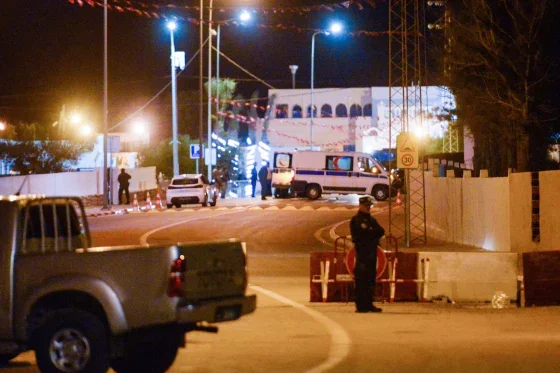
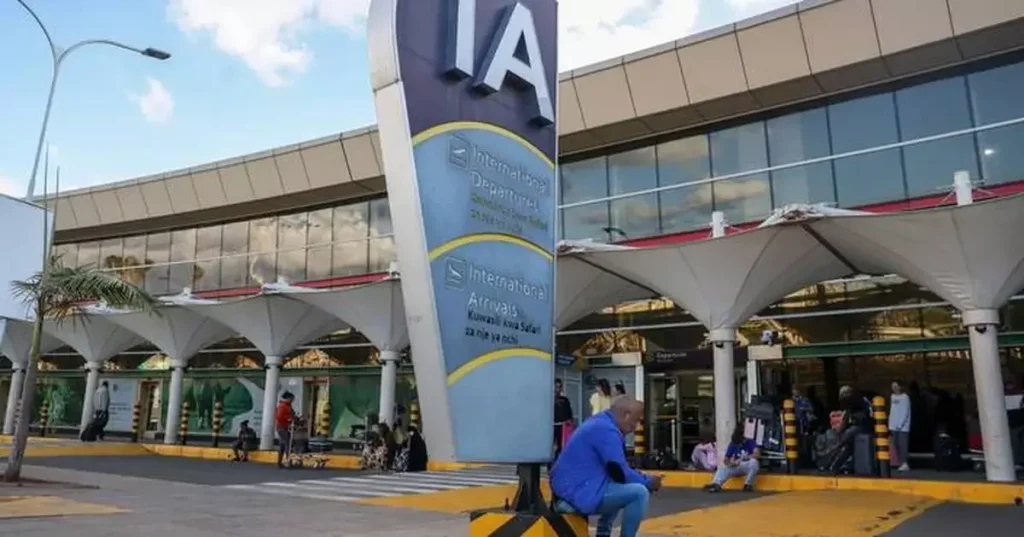
While the numbers on a flight board tell one story, the scenes outside the terminals tell another. Thousands of passengers were seen camping on the sidewalks and grassy verges outside JKIA, surrounded by mountains of luggage.
The Legal Limbo of Trent Bryski
Among those caught in the chaos is Trent Bryski, a Canadian tourist who had spent the last month exploring the natural wonders of Kenya.
His planned departure to Uganda was supposed to be a celebratory leap across the border to spend his birthday in Entebbe. Instead, he found himself trapped in a unique legal paradox.
“Actually, we are not supposed to be out here because our visa says that we have left,” Bryski explained.
Because he had already cleared immigration before the strike halted his flight, his Kenyan visa had technically expired. Authorities were forced to issue him and other travelers in similar positions “special letters” to allow them to remain in the country legally while they wait for the runways to reopen. The birthday celebration in Entebbe has since been replaced by a vigil on the airport pavement.
Domestic Disruptions
The strike has hit local families just as hard. Linda Chebet, another passenger, described the emotional toll of the delays. She had traveled to the airport to see her mother off on a flight to Eldoret.
Instead of a quick farewell, she was forced to navigate a maze of cancellations and rearrange complex domestic plans, illustrating that the strike’s impact felt just as heavy for short-haul travelers as it did for international tourists.
Why Are the Workers Striking?
At the heart of this confrontation is a long-standing dispute over pay, benefits, and labor conditions. According to union representatives, a strike notice was issued last week after negotiations with the Kenya Airports Authority (KAA) reached a stalemate.
The workers argue that despite the airport’s growth as a major regional transport hub, their “labor conditions and benefits” have not kept pace with inflation or the increased workload.
The union had previously reached a tentative agreement with the authorities, but when that deal stalled, the workers felt they had no choice but to exercise their right to strike.
Key demands of the airport workers include:
- Competitive Salary Adjustments: Aligning pay with the rising cost of living in Nairobi.
- Improved Workplace Safety: Upgrading facilities to ensure better health and safety standards for ground crews.
- Stalled Benefit Packages: The immediate implementation of previously promised insurance and retirement benefits.
The Response from Kenya Airports Authority
The Kenya Airports Authority has stated that it is currently implementing “contingency measures” to keep the airport functioning at a minimal capacity.
While they have not specified exactly what these measures entail, they typically involve bringing in management personnel or skeletal staff to handle emergency flights.
In a press release, the KAA emphasized that it remains “open to constructive dialogue” with the union. They expressed regret over the disruptions and claimed that their priority is the safety of the passengers and the restoration of normalcy. However, for the passengers sitting on their suitcases outside, these words offer little comfort without a concrete timeline for resolution.
The Global Significance of JKIA
Jomo Kenyatta International Airport is not just a Kenyan asset; it is a vital organ in the body of global aviation. As a primary gateway to East Africa, any prolonged closure of JKIA affects:
- Regional Tourism: Travelers heading to safaris in the Maasai Mara or the mountain gorillas of Uganda often transit through Nairobi.
- Trade and Cargo: Much of the region’s high-value exports, including fresh flowers and produce, rely on the efficiency of JKIA’s cargo terminals.
- Diplomatic Travel: As a hub for various international organizations, the airport is essential for the movement of humanitarian and diplomatic staff across the continent.
Conclusion: A Hub at a Crossroads
As the sun sets on the first day of the strike, the stalemate continues. The sights of families sleeping in terminals and tourists holding special legal letters serve as a stark reminder of how fragile the world’s travel networks can be.
The resolution of this strike will require more than just “contingency measures”—it will require a fundamental addressing of the grievances held by the people who keep the planes flying. Until a deal is reached, the skies over Nairobi will remain uncharacteristically quiet, and the ground will remain uncomfortably crowded.
READ ALSO: The Empathy Divide: Are Women Truly More Empathetic Than Men?