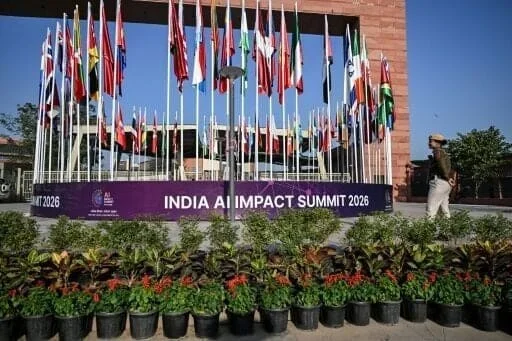
All eyes are on India this week. On Monday, the AI Impact Summit 2026 officially began in New Delhi. This five-day event marks a major milestone for the world. It brings together over 20 world leaders. Additionally, 45 ministerial delegations are in attendance. Top Silicon Valley CEOs like Sam Altman and Sundar Pichai have also arrived.
The summit aims for a “shared roadmap.” This plan focuses on global AI governance. Thousands of visitors are now at the venue. One big question remains. Can this diverse group reach concrete agreements? The stakes are higher than ever before.
From Bletchley to New Delhi: A New Direction
This is the fourth annual international AI meeting. It follows key gatherings in Paris, Seoul, and Bletchley Park. Early meetings focused on “existential risks.” They worried about super-intelligent machines in the distant future. In contrast, the New Delhi edition focuses on immediate impacts.
The theme centers on the Three “Sutras.” These are People, Progress, and Planet. The goal is simple. Leaders want to democratize AI benefits for everyone. They also want to protect people from negative side effects. The focus is now on the “here and now.”
India’s Rapid Rise in Science and Technology
Hosting this summit is a major win for India. Researchers at Stanford University note a significant jump in rankings. India now ranks third in global AI competitiveness. It has moved past long-standing tech hubs like Japan and South Korea.
Prime Minister Narendra Modi opened the event. He called it “further proof” of India’s progress. He believes the summit shows the skill of India’s youth. It provides a stage for innovation. It also promotes the responsible use of technology. India is no longer just a participant. It is now a leader.
The Frontline: Job Disruption and Economic Changes
Labor market disruption is a top priority this week. India’s customer service sector is massive. It also has a giant tech support industry. These sectors are on the frontlines of AI change.
Market data reveals high volatility. Shares in outsourcing firms have dipped recently. This is due to new AI voice tools. These digital assistants can now handle complex tasks. They perform work once done by thousands of humans.
The Changing Face of the Global Workforce
Experts at the summit shared a mixed outlook. Many admit that customer support roles may vanish. This could happen within just a few years. However, they remain hopeful about new roles. Society must adapt quickly to these shifts.
- At-Risk Roles: Data entry, basic software coding, and call center work.
- New Opportunities: AI ethics auditing and data labeling.
- Collaborative Roles: Managing human-AI workflows.
New fields must replace the old ones. The transition will be difficult for many workers. Education and retraining are now vital.
Safety First: Combating Deepfakes and Protecting Minors
The summit also looks at the dark side of AI. Deepfakes and misinformation are major concerns. National security agencies are on high alert. They worry about the impact on elections and social trust.
Kelly Forbes of the AI Asia Pacific Institute spoke out. She warned that tech moves faster than laws. This gap creates risks for children. Minors are often exposed to harmful AI-generated content. These tools can create realistic but fake images. Protecting the next generation is a core goal of the “People” sutra.
The Global Regulatory Divide
Consensus on regulation is hard to find. In Paris, many nations pledged to keep AI “open.” They also wanted it to be “ethical.” But the United States remains cautious about strict rules.
U.S. Vice President JD Vance issued a warning. He said too much regulation could “kill” the sector. He wants to protect the transformative power of AI. This creates a split. The EU favors strict safety rules. The U.S. favors rapid innovation. This divide makes a unified roadmap difficult to achieve.
Exploring the “Three Sutras”: People, Progress, Planet
India introduced a unique framework for the 2026 summit. It insists that technology must serve humanity.
- People: This sutra targets digital inclusion. It also prioritizes child safety. The goal is to make AI accessible to everyone. No community should be left behind.
- Progress: This pillar looks at economic growth. It focuses on building infrastructure. It also manages difficult job transitions. It encourages sustainable innovation.
- Planet: The final sutra focuses on the environment. Training Large Language Models (LLMs) uses massive amounts of energy. The goal is to reduce the carbon footprint of data centers. Leaders want “Green AI” for the future.
A New Voice for Developing Nations
This is the first large AI summit in a developing country. Organizers say this shift is vital. It creates a vision for the “many,” not just the “few.” Previous summits felt too focused on the West.
Roundtables are exploring local AI use cases. One example is improving road safety on dangerous highways. Another is helping South Asian women through digital literacy. These projects show the practical side of technology. They solve real-world problems in diverse cultures.
The Skeptic’s View: Real Change or Self-Regulation?
Not everyone is optimistic about the summit. Amba Kak from the AI Now Institute remains wary. She says tech giants often make narrow “voluntary” pledges. These companies might just be “grading their own homework.”
True accountability is still missing. Critics argue that self-regulation is not enough. They want world leaders to enforce strict laws. Without teeth, a “roadmap” is just a piece of paper. The summit must produce real results.
Conclusion: Toward a Responsible AI Future
The New Delhi AI Impact Summit 2026 is a critical crossroads. Tech leaders like Sam Altman are meeting with world leaders. President Emmanuel Macron and President Lula da Silva are also involved. The stakes are very high for the global economy.
The next few days will define our path. Will we have a fragmented, unregulated world? Or will we find a collaborative, ethical framework? The challenges are big. But the gathering in New Delhi shows the world is ready to act. We must ensure AI progress benefits everyone on the planet.
MORE LINKS: Global Climate Chief Warns of “New World Disorder” Ahead of COP31
Dakar University Suspends Student Unions Following Fatal Campus Unrest