
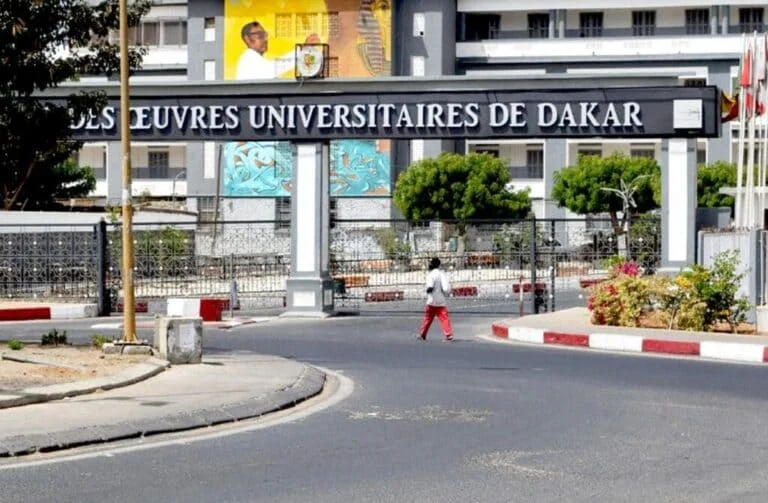
In a drastic move to contain escalating unrest, Senegal’s premier educational institution, Cheikh Anta Diop University (UCAD), announced on Thursday, February 12, 2026, the immediate suspension of all student associations. The decision follows a series of violent demonstrations over unpaid scholarships that resulted in the tragic death of a medical student.
The University’s Academic Council met late Thursday to address the crisis, stating it was “deeply affected by the tragedy.” To restore order and ensure the safety of the campus community, the council has opted to freeze the activities of student groups on a precautionary basis until further notice.
A Campus in Mourning: The Death of Abdoulaye Ba
The current crisis was sparked by the death of Abdoulaye Ba, a second-year medical student, during a confrontation with security forces. While the specific circumstances of his death remain under investigation, the event has paralyzed the university. Both the campus gates and student residences have been shuttered as the city of Dakar grapples with the fallout.
The Senegalese government has officially described the loss of life as a “tragedy” and made a rare admission concerning the use of “police brutality” during the intervention. However, Interior Minister Mouhamadou Bamba Cisse defended the necessity of the police presence. He alleged that some student factions had moved beyond peaceful protest, attempting to cause significant damage to university infrastructure.
Chaos on Campus: Violence Caught on Camera
The escalation this week turned the UCAD campus into a virtual battleground. Footage circulated widely on social media depicted scenes of extreme disorder. In these videos, law enforcement officers are seen entering university grounds and deploying tear gas into campus buildings.
One particularly harrowing video, which has been verified for authenticity, shows security forces using batons to strike a screaming individual. Students, in turn, were seen retaliating by hurling stones at the police lines. These images have fueled public anger and led to calls for greater accountability within the security apparatus.
The Root of the Conflict: The Scholarship Crisis
The violence this week is the culmination of a long-standing grievance: the systemic failure of scholarship disbursements. For years, Senegalese students have relied on these stipends to cover basic living expenses, including food, housing, and educational materials.
Factors Contributing to the Financial Delays:
- Overlapping Academic Years: Frequent strikes by both students and faculty have caused the academic calendar to drift, creating administrative confusion.
- Budgetary Constraints: National financial pressures have led to sporadic and incomplete payments.
- Administrative Lag: Students report going several months without receiving their promised stipends, leaving many in a state of extreme poverty.
For many at UCAD, these payments are not a luxury but a lifeline. The “pre-payment” system, meant to support those from rural areas or low-income backgrounds, has become a source of perpetual friction between the youth and the state.
Political Fallout and the Call for a Total Shutdown
The response from the student body has been swift and uncompromising. A collective of student associations has issued a statement holding the nation’s top leadership—including the President and Prime Minister—directly responsible for the lethal turn of events.
The collective is demanding more than just an apology; they have called for UCAD to be shut down entirely until a transparent and permanent solution to the scholarship crisis is established. They argue that the university environment is no longer safe or conducive to learning under the current security conditions.
A Pattern of Disruption
UCAD has a storied history as a hub of intellectual and political activism in West Africa. However, the frequent disruptions have taken a toll on its academic reputation. The constant cycle of demonstrations, police interventions, and subsequent closures has meant that a three-year degree can often take five years or more to complete.
This “academic instability” has created a frustrated generation of students who feel that their future is being compromised by bureaucratic inefficiency and heavy-handed law enforcement. The suspension of student unions—the primary bridge between the administration and the learners—risks further alienating the youth.
Conclusion: A Fragile Peace
As Dakar moves into the weekend, the atmosphere at Cheikh Anta Diop University remains tense. The suspension of student associations may temporarily silence organized protests, but it does little to address the underlying hunger and financial desperation that fueled the riots.
The government now faces a delicate balancing act: it must restore fiscal discipline to the scholarship system while also ensuring that the death of Abdoulaye Ba leads to meaningful reform in how campus protests are managed. For the students of UCAD, the primary question remains: when will the university be a place of education again, rather than a site of mourning?
READ MORE: West African Court Annuls Mali Sanctions: A Turning Point for Regional Trade