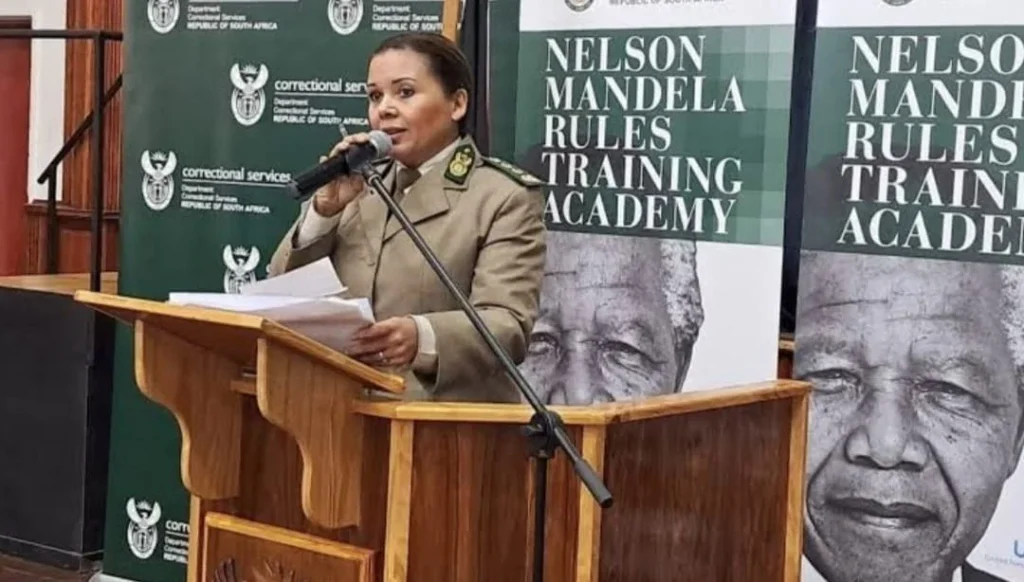
On Wednesday, February 11, 2026, South Africa reached a historic milestone in its journey toward judicial reform. President Cyril Ramaphosa officially inaugurated the Nelson Mandela Rules Training Academy.
The ceremony took place at the Drakenstein Correctional Facility, the site where Nelson Mandela spent his final days of imprisonment before his historic release 36 years ago.
This new facility represents a significant first for the African continent. It is dedicated exclusively to the United Nations Standard Minimum Rules for the Treatment of Prisoners.
These guidelines, internationally known as the “Nelson Mandela Rules,” serve as the global blueprint for dignity and justice within penal systems.
Honoring 36 Years of Freedom through Education
The timing of the launch is deeply symbolic. By opening the academy on the anniversary of Mandela’s release, the South African government is reaffirming its commitment to the late icon’s vision of a just society.
President Ramaphosa noted that the academy’s location—a former site of confinement—is now a center for enlightenment and reform.
The Nelson Mandela Rules are not just administrative guidelines. They represent a fundamental shift in how societies view those who have broken the law.
By renaming these rules after Mandela in 2015, the UN recognized his 27-year struggle as the ultimate testament to the importance of maintaining human dignity, even behind bars.
A Legacy of Justice and Global Human Rights
The launch event highlighted South Africa’s ongoing efforts to move away from a punitive “lock-and-key” model. Instead, the country is embracing a system focused on rehabilitation. Jane Marie Ong’olo, the Regional Representative of the United Nations Office on Drugs and Crime (UNODC), provided a global perspective on the academy’s importance.
“Nelson Mandela spent over 27 years in prison,” Ong’olo remarked. “Throughout his life, he remained a powerful advocate for fairness and justice. His legacy is now enshrined in these international standards. This academy ensures that his principles are not just written on paper but practiced in our hallways.”
The Academy: A Continental Hub for Excellence
President Ramaphosa has positioned the academy as a “knowledge hub.” While located in the Western Cape, its influence is intended to reach across the entire Southern African Development Community (SADC) and the wider African continent.
The facility aims to professionalize correctional services by providing high-level training to prison staff, administrators, and policy-makers.
The Academy’s Core Objectives:
- Staff Professionalization: Ensuring that correctional officers are trained in humane prison management, conflict de-escalation, and human rights law.
- Inmate Educational Programs: Expanding access to formal schooling and vocational training to ensure inmates leave with marketable skills.
- Reintegration Strategies: Designing data-driven programs that prepare prisoners for successful entry back into their communities.
- Holistic Personal Growth: Offering mental health support and self-improvement workshops for those serving long-term sentences.
Rehabilitation Over Retribution: A Modern Philosophy
For decades, South Africa’s prisons were symbols of apartheid-era oppression. The establishment of this academy signals the final stages of a philosophical transformation.
In line with Mandela’s values, the facility treats incarceration as an opportunity for reform rather than a cycle of retribution.
The “Mandela Rules” emphasize that the primary purpose of a prison sentence is to protect society and reduce recidivism. This can only be achieved if the period of imprisonment is used to ensure, as much as possible, that the offender is both willing and able to lead a law-abiding life upon release.
“I am told this is the first such facility of its kind on the African continent,” Ramaphosa stated during the ceremony. “We hope this academy serves as a model for other nations seeking to align their systems with international standards.”
Impact on the Southern African Region
The reach of the Nelson Mandela Rules Training Academy is expected to be vast. By inviting correctional officials from neighboring countries to train in Paarl, South Africa is leading a regional effort to standardize prisoner treatment. This collaborative approach is vital for addressing shared challenges, such as prison overcrowding and the spread of infectious diseases within confined populations.
Furthermore, the academy will serve as a research center. It will collect data on the effectiveness of various rehabilitation programs. This evidence-based approach will allow South Africa to refine its policies and share “best practices” with the global correctional community.
Conclusion: A Living Monument to Madiba
As the 2026 anniversary of Nelson Mandela’s release concludes, the opening of this academy stands as a living monument to his sacrifice.
It bridges the gap between a painful past and a hopeful future. By focusing on the dignity of every individual, the South African government is proving that the principles Mandela fought for are still the guiding light for the nation’s laws.
For the inmates at Drakenstein and across the continent, this academy offers more than just rules; it offers a path toward a second chance. As Ramaphosa concluded, “We are not just training officers; we are building a more humane society.”