
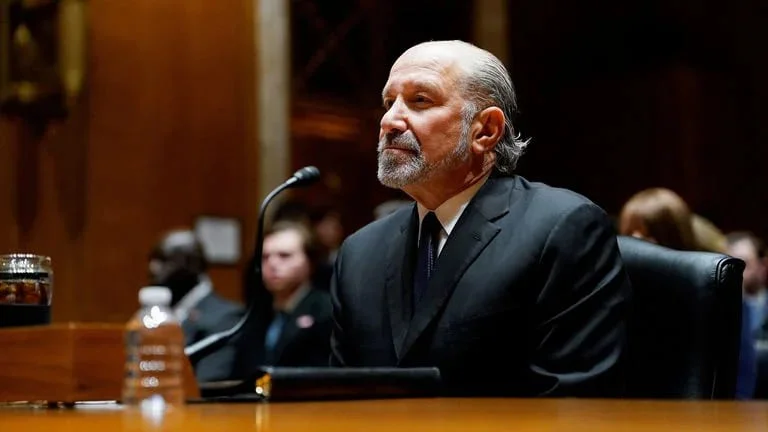
In a notable departure from traditional “strong dollar” rhetoric, U.S. Commerce Secretary Howard Lutnick told a Senate panel on Tuesday, February 10, 2026, that he views the current weaker state of the U.S. dollar as a “more natural” and beneficial level for the American economy.
Appearing before a Senate Appropriations subcommittee, Lutnick argued that a less aggressive greenback is the key to narrowing trade deficits, supercharging U.S. exports, and sustaining the administration’s ambitious GDP targets. His comments highlight an emerging ideological divide within the Trump administration regarding the global value of the world’s reserve currency.
A Move Toward “Natural” Economic Balance
Lutnick’s testimony focused on the competitive disadvantage he believes the U.S. has faced for decades. He alleged that foreign nations have historically “manipulated” the dollar higher to make their own exports cheaper and more attractive to American consumers.
Under President Donald Trump, Lutnick claims those dynamics are being forcibly realigned.
“The idea is, the dollar, where it is now, is just more natural,” Lutnick told lawmakers. “We are exporting more, and that’s why our GDP has grown so much, right?”
The Commerce Secretary provided a bullish outlook for the nation’s output, projecting that fourth-quarter 2025 GDP will exceed 5%, with the potential to top 6% in the first quarter of 2026.
The Administration’s “Dueling” Dollar Policies
Lutnick’s embrace of a softer dollar creates a visible friction point with U.S. Treasury Secretary Scott Bessent. Traditionally, the Treasury Department serves as the sole spokesperson for the dollar’s value, and Bessent has been consistent in his messaging.
The Internal Divide
- Howard Lutnick (Commerce): Views a weaker dollar as a “natural” tool to promote domestic manufacturing and reduce the trade gap.
- Scott Bessent (Treasury): Continues to champion a “strong dollar policy,” arguing that making the U.S. an attractive destination for foreign capital naturally supports currency value.
- President Trump: Has previously described the dollar’s recent slump as “great,” reinforcing Lutnick’s position over the Treasury’s traditional stance.
Market Pressure: Retail Sales and Economic Uncertainty
The dollar’s current trajectory is being shaped by more than just cabinet-level rhetoric. On the same day as Lutnick’s testimony, the U.S. Commerce Department released long-delayed data showing that U.S. retail sales were unexpectedly unchanged in December 2025.
Key Economic Factors Weighing on the Greenback:
- Federal Reserve Expectations: Persistent whispers of further rate cuts continue to dampen investor enthusiasm for the dollar.
- Fiscal Deficits: Rising government spending and a growing deficit have eroded some global confidence in U.S. fiscal stability.
- Consumer Spending Stalls: With retail sales flat, concerns are mounting over the resilience of the American consumer, who drives two-thirds of the economy.
- Data Delays: Agencies are still catching up on reporting following the disruptive 2025 government shutdown, leading to “noisy” data that heightens market volatility.
The Global Reaction: Yen Strength and Multi-Polarity
As Lutnick spoke, the dollar traded lower against most major peers. The Japanese Yen saw a significant boost following the election victory of Prime Minister Sanae Takaichi, whose policy outlook has encouraged a rotation out of dollar-denominated assets.
The administration’s apparent comfort with a weaker currency aligns with a broader push for a “multipolar” economic order where U.S. manufacturing isn’t hampered by an artificially high exchange rate. However, critics warn that a sustained decline could push Treasury yields higher just as the government’s debt-refinancing needs intensify.
Conclusion: A Strategic Shift in Trade Warfare
Howard Lutnick’s “natural dollar” stance is more than just a comment on exchange rates; it is a signal of a shift in how the U.S. intends to engage in global trade. By allowing the dollar to soften, the administration is effectively lowering the price of “Made in America” goods on the global stage.
Whether this leads to the 6% GDP growth Lutnick predicts—or triggers inflationary pressures that the Treasury and Fed must later scramble to contain—remains the defining question for the U.S. economy in 2026.