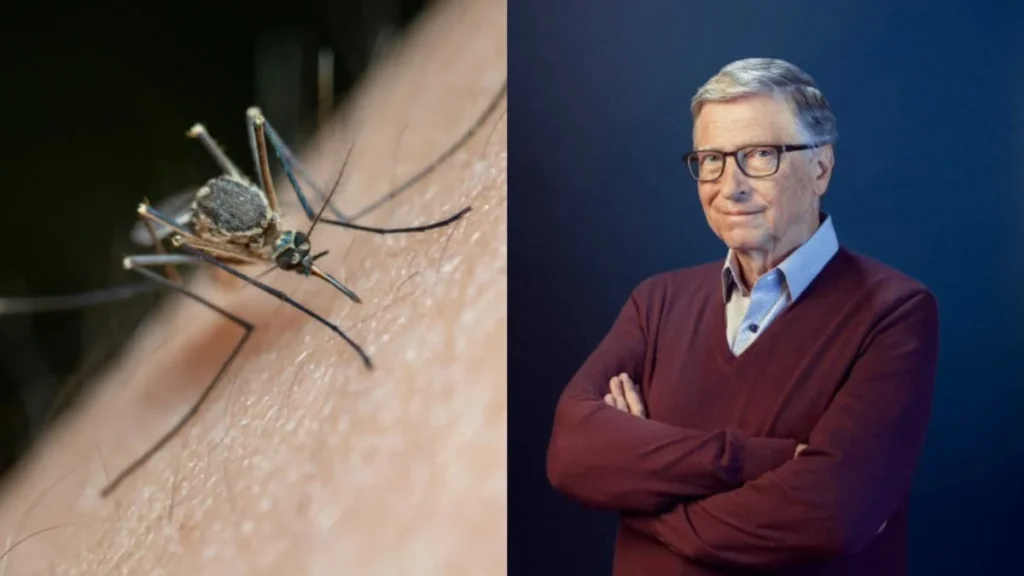
The Bill & Melinda Gates Foundation has officially dismissed viral social media allegations linking it to a supposed “invasion” of mosquitoes in Kenya. On Tuesday, February 10, 2026, the foundation clarified that it does not operate laboratories or conduct activities involving the release of insects in Nairobi or any other region.
The rumors, which gained significant traction on platforms like X (formerly Twitter), were fueled by prominent figures, including Senior Counsel Paul Muite.
These allegations suggested that millions of genetically modified (GM) mosquitoes had been unleashed. While purportedly meant to combat malaria, claimants argued the insects were instead causing distress to children and the elderly.
The Social Media Spark: Fact vs. Fiction
The controversy began when high-profile posts claimed Nairobi was “flooded” with lab-grown mosquitoes. Paul Muite’s post alleged these insects were “designed to harm” Kenyans, sparking a wave of conspiracy theories.
In a firm rebuttal, the Gates Foundation stated that these claims are entirely without merit.
“The Gates Foundation does not release mosquitoes, operate laboratories that do so, or run vector-control activities in Nairobi or anywhere else,” the official statement read.
The foundation further clarified that its mission in Kenya focuses on supporting local health priorities rather than implementing independent, unregulated field operations.
Local Leadership and Regulatory Oversight
A core pillar of the foundation’s defense is its adherence to national sovereignty. In Kenya, all malaria prevention strategies fall under the strict jurisdiction of the National Malaria Control Programme (NMCP) and the Ministry of Health.
The Role of the NMCP
The NMCP manages the distribution of insecticide-treated nets (ITNs), indoor residual spraying (IRS), and the monitoring of parasite resistance. The Gates Foundation acts as a financial partner to these institutions rather than a direct operator.
Key regulatory layers in Kenya include:
- Kenya Medical Research Institute (KEMRI): Ensures any new technology is tested by local scientists.
- National Biosafety Authority (NBA): Requires public participation and legal approval for releasing any modified organism.
- Ministry of Health Guidelines: All interventions must align with the Kenya Malaria Strategy 2023–2027.
Understanding Innovative Malaria Research
While the foundation denies releasing mosquitoes in Kenya, it acknowledges funding global research to eradicate malaria. Projects like Target Malaria explore innovative ways to reduce disease transmission.
Tools Currently Under Discussion
- Self-Limiting Genes: Creating male mosquitoes that cannot produce viable female offspring. Since only females bite, this reduces the population over time.
- Wolbachia Bacteria: Using naturally occurring bacteria to prevent mosquitoes from carrying viruses.
- Gene Drive Technology: A method designed to spread malaria-resistant traits through wild populations.
The foundation emphasized that none of these specific interventions are currently deployed as operational “releases” in Kenya. Any future use would require years of independent review and explicit government permission.
RELATED NEWS: A Silent Scourge: The Deadly Kala-Azar Surge Threatening Kenya’s Future
The Real Danger: Misinformation
The Gates Foundation warned that “factually incorrect” narratives can have dire consequences. When public trust in health organizations erodes, citizens may stop using life-saving tools like treated nets or vaccines.
“It is crucial for people to separate fact from fiction,” a foundation representative noted. “Effective malaria prevention requires public trust and locally-led efforts.”
Since its inception, the foundation has been a major donor to the Global Fund, which has helped reduce malaria deaths in Kenya by more than 60% since the early 2000s.
Conclusion: A Continued Partnership
The 2026 mosquito controversy highlights the complex relationship between global philanthropy and local perception. As the foundation moves forward with its 2026 priorities—focusing on vaccines, nutrition, and maternal health—it continues to emphasize that its work is done alongside local governments.
For Kenya, the focus remains on the National Malaria Strategy. While digital rumors create noise, the real work of saving lives continues through evidence-based policy and respect for local oversight.