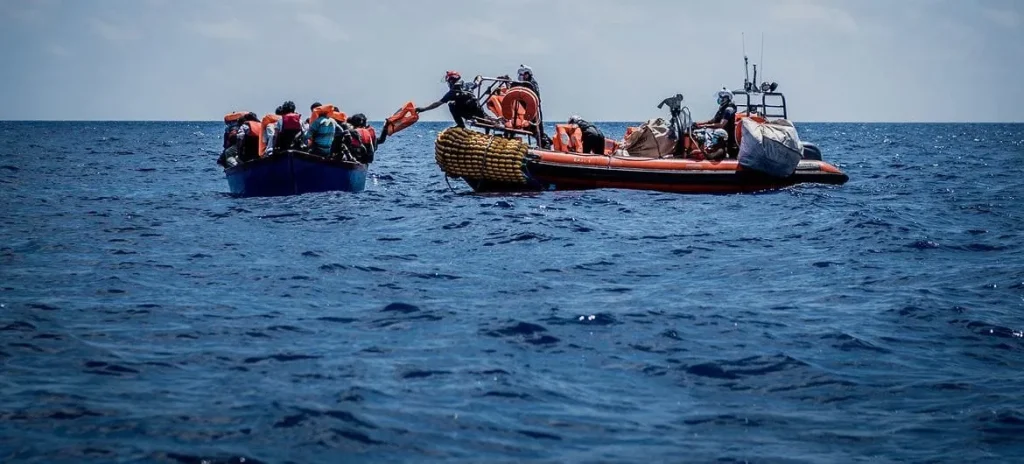
A profound sense of grief has once again gripped the Central Mediterranean. A rubber boat carrying dozens of hopeful travelers capsized off the Libyan coast, leading to a massive loss of life. On Monday, February 9, 2026, the International Organization for Migration (IOM) delivered a somber confirmation. At least 53 people, including two helpless infants, are now presumed dead or missing following the catastrophic incident.
The vessel carried approximately 55 migrants and refugees of various African nationalities. It overturned in the waters north of Zuwara, Libya, during the early hours of Friday, February 6.
Amidst this overwhelming tragedy, only two survivors emerged from the sea. Both are Nigerian women who were pulled from the water during a grueling search-and-rescue operation led by Libyan maritime authorities.
A Midnight Departure Turned Into a Fatal Nightmare
Survivor accounts shared with IOM staff provide a harrowing timeline of the disaster. The journey began in Al-Zawiya, a coastal city in northwestern Libya known as a frequent departure point for irregular migration. The overcrowded rubber boat pushed off from the shore at approximately 11:00 p.m. on February 5.
The journey toward European shores initially seemed stable. However, the situation turned catastrophic roughly six hours into the voyage. According to the survivors, the boat began taking in water, likely due to structural failure caused by overcrowding. Within minutes, the vessel capsized in the pitch-black, open sea.
The personal toll is devastating. One of the rescued women reported the tragic loss of her husband to the waves. The second survivor shared the agonizing news that both of her babies perished when the boat flipped. These accounts highlight the extreme vulnerability of those who entrust their lives to unseaworthy vessels in search of safety or opportunity.
The Growing Toll: A Surge in Mediterranean Casualties
The IOM has expressed deep mourning over the continued loss of life along what remains the world’s deadliest migration corridor. Upon their return to land, IOM medical teams provided immediate emergency assistance to the two survivors. Both women were described as being in a state of severe shock and physical exhaustion.
The scale of the crisis in 2026 has already reached alarming levels. The statistics paint a grim picture of a humanitarian emergency that refuses to subside:
- Year-to-Date Toll: This latest tragedy brings the number of migrants reported dead or missing on the Central Mediterranean route in 2026 to at least 484.
- January 2026 Spike: In January alone, the IOM recorded 375 deaths or disappearances. Many of these are linked to “invisible” shipwrecks—incidents that often go unrecorded because extreme winter weather prevents bodies or debris from being recovered.
- Historical Context: This follows a devastating 2025, where the Missing Migrants Project recorded more than 1,300 people lost at sea on this specific route.
Systemic Exploitation: Smuggling Networks and Protection Risks
The IOM continues to issue urgent warnings regarding the predatory nature of human trafficking and smuggling networks. These criminal organizations aggressively exploit vulnerable individuals, charging exorbitant fees for a “passage” that often ends in tragedy.
Smugglers frequently force migrants onto unseaworthy, rubber dinghies that are not designed for open-sea travel. Furthermore, these individuals are exposed to extreme abuse and protection risks throughout their journey.
For the smuggling syndicates, the migrants are merely cargo; their safety is never a priority. The IOM stresses that these networks thrive on the lack of safe, legal alternatives for migration.
A Call for Action: Beyond Reactive Measures
In its official statement, the IOM emphasized that purely reactive search-and-rescue measures are no longer sufficient to address the root of the problem. The organization is calling for a comprehensive, three-pronged international response:
1. Stronger International Cooperation
There is an urgent need for a unified global effort to dismantle the financial and logistical structures of smuggling networks operating in North Africa. This involves better intelligence sharing and stricter border controls to prevent unseaworthy vessels from ever leaving the shore.
2. Protection-Centered Responses
The IOM advocates for responses that prioritize the safety and human rights of migrants. When rescue operations occur, they must be conducted with the dignity of the survivors in mind, ensuring they receive not just medical aid, but mental health support and legal protection.
3. Creation of Regular Migration Pathways
Perhaps most critically, the IOM is pushing for the creation of safe and regular migration pathways. By providing legal avenues for work or asylum, the international community can reduce the demand for dangerous sea crossings and strip smuggling networks of their “customer base.”
The Role of Climate and Conflict in Migration
The persistent surge in migration across the Mediterranean cannot be viewed in a vacuum. Regional conflicts across the Sahel and Middle East, coupled with the increasing impact of climate change on agriculture, continue to drive people toward the Libyan coast. Many believe that the risk of the sea is preferable to the certainty of violence or starvation at home.
The “invisible shipwrecks” mentioned by the IOM are particularly concerning. These occur when boats disappear without a trace, often in the middle of the night or during winter storms. Without a distress call or survivors, these deaths are often never officially tallied, meaning the true death toll in the Mediterranean is likely much higher than currently reported.
Conclusion: A Persistent Humanitarian Crisis
The discovery of this latest shipwreck serves as a grim reminder of the high stakes involved in irregular migration. While the international community debates border policies and maritime laws, the Mediterranean continues to claim lives at a staggering rate.
For the two Nigerian survivors, the journey has ended in unimaginable personal loss. Their stories are a testament to the urgent human cost of a crisis that shows no signs of slowing down. This tragedy must serve as a catalyst for a renewed global commitment to human safety over political rhetoric. Until safe pathways are established, the waters off the coast of Libya will continue to be a graveyard for the desperate.
Modern Milestone: President Samia Unveils Rebuilt Kariakoo Market