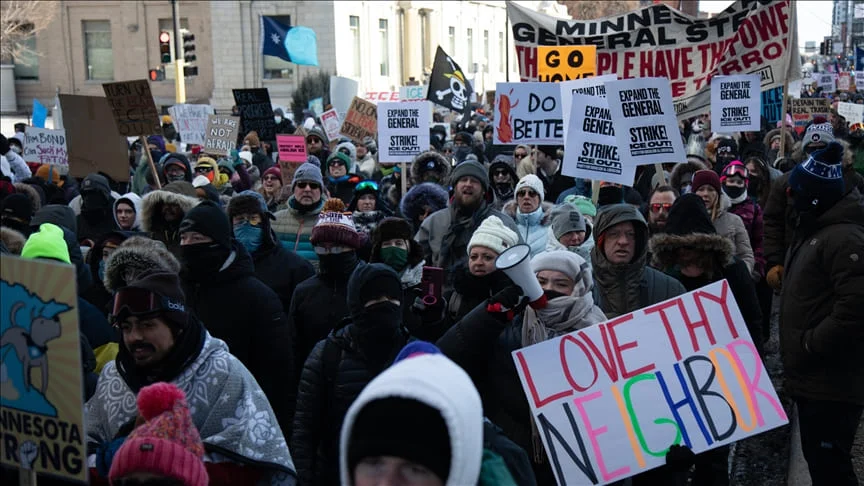
On Friday, February 6, 2026, the streets of Minneapolis remain a focal point of national unrest. Demonstrators continue to demand the immediate withdrawal of federal immigration agents from their neighborhoods. These protests intensified following a series of high-profile fatal encounters in January. Now, they are driving a massive legislative showdown in Washington, D.C. With the Department of Homeland Security (DHS) funding set to expire on February 13, the United States faces a real prospect of a government shutdown. This event could potentially paralyze national travel and delay vital disaster relief efforts across the country.
This situation is not merely a debate over budget numbers. Instead, it represents a fundamental clash over the limits of federal police power in American cities. While federal agents from Immigration and Customs Enforcement (ICE) and Customs and Border Protection (CBP) continue a widespread campaign known as “Operation Metro Surge,” Congressional Democrats have issued a clear ultimatum: if there are no reforms, there will be no funding.
The Minneapolis Catalyst: Two Fatal Shootings That Sparked a Movement
The current unrest was ignited by two tragic events in the Twin Cities. These incidents have quickly become a rallying cry for activists and lawmakers alike.
Renée Nicole Macklin Good: On January 7, 2026, the 37-year-old mother of three and U.S. citizen was shot and killed by an ICE agent during an early-morning raid. Ms. Good was a poet and writer who had just dropped her child off at school. Video evidence suggests she was attempting to drive away from—not toward—the agents when Officer Jonathan Ross opened fire. The shooting immediately drew condemnation from local leaders and sparked weeks of daily protests.
Alex Pretti: On January 24, 2026, the situation escalated further. Alex Pretti, a 37-year-old ICU nurse, was fatally shot while participating in a demonstration against federal enforcement. Witnesses reported that Pretti was filming officers when an agent approached him aggressively. After being pepper-sprayed, Pretti was pinned to the ground and shot ten times. Civil rights groups have described the incident as a “gross overreach” of federal authority.
These deaths transformed local grievances into a national crisis. In Minneapolis, federal agents have utilized chemical irritants, flash-bang grenades, and unmasked tactical gear. Consequently, many residents now describe their city as a “conflict zone.”
Operation Metro Surge: The Largest Raids in U.S. History
The scale of the federal presence in Minnesota is unprecedented. According to official DHS figures, Operation Metro Surge involved the deployment of approximately 2,000 agents to the Minneapolis-St. Paul area alone. Furthermore, the Department of Justice confirmed that at least 1,000 CBP officers joined the effort to bolster ICE’s enforcement capacity.
By early February 2026, the operation had resulted in roughly 3,000 arrests. However, the tactics used by these agents have been widely criticized by local and state officials. For example, Minnesota Attorney General Keith Ellison filed a federal lawsuit to halt the surge. He argued that the deployment violates the Tenth Amendment and disrupts the “equal sovereignty” of the state.
Highly Controversial Tactics
The “Metro Surge” has not been limited to residential raids. Federal agents have expanded their reach into various public spaces:
Airport Checkpoints: Agents established document-verification stations at Minneapolis-St. Paul International Airport. This move affected both international travelers and domestic employees.School Incidents: Federal agents reportedly tackled individuals outside Roosevelt High School. Because of the resulting chaos, the district was forced to cancel classes.Diplomatic Infractions: Perhaps most shockingly, several ICE agents attempted to enter the Consulate of Ecuador in Minneapolis. Legal scholars described this incident as a “major infraction of diplomatic norms.”
The Funding Ultimatum: 10 “Common Sense” Reforms
Led by Senate Majority Leader Chuck Schumer and House Democratic Leader Hakeem Jeffries, Democrats are refusing to provide a full-year appropriations bill for the DHS. They insist on a 10-point list of accountability measures.
The Democratic “Red Line” Demands:
- Judicial Warrants: Agents must obtain a warrant signed by a judge before entering private property.
- No Masks: Federal agents are banned from wearing face coverings during enforcement actions.
- Clear Identification: Agents must display their names and unique ID numbers clearly.
- Sensitive Locations: Raids are prohibited near schools, churches, and medical facilities.
- Body Cameras: The use of body-worn cameras is mandatory for all public interactions.
- Use of Force Standards: A “reasonable use of force” policy must be codified into federal law.
- Ending Racial Profiling: Stops based solely on race, accent, or job type are prohibited.
- Citizen Verification: Officers must ensure a person is not a U.S. citizen before detention.
- Independent Investigations: An independent body must be created to investigate agent misconduct.State Coordination: Large-scale urban operations require the consent of local authorities.
“Federal immigration agents cannot continue to cause chaos in our cities while using taxpayer money,” Jeffries stated. He emphasized that without “bold and meaningful change,” there is no path forward for the funding bill.
GOP Pushback: “Unrealistic” and “Radical”
The Republican leadership has firmly rejected these demands. They view the proposals as an attempt to “handcuff” law enforcement. Senate Majority Leader John Thune characterized the 10-point list as a “radical far-left wish list.” He argued that the administration requires “maximum flexibility” to carry out its mission of mass deportation.
Thune issued a counter-warning. He stated that the Department of Homeland Security is on track for a total shutdown if a bipartisan agreement is not reached soon. “This is not a blank-check situation,” Thune cautioned. He blamed the potential shutdown entirely on what he called “unrealistic Democratic demands.”
The “One Big Beautiful Bill” Factor: Why ICE Won’t Stop
A shocking twist in this shutdown threat is the One Big Beautiful Bill Act (OBBBA). This legislation, signed into law last year, provided a massive, multi-year funding infusion for the DHS. Specifically, it earmarked $165 billion for immigration enforcement.
Because of this prior funding, experts note that a government shutdown would not stop ICE or CBP operations. These agencies have enough cash to run for years without further congressional approval.
- ICE: Holds approximately $75 billion in reserve for mass deportation efforts.
- CBP: Holds roughly $65 billion to maintain its border and urban surge operations.
Therefore, the real victims of a shutdown would be the “non-enforcement” agencies. If the DHS shuts down, thousands of employees at the TSA, FEMA, and the U.S. Coast Guard would be forced to work without pay.
Impact of a Shutdown: Travel Chaos and Natural Disasters
The consequences of a February 14 shutdown would be felt by every American. Senate Majority Leader John Thune warned of a repeat of last year’s 43-day shutdown. That event caused massive travel delays and stalled disaster aid.
- Massive Travel Delays: TSA agents and air traffic controllers may be forced to work without pay. This often leads to “sick-outs,” which create hours-long security lines at airports.
- FEMA Paralysis: The Disaster Relief Fund (DRF) could run dry. This would halt aid for families recovering from winter storms or other natural disasters.
- Coast Guard Strain: Unlike other military branches, the Coast Guard falls under the DHS. Consequently, its members would not receive paychecks during the funding lapse.
Conclusion: The Looming February 13 Deadline
As of today, February 6, there is no sign of a compromise. The standoff in Minneapolis has crystallized a national debate: Should the federal government have unfettered power to conduct urban raids? Or should federal agents be bound by the same standards as local police?
With only one week left before funding expires, the American public remains caught in the middle. Whether the result is a massive policy overhaul or a catastrophic shutdown of essential services, the decision made in the coming days will define the second year of the current administration.
READ ALSO: Morocco to Challenge “Excessive” CAF Penalties After Heated AFCON Final