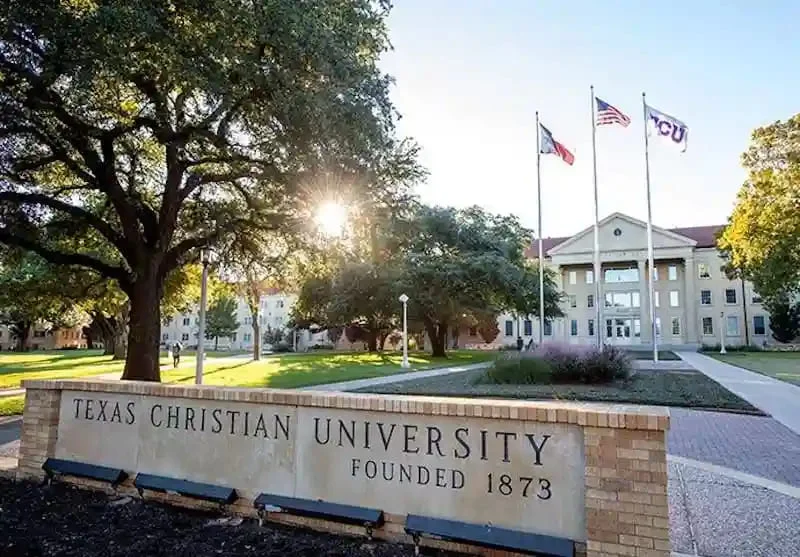
While the tech world is currently obsessed with the latest high-speed 5G networks and expensive foldable smartphones, two visionary students from Texas Christian University (TCU) have taken a radically different approach to solve a global crisis. Happy Niyorurema and Mame Niang have developed a groundbreaking system that delivers elite educational resources through standard phone calls, effectively bypassing the need for an internet connection or a smartphone.
On Thursday, February 5, 2026, their innovation reached a historic milestone. At the World Government Summit in Dubai, the duo was honored with the prestigious Global Best M-Gov Award. This accolade recognizes the most impactful mobile government solutions that improve lives in underserved communities, and the TCU project stood out for its ability to bring Artificial Intelligence (AI) to the world’s most remote regions.
The Hidden Crisis: 2.9 Billion People Left in the Dark
The core philosophy driving this project is the urgent need to bridge the “Digital Divide.” In our modern era, we often treat internet access as a universal constant. However, the data tells a much grimmer story.
“When we talk about AI, we often assume people are online and able to use it. But there are 2.9 billion people, most of them in the Global South, who still lack internet access – that’s just over one-third of the world’s population,” explained Happy Niyorurema.
This “digital wall” is built from two primary bricks: the high cost of data and the expensive hardware required to access modern web platforms. For a student in a rural village in the Global South, the latest AI breakthrough might as well be on another planet if they cannot afford a smartphone or a data plan. By recognizing this disparity, Niyorurema and Niang set out to democratize knowledge by looking backward at a technology that is already ubiquitous: the standard voice call.
How it Works: Turning Telephony into a Teacher
Rather than building a typical app or a website, the TCU duo did something far more complex under the hood. They engineered their own Large Language Model (LLM)—the same type of technology that powers famous chatbots—but instead of hosting it on a web server, they integrated it directly into traditional telephony infrastructure.
The Voice-First AI Interface
The system operates through a remarkably simple user experience. Instead of typing a prompt into a search bar, a learner uses a basic “feature phone” to dial a local number. The system then uses Voice-over-Internet Protocol (VoIP) and Speech-to-Text technology to “hear” the student’s question.
- The Call: The student dials a designated number using any mobile phone.
- Processing: The AI processes the voice request, searching its vast educational database for the answer.
- The Response: The system converts the text-based answer back into a natural-sounding voice (Text-to-Speech) and reads the lesson or answer back to the student in real-time.
This method ensures that the “interface” is as natural as a conversation with a teacher. There are no menus to navigate, no apps to update, and most importantly, no “page not found” errors due to a dropping 4G signal.
Innovation Through Simplicity: Challenging “Smartphone Bias”
One of the most profound aspects of this project is how it challenges the tech industry’s inherent “smartphone bias.” Mame Niang pointed out that developers often design products assuming that every user has a high-resolution touch-screen and a stable power source.
“It’s extremely easy to use – you don’t need a smartphone,” Niang stated. “I think this solution is innovative because we tend to assume people have access to smartphones and the internet. But with this, you can use even the most basic phone.”
The Power of the Feature Phone
In many parts of Africa, South Asia, and Latin America, the “feature phone” (or “brick phone”) remains the king of communication. These devices are durable, have batteries that last for days, and are significantly cheaper than smartphones.
By tailoring their AI to work on these devices, Niyorurema and Niang have ensured that their educational tool is as accessible as a basic phone signal—which now covers over 95% of the world’s populated areas.
From Rwanda to the World: The Expansion Strategy
The project is no longer just a laboratory experiment at TCU. It has already successfully moved into its pilot phase in Rwanda. In this initial rollout, students have used the system to ask for help with mathematics, science, and language learning. The results have been overwhelmingly positive, proving that voice-based AI can serve as a viable 24/7 tutor for those who lack formal educational support.
Following their victory in Dubai, the team is preparing for an aggressive continental expansion. Their roadmap for 2026 and beyond includes:
- Senegal: Niang’s home country will be the next major hub for the system, focusing on French and local language integration.
- Zambia: A pilot is being discussed to help bridge the rural-urban education gap in Southern Africa.
- Multilingual Support: The team is working to ensure the AI can understand and speak in local dialects, further removing barriers for non-English speakers.
The World Government Summit: A New Vision for Public Service
The World Government Summit in Dubai is the world’s premier forum for discussing the future of governance and public services. This year’s conclusion on Thursday sent a clear message: the most effective innovations are not always the most complex ones. They are the ones that meet people exactly where they are.
By awarding Niyorurema and Niang the Global Best M-Gov Award, the international community has validated a new model for public service. This model prioritizes equity over vanity. It proves that we can use the most advanced technology (AI) through the most accessible medium (voice) to ensure that no child’s education is determined by their proximity to a Wi-Fi router.
Conclusion: A Lesson in Global Equity
The story of Happy Niyorurema and Mame Niang is a powerful reminder of what happens when empathy drives engineering. These two TCU students didn’t just build a better AI; they built a more inclusive world. By stripping away the requirements for expensive hardware and monthly data subscriptions, they have transformed a humble phone call into a gateway for human potential.
As the system scales across Africa and the Global South, it carries the potential to redefine what “mobile government” looks like. It is a future where knowledge is not a luxury for the connected, but a right for everyone with a dial tone.
READ MORE: Morocco to Challenge “Excessive” CAF Penalties After Heated AFCON Final