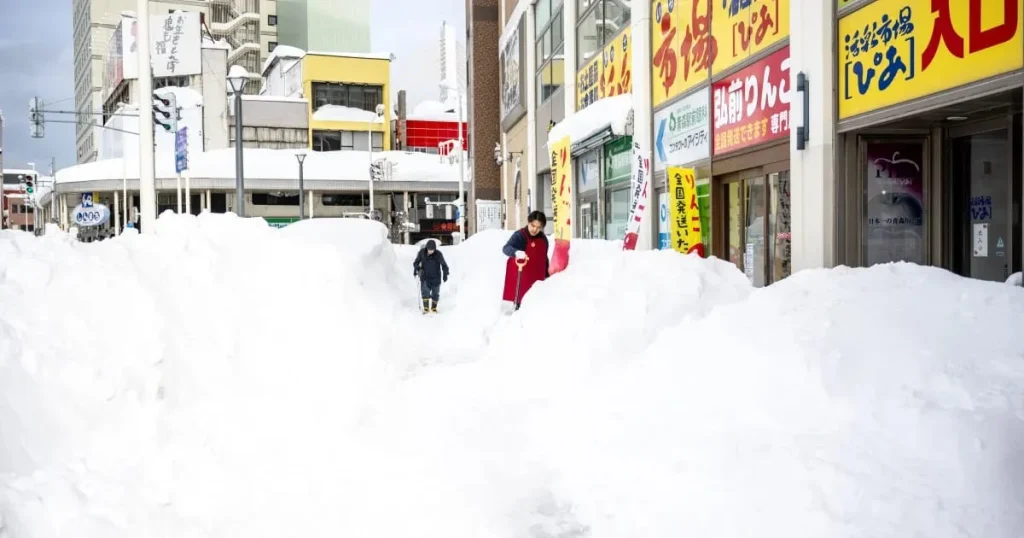
Northern Japan is currently struggling with a massive humanitarian and logistical crisis. Record-breaking snowfall has claimed at least 30 lives over the past two weeks. Since January 20, 2026, a powerful winter pressure pattern has funneled a relentless Arctic air mass across the Sea of Japan. Consequently, some regions have seen more than double their average precipitation.
In the hardest-hit prefecture of Aomori, remote mountainous areas are buried under a staggering 4.5 meters (14.7 feet) of snow. This unprecedented weather event forced the central government to take drastic action. For the first time in over two decades, officials deployed the Japan Self-Defense Forces (JSDF) to assist overwhelmed local crews.
A Tragedy in the Trenches: The Human Cost
The mounting death toll highlights the extreme danger facing Japan’s aging population in rural regions. According to the Fire and Disaster Management Agency (FDMA), most of the 30 fatalities occurred during dangerous snow-clearing operations. Others resulted from structural failures.
One heart-wrenching story emerged from Ajigasawa. Rescuers found Kina Jin, a 91-year-old woman living alone, beneath a three-meter pile of snow outside her home. An aluminum shovel found beside her suggested she was trying to clear a path. Unfortunately, a massive shelf of snow slid from her rooftop and buried her. Local police confirmed the cause of death as suffocation, proving how quickly “white death” can strike.
A statistical look at the crisis (as of February 3, 2026):
- Total Fatalities: 30 people.
- Total Injuries: 324 reported, mostly from rooftop falls.
- Regional Deaths: Niigata (12), Akita (6), Hokkaido (3), and Aomori (3).
Why 2026 is Breaking Weather Records
Meteorologists point to a persistent Arctic air mass lingering over the Japanese islands. This cold front combined with relatively warm waters in the Sea of Japan to create intense “sea-effect” snow bands.
In Aomori City, snow accumulation peaked at 183 cm (72 inches) on February 1. This surpassed the previous 40-year record set in 1986. The sheer volume of snow has created “snow walls” as high as 1.8 meters. As a result, the local government’s ability to function has been effectively paralyzed.
“The snow is so heavy that our staff cannot even convene for emergency meetings,” stated Aomori Governor Soichiro Miyashita. “The danger of life-threatening incidents is now imminent.”
Emergency Response: The Military Steps In
Facing an “imminent threat to life,” Governor Miyashita requested disaster relief from the Ground Self-Defense Force (GSDF). This marks the first time in 21 years that the military has been called to Aomori City for snow removal.
Current military objectives include:
- Elderly Support: Prioritizing snow removal for seniors living alone to prevent roof collapses.
- Emergency Corridors: Clearing vital paths for ambulances and fire services.
- Information Gathering: Using specialized equipment to reach isolated villages.
Prime Minister Sanae Takaichi hosted a cabinet-level meeting on Tuesday morning. She instructed all ministers to prioritize saving lives and maintaining essential infrastructure.
Infrastructure and Political Paralysis
The snowfall has brought transportation to a complete standstill. Rail links in Hokkaido and Tohoku remain suspended, leaving thousands of travelers stranded. In Sapporo, snow depths reached 111 cm, exceeding the one-meter mark for the first time in four years.
Beyond logistics, the weather is casting a long shadow over Japan’s political scene. A snap general election is scheduled for Sunday, February 8, 2026. With voting sites buried and many elderly voters unable to leave their homes, officials worry about voter turnout and the accessibility of the democratic process.
Safety Guidelines for Residents
As temperatures fluctuate, authorities are warning of “secondary disasters” like avalanches.
Critical safety measures for residents:
- Never Work Alone: Always have a partner when clearing roofs or driveways.
- Safety Gear: Use harnesses and helmets. A simple shovel is not enough against heavy, wet snow.
- Stay Clear of Rooftops: Avoid standing directly under eaves, especially as temperatures rise and snow begins to melt.
READ MORE: Rafah Crossing Reopens: First Group of Palestinians Returns to Gaza