

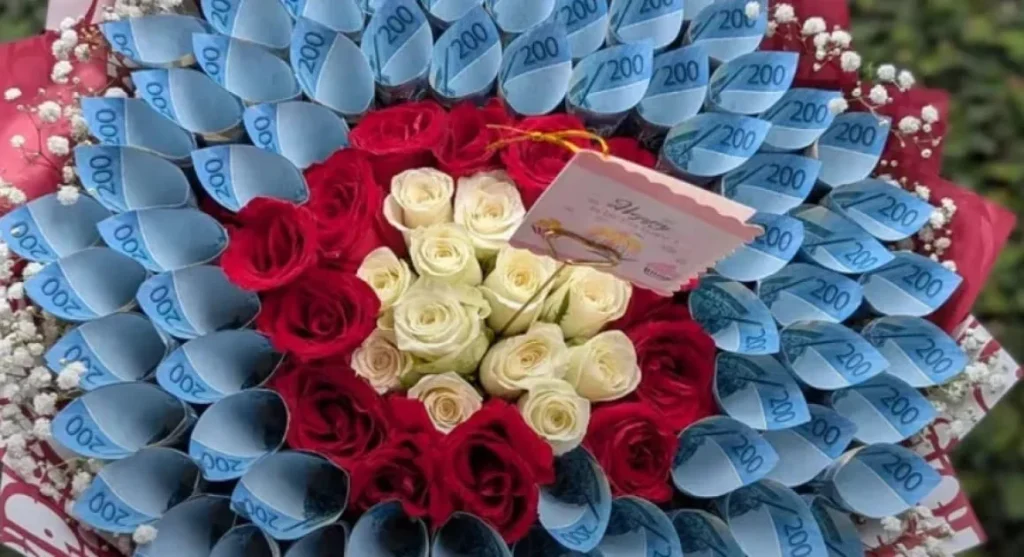
The Central Bank of Kenya (CBK) has officially declared war on one of social media’s most popular gifting trends. In a stern warning issued on its official X handle this Monday, the apex bank cautioned the public against creating decorative “cash bouquets” using the national currency.
What started as a viral display of affection and wealth has now become a significant legal liability. The bank declared that these practices constitute the defacement of national currency. Under existing laws governing the Kenyan Shilling, the stakes are remarkably high. Individuals found guilty of damaging, altering, or defacing banknotes can face up to seven years of imprisonment.
The Anatomy of a “Damaged” Banknote
The cash bouquet trend has gained immense traction over the last two years. High-profile celebrities and social media influencers often promote the practice. It involves rolling and folding banknotes of different colors and denominations to resemble rosebuds. Afterward, these are fastened together to mimic expensive floral arrangements.
While these displays are popular for weddings and birthdays, the CBK maintains that the “integrity” of the money is permanently lost. The methods used to secure these “flowers” are particularly damaging to the physical properties of the Shilling.
Specific actions that render notes unfit for circulation include:
- Aggressive Adhesives: Creators often use heavy-duty glue or double-sided tape to hold the “petals” in place.
- Mechanical Fasteners: Pinning or stapling banknotes into bouquet structures creates permanent perforations.
- Structural Alteration: Deeply rolling or “crimping” notes destroys the fiber of the paper. This interferes with the high-speed processing equipment used by banks.
The Economic Impact: Why Defacement Matters
To the average consumer, a folded note might seem harmless. However, the CBK emphasizes that the Shilling serves three primary functions: a medium of exchange, a unit of account, and a store of value. When a note is defaced, it loses its ability to fulfill these roles efficiently.
Modern financial infrastructure relies heavily on automation. When banknotes are glued, pinned, or excessively creased, Automated Teller Machines (ATMs) frequently reject them. Furthermore, high-speed sorting equipment often jams when processing “distressed” currency.
Consequences for the Kenyan Financial System:
- Rising Replacement Costs: The government must constantly withdraw and destroy damaged notes. This leads to massive, unnecessary printing costs funded by taxpayers.
- Operational Inefficiency: Tellers must spend extra time manually sorting through cash that machines cannot handle. This slows down banking services nationwide.
- Individual Financial Risk: Retailers have the right to refuse defaced currency. If you hold a note that has been pinned or glued, businesses may no longer accept it as legal tender.
“While CBK does not object to the use of cash as a gift, such use should not involve any action that alters, damages, or defaces banknotes,” the statement clarified.
Valentine’s Day and the “Flower vs. Finance” Debate
The timing of this announcement is no coincidence. With Valentine’s Day (February 14) approaching, “cash flowers” were expected to flood the Nairobi market. The CBK’s move has effectively pulled the plug on this lucrative niche for many creative entrepreneurs.
Interestingly, Kenya’s traditional horticultural sector welcomed the news. As a leading producer of fresh-cut roses, local florists argue that authentic flowers are a more sustainable expression of love.
The warning has sparked a lively debate online. Some users expressed relief, calling the trend an “expensive and wasteful” display of ego. Others, however, questioned if a seven-year prison sentence is too harsh for “creative expression.”
Legal and Ethical Gifting: How to Give Cash Safely
The CBK is not banning the gifting of money itself. However, they demand that the money remains in a condition that allows it to circulate freely. If you plan on gifting cash this season, consider these “bank-approved” alternatives:
- Pristine Envelopes: Use decorative, high-quality envelopes to present crisp, unfolded banknotes.
- Digital Transfers: Mobile money platforms remain the most efficient way to gift funds without physical wear and tear.
- Cash Gift Boxes: Place flat, unfolded notes inside a gift box ensuring no adhesives are used.
The Final Word from the Apex Bank
The Central Bank’s message is clear: The Shilling is a national symbol and a critical tool for economic stability. Treating it as a craft material is a criminal offense. As the February 14th deadline approaches, Kenyans are encouraged to stick to the traditional “language of flowers”—the ones that grow in the ground, not the ones printed on paper.
The CBK is cracking down on viral gifting trends to save the economy from rising costs. What do you think—is this a necessary move or an overreach? Share your thoughts in the comments below!”
READ ALSO: Two Nollywood Titans: The Truth Behind the Viral Clash, Funke Akindele and Kunle Afolayan


1 thought on “Kenya Issues Warning: Cash Bouquets Could Lead to Seven Years in Prison”
????????Wellllllllllllllllll????????if they give me, I will collect ooo????????before they make this law in Nigeria, let me collect my own bouquet ????????