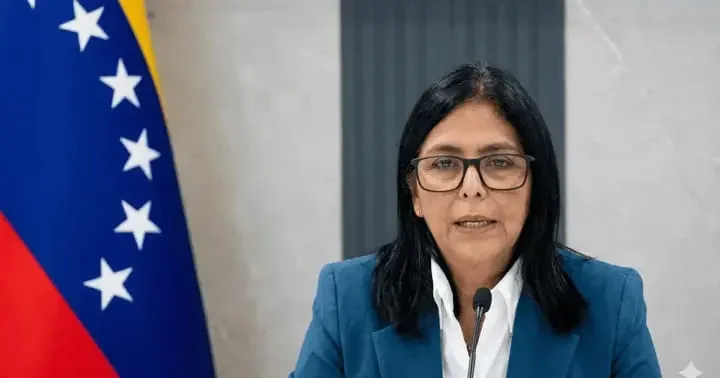
In a significant realignment of regional geopolitics, Interim Venezuelan President Delcy Rodriguez is scheduled to visit the United States shortly. A senior U.S. official confirmed the upcoming trip on Wednesday, marking a historic turning point in the often-turbulent relationship between Washington and Caracas.
If the visit proceeds, Rodriguez will be the first sitting Venezuelan head of state to travel to the U.S. for bilateral talks in over 25 years—excluding standard appearances at the United Nations in New York.
Addressing the news on Wednesday, Rodriguez stated she is approaching the upcoming dialogue “without fear.” She emphasized a commitment to using diplomacy to address long-standing differences and difficulties between the two nations.
A “Head-Snapping” Reversal in Relations
The invitation represents a radical departure from years of hostility. This shift gained momentum following a high-stakes U.S. operation that saw former President Nicolas Maduro seized by Delta Force operatives and transported to a U.S. facility to face narcotrafficking charges.
Rodriguez, previously a core member of the Maduro administration and a former Vice President, has significantly altered her political trajectory since assuming the interim presidency. Despite remaining under certain U.S. sanctions, she has overseen several major concessions:
- Energy Cooperation: Allowing the U.S. to broker the sale of Venezuelan oil.
- Economic Reform: Facilitating new avenues for foreign investment.
- Humanitarian Acts: Overseeing the release of dozens of political prisoners.
Internal Power Struggles and Military Reshuffle
While the White House appears ready to embrace Rodriguez, the move is not without risks for her domestically. Hardliners within the Venezuelan government remain deeply skeptical of U.S. influence.
To solidify her position, Rodriguez began a major reorganization of the military on Wednesday, appointing 12 senior officers to key regional commands. Observers are closely watching powerful figures like Interior Minister Diosdado Cabello and Defense Minister Vladimir Padrino Lopez. On state television Wednesday night, Cabello denied rumors that he had held secret meetings with U.S. officials prior to Maduro’s removal.
Trump’s Strategy: Oil and Stability
President Donald Trump’s administration has signaled a pragmatic approach to the “oil-rich” nation. Analysts suggest that the U.S. is prioritizing access to Venezuela’s proven oil reserves—the largest in the world—over immediate and total regime change.
Earlier this month, Trump hosted exiled opposition leader and Nobel Peace Laureate Maria Corina Machado at the White House. While Machado’s party is widely viewed as the rightful winner of the disputed 2024 elections, Trump recently indicated he would like to see her “involved in some way,” rather than necessarily leading the transition alone.
The “Iraq Lesson”: Political experts, including Benigno Alarcon of Andres Bello Catholic University, believe Trump is intentionally avoiding a full-scale military occupation. The goal appears to be stabilization without the long-term troop deployments that defined previous U.S. interventions in the Middle East.
Criticism from Pro-Democracy Activists
The “embrace” of a former Maduro insider has drawn sharp criticism from democracy advocates. Critics argue that any deal with the current interim government must be conditional on full amnesty for all political prisoners and a firm commitment to holding fresh, transparent elections.
As a U.S. naval flotilla remains stationed off the Venezuelan coast, the upcoming visit by Rodriguez will serve as a critical test of whether this new era of “fearless diplomacy” can lead to lasting stability.
READ MORE: Dakar Erupts for Senegal AFCON Victory Despite FIFA Controversy