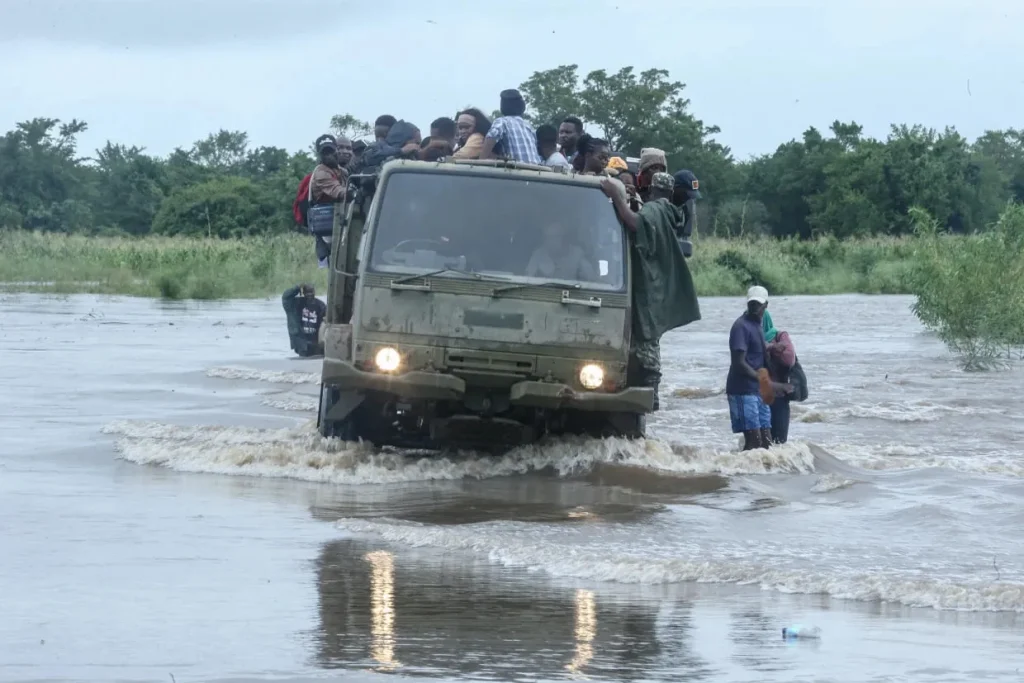
South Africa has officially declared a national disaster after weeks of torrential rainfall and devastating floods. This crisis, which is primarily centered in the northern regions, has resulted in at least 30 confirmed deaths. Additionally, the extreme weather has destroyed thousands of homes and caused the collapse of vital infrastructure, including roads and bridges.
The head of the National Disaster Management Center issued the declaration to empower the state. Consequently, the national government can now centralize and coordinate a massive emergency response across all affected territories.
The Epicenter of the Crisis
The northern provinces of Limpopo and Mpumalanga have suffered the most severe impact so far. While most fatalities occurred in these two regions, the Ministry of Cooperative Governance and Traditional Affairs confirmed that at least three other provinces are also battling extreme conditions.
The Massive Economic and Physical Toll
The scale of the destruction is staggering for the local economy. In Limpopo alone, the provincial premier estimates that the floods have caused approximately $240 million in damage.
Key impacts include:
- Residential Destruction: Thousands of homes were inundated or entirely swept away by rising waters.
- Infrastructure Collapse: Major transport routes and bridges are now unusable, which has isolated several communities.
- Tourism Disruptions: The world-renowned Kruger National Park temporarily suspended operations. Specifically, over 300 tourists and staff members were evacuated from flooded camps before the park began a phased reopening this week.
Regional Impact and Historical Context
This current weather pattern is part of a broader regional crisis. Heavy rains have lashed South Africa, Mozambique, and Zimbabwe for weeks. This has led to severe flooding in central and southern Mozambique. Since the rains began late last year, the collective death toll across these three nations has surpassed 100 people.
South Africa is unfortunately familiar with these climate-related tragedies. This disaster follows a pattern of increasingly frequent weather events. For instance, more than 400 people died in the 2022 KwaZulu-Natal floods. Similarly, over 100 people lost their lives during the 2025 floods in the Eastern Cape.
The Search for the Missing
Rescue teams continue to work around the clock because several individuals remain missing. Specifically, searchers are looking for 5-year-old Siyanda Baloyi, who was swept away when his home in Limpopo was overtaken by floodwaters last week.
Furthermore, authorities are searching for a government official from the Ekurhuleni municipality. The official, along with several other passengers, disappeared after their vehicle was washed away while traveling through Mozambique.
Moving Toward Recovery
As the government assesses the full extent of the damage, the primary focus remains on search and rescue. While the reopening of Kruger National Park offers a sign of stabilization, the recovery of infrastructure remains a massive hurdle. Rebuilding homes and restoring essential services in the north will be a significant long-term challenge for the nation.