
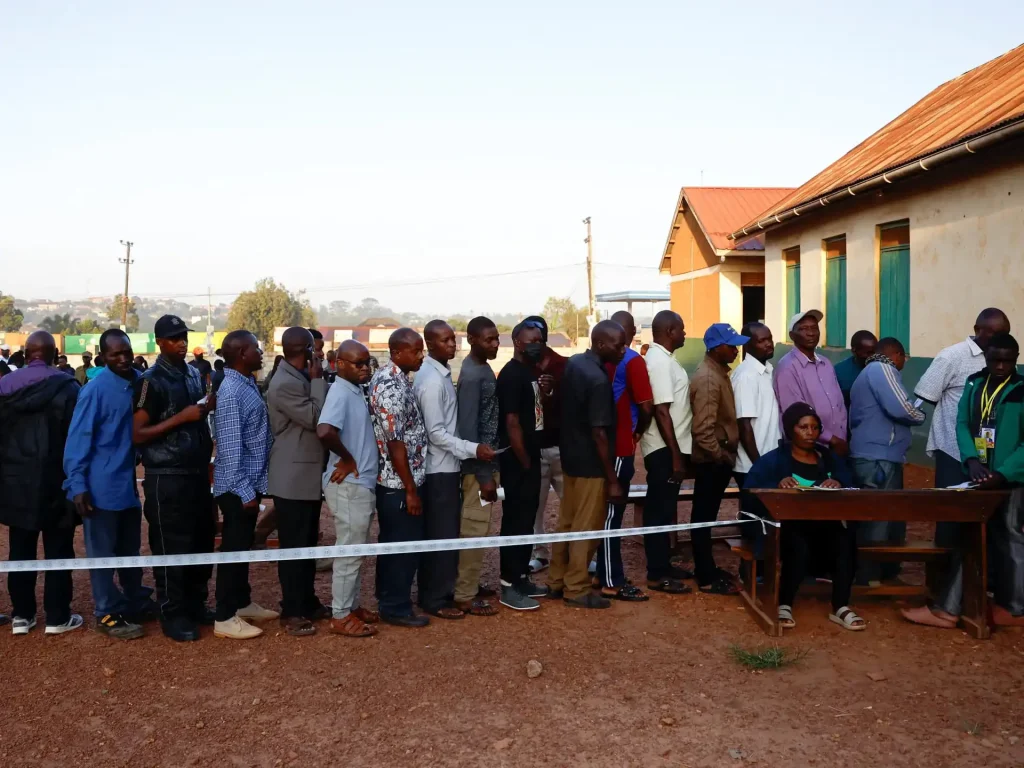
A blanket of digital silence descended upon Uganda on Thursday, January 15, 2026, as millions of citizens headed to the polls.
In a move that has drawn sharp international scrutiny, the government severed all internet connectivity just as the 2026 Uganda election began. Authorities justified the shutdown as a necessary measure to “prevent misinformation and fraud.” Consequently, the nation’s 21.6 million registered voters are casting their ballots in an information vacuum.
This blackout adds a layer of opacity to a contest already defined by high tension and logistical nightmares.
A Generational Clash at the Ballot Box
The stakes in this Uganda election could not be higher. The race represents a stark confrontation between the entrenched old guard and a restless youth movement.
Yoweri Museveni, 81, is fighting to extend his four-decade rule, having held power since 1986. His primary challenger is Robert Kyagulanyi, the pop star known globally as Bobi Wine. Wine champions a platform of radical political transformation, appealing directly to the younger demographic in this nation of 45 million.
Conversely, the incumbent has relied on a rhetoric of force. In his final address, Museveni warned that state security would “crush” any attempts to disrupt the voting process.
Technical Failures Fuel Skepticism
On the ground, the democratic process faced immediate stumbling blocks.
Although officials scheduled polls to open at 7:00 am, logistical delays left crowds waiting outside stations for hours. Furthermore, widespread technology failures are testing the integrity of the vote. Reports confirm that biometric verification kits in Kampala failed to power on, contradicting official assurances.
Juma Katongole, a voter in the capital, voiced the growing public distrust.
“As a voter, I am frustrated,” Katongole remarked. “I am losing confidence because they assured us no one would vote without biometrics, but the machines are not working.”
Security Forces Clamp Down
Beyond the technical glitches, the atmosphere is heavy with intimidation.
Military units have patrolled major urban centers throughout the week. This display of force follows a violent campaign season that Amnesty International described as a “campaign of repression.”
Additionally, the civic space has shrunk rapidly.
- Civic Bans: The government has suspended media watchdogs and civil society groups.
- Closures: Authorities shuttered one key organization just 24 hours before voting, accusing it of activities “prejudicial to national security.”
- Missing Opposition: Veteran opponent Kizza Besigye is notably absent from the ballot, as he continues to fight treason charges from 2025.
What Happens Next?
As the polls close at 4:00 pm, the countdown begins. The Constitution binds the Electoral Commission to declare a winner within 48 hours. However, with the internet down and independent observers restricted, the world watches anxiously to see if the results will reflect the will of the people or the might of the state.
__________________________________________________
IN OTHER NEWS, Trump Administration Announces Indefinite U.S. Visa Freeze for Nigeria and 74 Other Nations