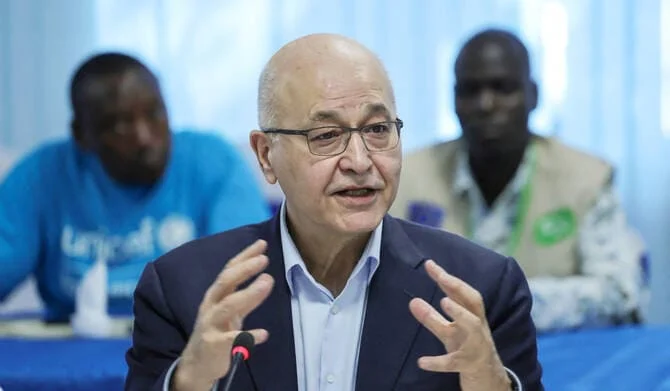
Newly appointed United Nations High Commissioner for Refugees Barham Salih made his first field visit to Kakuma refugee camp in northwest Kenya on Tuesday, praising the country’s shift from traditional aid camps to self-sustaining communities.
Historic Transformation in Kakuma
Established in 1992 to shelter people fleeing conflict in South Sudan, Ethiopia and the Democratic Republic of Congo, Kakuma was officially redesignated as a municipality in April 2025. This change allows local authorities to gradually take over administration and services.
A Model of Inclusion
During the tour, Salih called Kenya’s approach a powerful example of generosity and forward thinking. He highlighted the Shirika Plan, a national strategy that integrates refugees into local healthcare, education and economic life.
“Instead of keeping people dependent on aid forever, we need solutions that restore dignity and let them contribute,” Salih said. He stressed that real protection means helping displaced individuals rebuild independent lives.
Leadership Shaped by Experience
Salih, the first former head of state to lead UNHCR, brings a personal perspective. As Iraq’s President from 2018 to 2022, he once lived as a refugee himself.
He pledged to lead with empathy, practical solutions and respect for international law, focusing on long-term stability for both refugees and host countries.
Next Stop: Chad
After Kenya, Salih heads to Chad to assess camps there and discuss ways to support nations facing funding shortages.
As global displacement reaches new highs in 2026 and budgets tighten, Salih’s emphasis on self-reliance signals a fresh direction for the UN refugee agency.
ALSO READ: Nigeria’s 2026 Budget: ₦3.50tn New Projects Defy Federal Directive