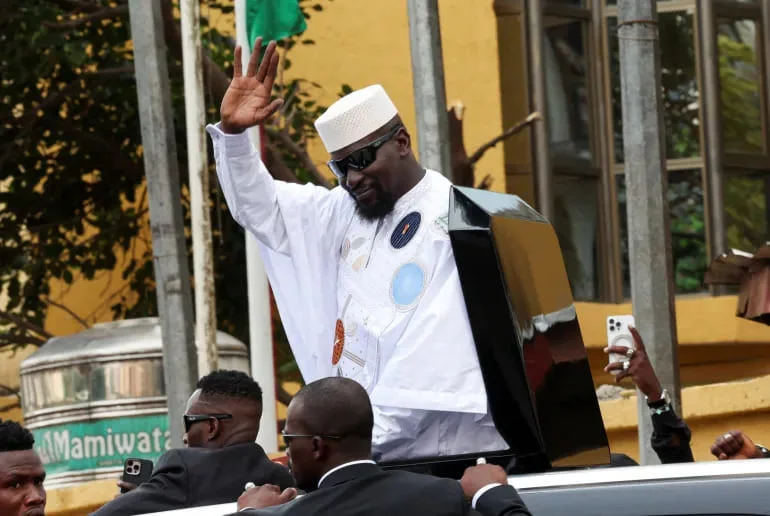
In a landmark ruling on Sunday, January 4, 2026, the Supreme Court of Guinea officially certified Gen Mamady Doumbouya as the winner of the recent presidential election. The court’s final data confirmed that the former military leader secured 86.72% of the vote, cementing his transition into an elected presidency.
This judicial validation follows the December 28, 2025 polls. While the election faced international and domestic scrutiny due to the exclusion of several key opposition figures, the court’s decision now provides a formal legal mandate for Doumbouya’s seven-year term.
Legal Path Cleared as Challenger Withdraws
The court’s first president, Fode Bangoura, announced the final standings, which remained largely unchanged from the earlier provisional reports. The secondary results include:
- Abdoulaye Yéro Baldé: 6.59% (Runner-up)
- Minor Candidates: Collective share of remaining votes.
Notably, Baldé had initially submitted a formal complaint to the Supreme Court challenging the election’s integrity. However, Bangoura revealed that Baldé “voluntarily withdrew” his petition shortly before the final tally was announced, effectively ending any legal opposition to the result.
Doumbouya Issues a Call for National Reconciliation
Following the court’s announcement, President-elect Doumbouya addressed the nation in a televised broadcast. Shifting away from the friction of the election cycle, he emphasized a vision of a “united and indivisible” Guinea.
“Today, there are neither winners nor losers,” Doumbouya remarked. “There is only one Guinea.”
The President-elect’s roadmap for his new term focuses on:
- National Unity: Healing divisions caused by the transitional period.
- Economic Sovereignty: Managing Guinea’s natural wealth to ensure “shared prosperity.”
- Justice Reform: Building a new state foundation based on peace and the rule of law.
From Transitional Leader to Elected President
Doumbouya originally ascended to power via a military coup in 2021, ousting President Alpha Condé. While he initially acted as a transitional figure, this election serves as a pivotal move to legitimize his continued authority within a constitutional framework.
With the Supreme Court’s validation, his administration now turns its focus toward its official inauguration and the implementation of its seven-year developmental agenda