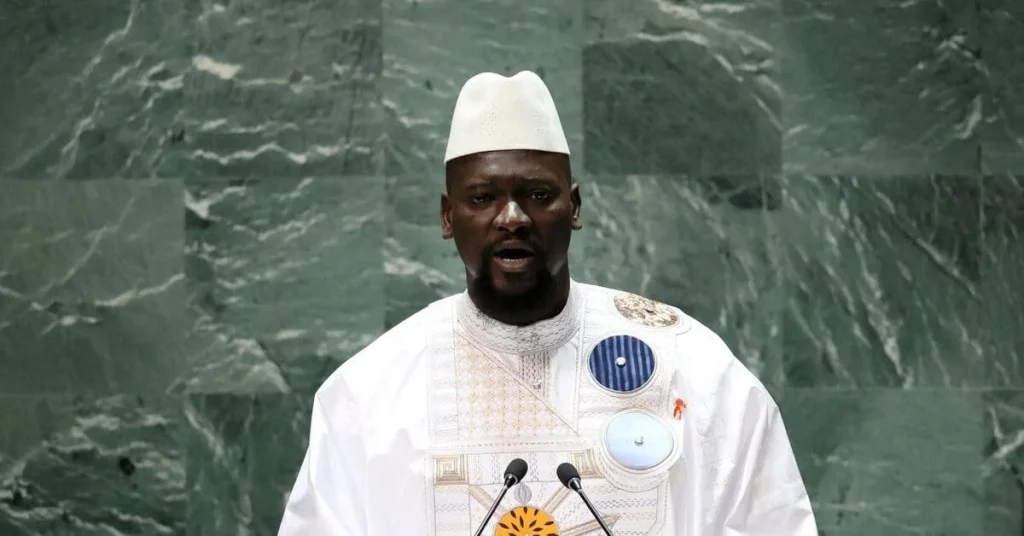
This Sunday, Mamady Doumbouya is expected to trade his military fatigues for a civilian mandate.
Voters in Guinea head to the polls on December 28, 2025, for a pivotal Guinea presidential election. The outcome, however, seems largely predetermined. Doumbouya, the former special forces commander who seized power in 2021, is the overwhelming favorite to secure the presidency.
His likely victory cements a controversial political transition. Initially, the junta leader promised to step aside. However, a constitutional overhaul in September 2025 cleared his path to power.
This new legal framework removed eligibility restrictions and extended the presidential term to seven years.
Simandou Mine Fuels Popularity
While political maneuvering paved the way, economic ambition is securing the votes.
Doumbouya’s campaign is riding high on the launch of the Simandou iron ore mega-mine. Known as the world’s richest untapped deposit, this project has become the cornerstone of his administration’s “Simandou 2040” vision.
For many in Conakry, the mine represents tangible progress and stability.
Economic factors driving voter sentiment include:
-
Record Output: The project targets an annual production of 120 million metric tons.
-
State Control: A new “resource nationalism” strategy ensures the government keeps a larger slice of revenue.
-
Job Creation: The industrial push is viewed as a vital engine for local employment.
A Hollow Opposition Field
Technically, Doumbouya faces eight challengers. In reality, the Guinea presidential election lacks a heavyweight contender.
The political landscape has been effectively cleared of major threats. Heavy hitters like former President Alpha Condé and opposition leader Cellou Dalein Diallo remain in exile. Furthermore, strict documentation requirements disqualified numerous other potential candidates.
Critics argue that restrictions on media and protests have further tilted the playing field.
“There is currently no opponent who can realistically challenge him,” observed analyst Bella Bah.
Bah added a caveat for the future: “However, the real test will be how the President chooses to engage with civilian leaders after the vote.”
Regional Watchdogs Return
Interestingly, the election marks a thaw in diplomatic relations.
Despite Guinea’s suspension from the bloc, ECOWAS has deployed observers to monitor the process. This move suggests a cautious “rapprochement” between the military government and West African neighbors.
Election Day Logistics:
-
Voter Roll: Approximately 6.7 million registered voters.
-
Access: 24,000 polling stations established nationwide.
-
Timeline: Official results are expected within 48 hours of closing.
While international groups remain skeptical about the fairness of the process, the campaign season has been notably peaceful.
_______________________________________________________________________________________________________________________________
Morocco Unveils Eight Free Fan Parks to Transform AFCON Experience