
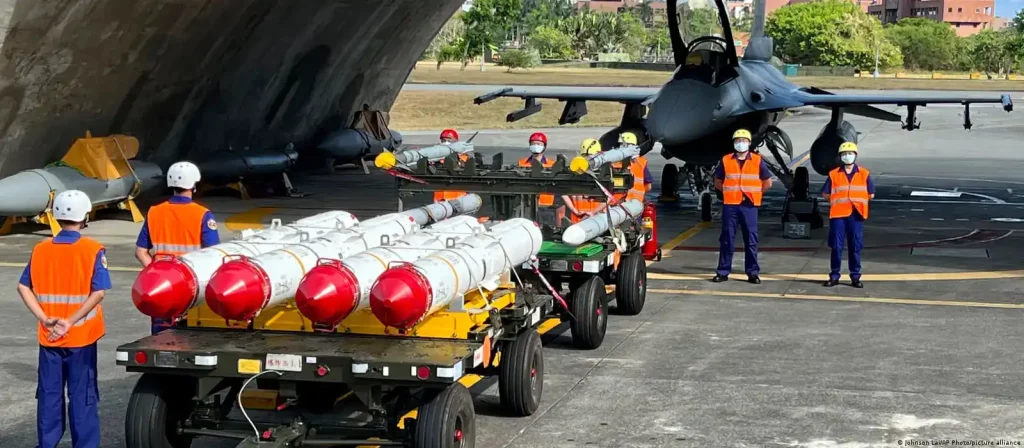
The Trump administration has shattered previous records by authorizing a massive $11.1 billion US-Taiwan arms deal. This package represents the single largest weapons transfer ever approved for the self-governing island.
This aggressive move arrives as military friction in the Taiwan Strait reaches a boiling point. By approving this sale, Washington is sending a clear signal of deterrence to Beijing.
Strategic Shift in the US-Taiwan Arms Deal
Defense experts characterize this package as a pivot toward “asymmetric warfare.” Instead of traditional heavy machinery, the focus is on mobile, cost-effective systems capable of countering a larger invading force.
According to Taiwan’s defense ministry, the inventory spans eight distinct categories.
Key equipment includes:
-
HIMARS rocket systems
-
Altius loitering munitions (drones)
-
Javelin anti-tank missiles
-
Howitzers
-
Critical support parts
The Pentagon confirmed the sale supports American national security interests. Meanwhile, Rupert Hammond-Chambers, president of the U.S.-Taiwan Business Council, highlighted the tactical value of these assets.
“This is a response to the threat from China and the demand from Mr. Trump that partners do more to secure their own defence,” Hammond-Chambers noted.
Beijing Warns of Consequences
China responded to the announcement with immediate condemnation. Beijing claims sovereignty over the island and views any foreign military support as a direct provocation.
Foreign Ministry spokesperson Guo Jiakun issued a severe rebuke regarding the deal.
“By aiding ‘Taiwan independence’ with weapons, the U.S. side will only bring fire upon itself,” Guo stated.
Despite these threats, the US-Taiwan arms deal is expected to sail through Congress with bipartisan support.
Taiwan Doubles Down on Defense
Taipei remains defiant in the face of isolation tactics from the mainland. Presidential office spokesperson Karen Kuo expressed gratitude for the continued American support.
“Our country will continue to promote defence reforms and demonstrate our determination to defend ourselves,” Kuo said.
Furthermore, this purchase aligns with President Lai Ching-te’s recent domestic policy shifts. He recently unveiled a supplementary defense budget of $40 billion, scheduled to run from 2026 to 2033.
Lai emphasized that there is “no room for compromise on national security.”
Diplomatic Ties Deepen
The timing of this announcement is significant. It follows a sensitive, unannounced visit to Washington by Taiwan’s Foreign Minister Lin Chia-lung just last week.
Additionally, the Trump administration has released a new national security strategy. It identifies Taiwan as a vital geopolitical linchpin between Northeast and Southeast Asia. The document outlines a goal to maintain “military overmatch” in the region to prevent conflict.