
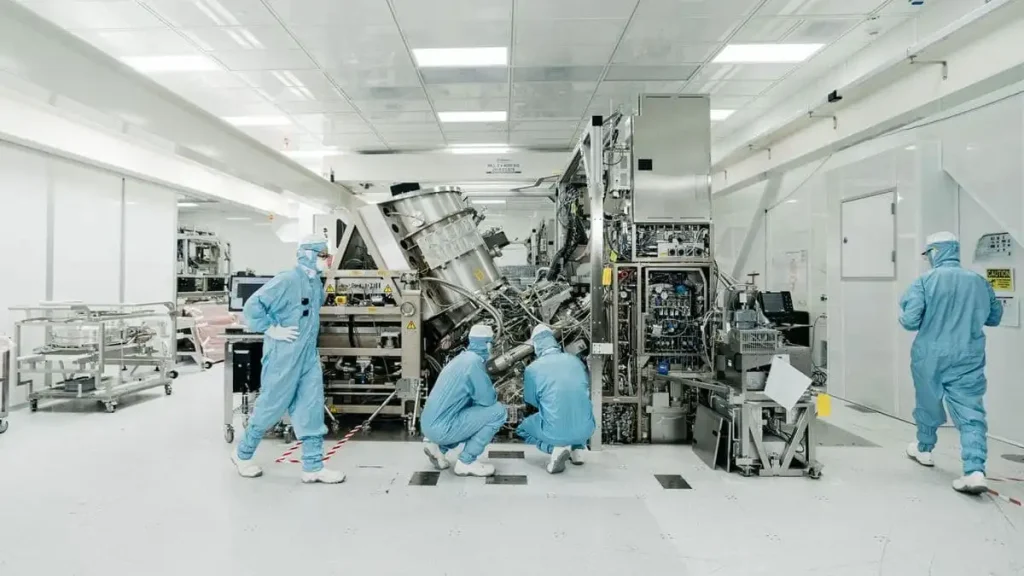
China has stunned global tech watchers. A prototype EUV machine now runs in a Shenzhen facility. This defies U.S. and Dutch export bans aimed at curbing Beijing’s progress.
The device generates extreme ultraviolet light. It paves the way for cutting-edge chips vital for AI and defense. Success here could erase America’s role in China’s supply chain.
The China EUV Machine: A Game-Changer
Built by a shadowy team, the machine uses reverse-engineered tech. Former ASML engineers joined the effort. They sourced parts from auctions and Japanese suppliers via back channels.
This breakthrough stems from a six-year push. Huawei coordinates with state institutes and thousands of experts. The Communist Party’s top tech body oversees it all.
Overcoming Massive Challenges
The prototype spans a factory floor—far larger than Western models. It blasts lasers at molten tin 50,000 times per second. This creates sun-hot plasma for precise circuit etching.
Hurdles remain. No chips produced yet, just light generation. Testing continues rigorously.
Engineers use aliases for secrecy. Cameras track every step. Staff often stay onsite during weeks.
Timeline and Global Impact
Beijing targets working chips by 2028. Insiders predict 2030 as realistic. Either way, it outpaces foreign forecasts.
This matters hugely. Smaller circuits mean faster, greener chips. China gains independence in a field long dominated by the West.
Consequently, tensions rise in the tech cold war. Sanctions may falter as Beijing closes the gap.
What’s Next for Semiconductor Self-Sufficiency
The project mirrors wartime urgency. Recruitment lured global talent with bonuses and perks.
Furthermore, it highlights China’s resolve. Independence could reshape global supply chains and power balances.
__________________________________________________________________________________________________________________
Online Education Giants Unite: Coursera Buys Udemy for $2.5 Billion