A landmark US-Kenya health pact has effectively stalled before it could even begin. The High Court issued a temporary order freezing the multi-billion shilling agreement following urgent concerns regarding national sovereignty and citizen privacy.
Justice Bahati Mwamuye delivered the ruling, which strictly prohibits the government from “implementing or giving effect” to the cooperation framework. This legal injunction arrives less than a week after the deal was finalized.
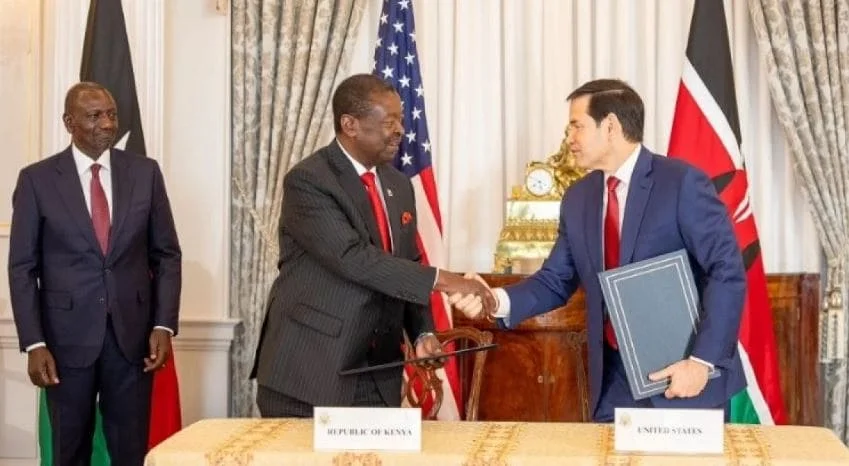
President William Ruto attended the signing ceremony in Washington, D.C., on December 4. There, Prime Cabinet Secretary Musalia Mudavadi and U.S. Secretary of State Marco Rubio formally engaged the partnership. However, that diplomatic victory is now in legal limbo.
Privacy Risks in the US-Kenya Health Pact
The suspension stems from a petition filed by the Consumers Federation of Kenya (COFEK). The watchdog group argues that the agreement is fundamentally flawed.
According to COFEK, the deal creates a backdoor for foreign entities to access the sensitive medical records of millions of Kenyan citizens. They contend this violates the Data Protection Act and the Digital Health Act.
Furthermore, Secretary-General Stephen Mutoro accused the state of secrecy. He claims officials began executing parts of the framework without the legally required public participation. Consequently, the court’s freeze specifically targets any clauses related to sharing health data.
Allegations of Financial Burden and Corruption
Beyond privacy issues, the US-Kenya health pact faces a second legal challenge from Busia Senator Okiya Omtatah.
Omtatah warns that the framework’s financial structure invites graft. He notes that the deal channels money directly through ministries, allegedly stripping away necessary external oversight.
Moreover, the Senator flagged the immense cost. The agreement requires Kenya to match U.S. funding. Estimates suggest this could saddle the national budget with an extra US$850 million.
“The agreement could undermine Kenyans’ right to health and equality by tying US support to political conditions,” Omtatah argued.
Next Steps for the Agreement
The government now faces a difficult legal battle early next year.
-
December 17: COFEK must serve court orders to all respondents.
-
January 16: The state must file its response.
-
February 12: The case resumes before Justice Lawrence Mugambi for further direction.
_______________________________________________________________________________________________________________________________
Operation Thunder 2025: 1,100 Suspects Identified in Record Global Wildlife Crime Bust