
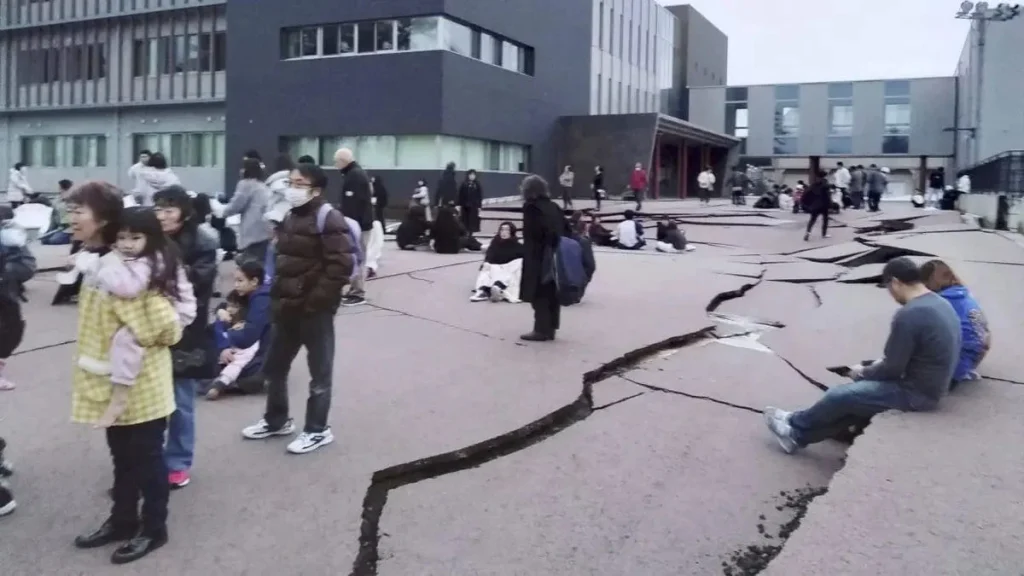
A severe 7.6 magnitude Japan earthquake rattled the northern coastline, triggering immediate panic and urgent tsunami alerts. Consequently, authorities rushed to secure the safety of approximately 90,000 people living in the threatened coastal zones of Aomori, Iwate, and Hokkaido.
Television networks broke into regular programming with a stark, singular command for citizens: “Run!”
Tsunami Threats and Wave Impact
The Japan Meteorological Agency (JMA) initially projected distinct danger. Experts feared waves could surge up to three meters high. However, the situation de-escalated hours later as officials downgraded warnings to advisories.
Despite the downgrade, water did breach the shoreline. Monitoring stations recorded waves measuring between 40 and 70 centimeters at Kuji port.
Anatomy of the Japan Earthquake
The tremor struck late at night, catching many while they slept. It occurred at 23:15 local time (14:15 GMT). The epicenter was located roughly 80 kilometers offshore from Aomori.
Seismologists pinpointed the quake’s depth at 50 kilometers below the seabed.
The sheer force of the shake caused immediate infrastructure paralysis. Rail operators suspended Shinkansen bullet train services instantly. Furthermore, local lines halted operations to prevent derailments during potential aftershocks.
Casualties and Damage Assessment
While the quake was powerful, early reports suggest the region avoided catastrophic destruction. Public broadcaster NHK and other local media outlets have confirmed over 20 injuries so far.
Most wounds resulted from falling debris rather than structural collapse. In Hachinohe city, guests at a local hotel sustained injuries during the shaking.
The government mobilized immediately. A crisis management center was established under the Prime Minister’s direct supervision to manage the fallout.
“We are making every effort to assess the damage and implement emergency disaster response measures,” officials stated.
Nuclear Safety Status
Memories of 2011 remain fresh in the region, making nuclear safety a primary concern. Fortunately, utility operators reported zero irregularities following urgent safety inspections.
Tohoku Electric Power confirmed that the Onagawa and Higashidori nuclear power plants remain secure. Similarly, the International Atomic Energy Agency received confirmation that no abnormalities were detected at the sensitive Fukushima Daiichi site.
Japan remains one of the most seismically active nations globally due to its location on the “Ring of Fire.”
____________________________________________________________________________________________________________________________________