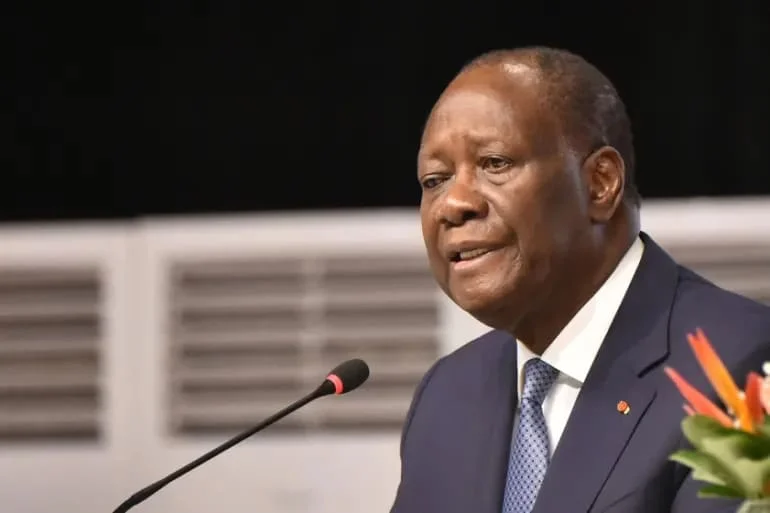
The inauguration ceremony unfolded against a backdrop of silenced dissent and questions regarding the nation’s democratic integrity. Dignitaries from across West Africa, including leaders from Ghana, Senegal, Gabon, and Liberia, witnessed the event.
In his address, the veteran leader framed his continued rule as a direct request from the populace.
“On Saturday, October 25, Ivorians expressed their sovereign choice,” Ouattara stated.
He further highlighted his administration’s track record since 2010, positioning the election results as a reward for years of national progress.
Alassane Ouattara and the Election Controversy
However, the path to this inauguration was paved with unrest. The October polls were marred by historically low voter turnout and heavy-handed state tactics.
Crucially, the electoral commission barred heavyweight opposition figures from the ballot. This exclusion list included key rivals such as Tidjane Thiam and former president Laurent Gbagbo.
Consequently, the streets erupted in anger. When citizens protested Ouattara’s candidacy announcement, authorities responded with force. Security personnel deployed tear gas and arrested hundreds of demonstrators to quell the uprising.
Economic Growth vs. Democratic Decline
Alassane Ouattara leaves a complicated legacy. Supporters laud the President for stabilizing the world’s top cocoa producer following the civil war and violence of the early 2010s. Under his watch, the economy has surged, boasting a robust 6% annual growth rate.
Conversely, critics argue this stability comes at a high cost. The Ivory Coast nominally enforces a two-term limit for presidents.
Yet, a 2016 constitutional referendum created a legal loophole. Ouattara argued this change reset his term counter to zero, allowing him to bypass intended restrictions.
Regional Instability
Beyond domestic borders, the administration faces a hostile neighborhood. Junta-led governments in Mali, Niger, and Burkina Faso have openly clashed with the Ivorian government.
These regimes criticize Ouattara for his alleged alignment with France. They blame this geopolitical stance for worsening security conditions in the Sahel.
During his oath, the President acknowledged these external dangers. He noted that the sub-regional environment remains “fragile” due to evolving terrorist threats.
____________________________________________________________________________________________________________________________________