
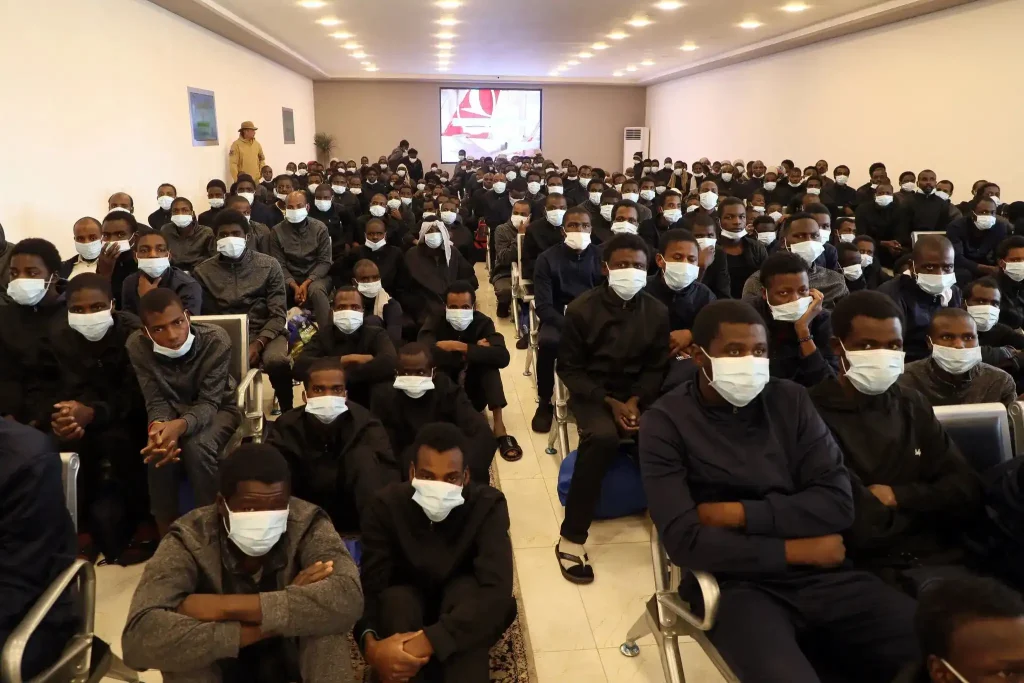
In a decisive move to alter regional migration dynamics, authorities have initiated a rigid schedule of Libya migrant deportations. Interior Minister Imad Trabelsi confirmed the new policy during a press briefing in Tripoli, signaling a shift in how the North African nation handles the flow of people aimed at Europe.
To execute this crackdown, the government has authorized two repatriation flights per week throughout the current month.
Targeting Vulnerable Demographics
The new initiative specifically targets irregular travelers originating from sub-Saharan Africa.
Rather than a blanket approach, officials are prioritizing the immediate removal of specific groups. Women, children, and the elderly are at the top of the list for return to their countries of origin.
This urgency is driven by a refusal to absorb the crisis. Trabelsi made it clear that Libya will not accept the status of a permanent “holding ground” or buffer zone for individuals intercepted at sea.
Demographic Pressure
The scale of human movement through the region has rattled local officials.
According to government data, approximately three million irregular migrants have crossed into the country over the past decade and a half. Many of these travelers arrive with families, intending to stay until they can cross to Italy, which lies just 300 kilometers north.
Consequently, Tripoli argues that this influx creates unsustainable demographic strain.
Friction with Brussels
The surge in Libya migrant deportations also exposes a deepening rift with the European Union.
While the EU claims to have provided over half a billion euros in migration-related funding between 2015 and 2027, Libyan authorities contend they are largely on their own. They argue that international support has been insufficient given the magnitude of the challenge.
Meanwhile, the International Organization for Migration (IOM) reports that 25,000 people have been intercepted and brought back to Libyan shores this year alone.
Protecting War Victims
Despite the aggressive removal of economic migrants, the government has carved out critical humanitarian exceptions.
Refugees fleeing the civil war in neighboring Sudan are exempt from deportation. Authorities have issued orders to ensure these displaced populations retain access to healthcare and education, distinguishing them from those moving solely for economic opportunity.
__________________________________________________
Nvidia Claims 10x Performance Leap in Battle for AI Inference Market