
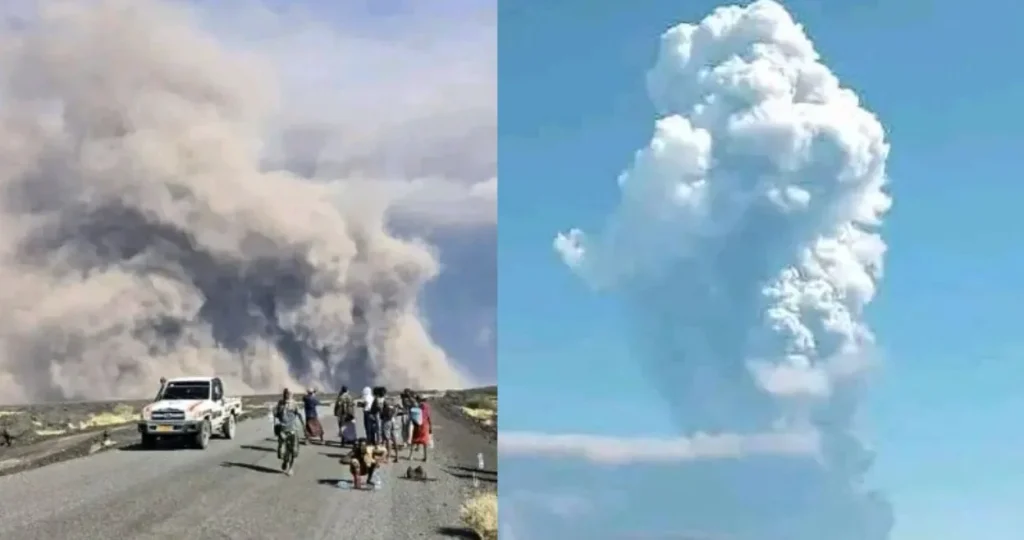
A volcano that last roared during the Stone Age has come back to life. Hayli Gubbi, located in Ethiopia’s remote Afar depression, erupted Sunday for the first time in roughly 12,000 years.
An Explosion That Shook the Desert
A massive blast hurled ash and smoke 14 kilometres high. Winds quickly swept the plume across the Red Sea into Yemen and Oman, with satellite images now showing it racing toward India and southern China.
“Like a Bomb Went Off”
Residents near Afdera village felt the ground tremble and heard a deafening boom. “It sounded like a huge explosion, then everything turned black with ash,” one herder told local officials.
No Lives Lost But Livelihoods Threatened
So far, no human deaths have been reported. The real danger is to livestock. Thick layers of ash now blanket grazing pastures, leaving thousands of goats, camels, and cattle without food.
“Whole villages are grey. Animals have nothing to eat,” said local administrator Mohammed Seid.
A Geological Wake-Up Call
Scientists say Hayli Gubbi had been completely dormant throughout the entire Holocene era — the 12,000-year stretch of human civilization. Its sudden awakening is one of the rarest volcanic events on record.
Monitoring teams are tracking the fast-moving ash cloud as it crosses continents, warning airlines and watching for possible acid rain over Asia in the coming days.
Ethiopia’s silent giant is silent no more.