
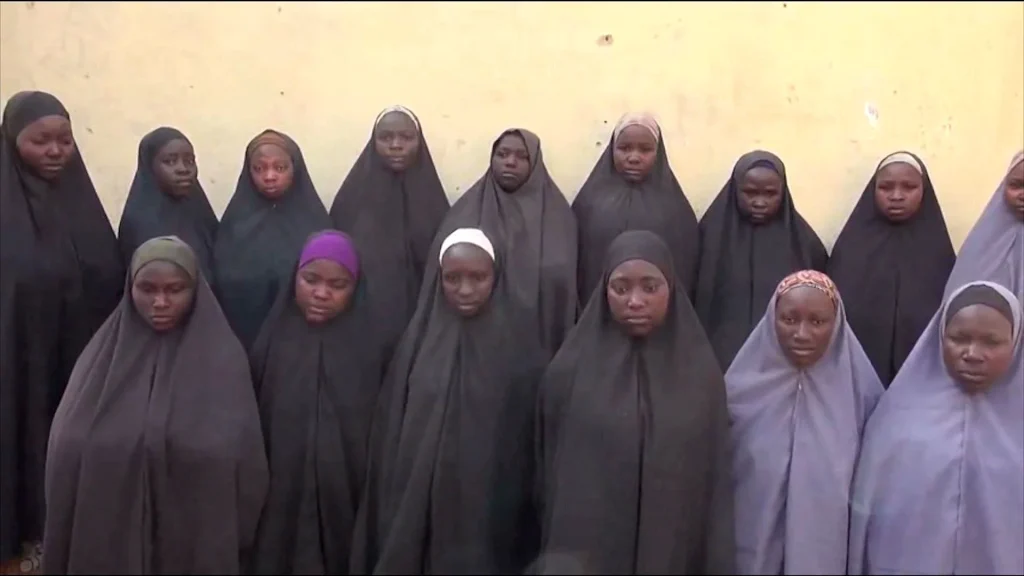
For 11 long years, the same nightmare has haunted West African parents: the sudden silence after an attack, followed by the agonizing realization that their children—students who simply sought an education—have vanished.
Just yesterday, 25 more girls disappeared in Kebbi State. This is the cycle of terror that has made Nigerian classrooms a battleground.
Since the shocking 2014 abduction in Chibok, armed groups have seized over 1,500 students across the northern states. The crisis, fueled by ransom demands and ideological hatred, reveals a profound failure in governance and security.
From the jihadist strongholds in the northeast to the bandit-infested forests of the northwest, the pattern is devastatingly familiar: gunmen storm schools at dawn, families mourn in the streets, and another generation pays the price for simply seeking knowledge.
The Nightmare Timeline: From Ideology to Profit
Chibok, 2014: A Global Wake-Up Call
The crisis began in the dusty town of Chibok, Borno State, on April 14, 2014. Militants from Boko Haram, whose name condemns Western education, raided the Government Girls Secondary School under darkness.
They loaded 276 terrified girls—some as young as 11—into trucks before disappearing into the Sambisa Forest. The world reacted instantly with the global trending cry: #BringBackOurGirls. Despite the massive international outcry, rescue efforts stalled. While 82 girls escaped and 103 were later freed via prisoner swaps, 91 remain missing. Many were reportedly forced into marriages or exploited as fighters.
Dapchi, 2018: History Repeats Itself
Four years later, in February 2018, history tragically echoed in Dapchi, Yobe State. A Boko Haram faction targeted the Government Girls Science and Technical College. They abducted 110 girls during morning assembly.
Eyewitnesses reported militants in military clothing deceived the students before bundling them onto vehicles. Unlike Chibok, most girls were released a month later following negotiations. Yet, five died in captivity, and one was coerced into converting to Islam. The incident exposed glaring intelligence gaps, as the militants drove through military checkpoints unchecked.
Kankara, 2020: The Shift to Banditry
By December 2020, the threat migrated westward. Gunmen on motorcycles stormed the Government Science College in Kankara, Katsina State, seizing over 344 boys—a rare gender shift in the abductions.
The attackers were identified as Fulani bandits, not jihadists, motivated by demands for millions in ransom amid escalating rural violence over land and cattle. The boys were freed after two weeks of negotiations. This mass abduction signaled the northwest’s entry into the epidemic, turning schools into lucrative, soft targets for criminal gangs.
Bethel Baptist, 2021: Faith Under Fire
July 2021 brought intense suffering to Kaduna State. Over 140 students were seized from Bethel Baptist High School. The Anglican institution, a center for Christian education in a sensitive region, saw gunmen scale fences and drive pupils into the bush.
The families endured two months of captivity and frantic ransom negotiations, eventually paying a huge sum. All were released, but not before families liquidated assets and faced death threats. Weeks later, 160 more students vanished from a primary school in Tegina, underscoring Kaduna’s vulnerability.
Kuriga, 2024: Mass Rescue and Lingering Questions
In March 2024, gunmen struck LEA Primary School in Kuriga, Kaduna, abducting 287 students (mostly boys) and a teacher. The attack, one of the largest in years, sparked fury. After 16 harrowing days, the military successfully rescued 137 students in Zamfara State.
While the remainder were freed through separate means, rumors of large ransom payments persisted. Critics highlight delayed security responses as a recurring failure in addressing the scourge.
The Latest Blow: Kebbi, November 17, 2025
The cycle spun tragically again yesterday. In the early hours of November 17, 2025, gunmen armed with sophisticated rifles stormed the Government Girls Comprehensive Secondary School in Maga, Kebbi State.
They abducted 25 Muslim schoolgirls. The Vice Principal, Hassan Yakubu Makuku, was shot dead while shielding the students; another staffer was wounded. A major multi-agency manhunt is now underway. No group has claimed responsibility, but bandits are the prime suspects in this ransom-driven region.
A Decade of Fear
These abductions are not random; they are symptoms of a nation fracturing under ideological terror and profit-driven criminality. Girls disproportionately suffer, facing forced marriage and stigma upon their return. Yet, resilience shines: survivors advocate for education, and communities rally under the same cry heard ten years ago.
Over 1,500 students kidnapped since 2014; thousands more displaced. The core truth endures: until Nigerian schools are safe havens, not hunting grounds, the stolen futures will continue to mount.
91 girls from Chibok have yet to return home. 25 more just vanished in Kebbi.
As another school attack dominates headlines, one question remains for every citizen and every West African neighbor: What will it take to finally end the nightmare?