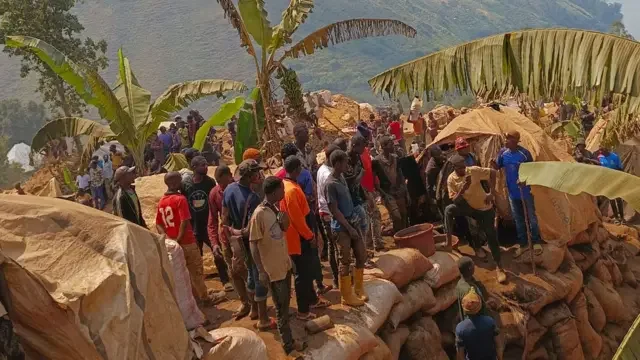
Heavy rain had turned the ground into mud around the Kalando quarry in Lualaba province, southeastern Democratic Republic of Congo. Still, thousands of informal miners driven by the chance to find copper and cobalt kept pouring in, ignoring every warning about landslides.
On Saturday, disaster struck.
Panic, Gunfire, and a Deadly Crush
According to the government’s Artisanal and Small-Scale Mining Support Service (SAEMAPE), soldiers stationed at the site fired shots into the air. The sudden gunfire triggered mass panic. Hundreds of miners stampeded toward the only exit a narrow bridge already packed with people.
The overloaded structure buckled and collapsed instantly.
Bodies fell on top of one another in the chaos. The provincial interior minister confirmed at least 32 deaths, but SAEMAPE’s report puts the toll at 40 or higher.
The Bigger Picture Behind the Tragedy
Kalandao is just one flashpoint in a decades-long struggle over Congo’s mineral wealth. The country supplies most of the world’s cobalt – the key ingredient in electric-car batteries – yet 80% of industrial mines are owned by foreign companies.
Meanwhile, tens of thousands of local people, shut out of legal jobs, risk their lives daily in unregulated pits guarded by soldiers and contested by rival cooperatives.
Eastern Congo’s ongoing conflict, worsened by the recent surge of M23 rebels, has pushed even more families into these death-trap quarries.
What happened at Kalando was not an accident of weather alone – it was the result of poverty, exclusion, and a system that puts profit far above human lives.
Côte d’Ivoire: 8% Growth Ahead, But Inequality & Politics Loom