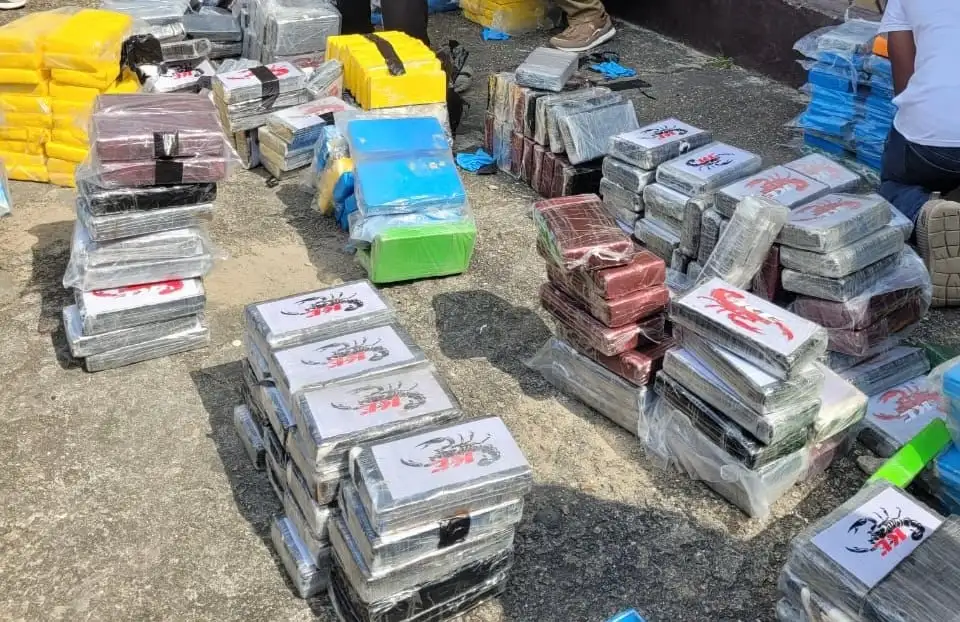
The national anti-narcotics enforcement agency confirmed Tuesday that a massive international investigation is now active.
The agency is working closely with law enforcement partners from the United States and the United Kingdom. Their shared objective is to dismantle the criminal cartel behind the huge shipment of illegal drugs.
Authorities found 1,000 kilograms of cocaine concealed inside an empty shipping container at a port in Lagos last weekend. This immense seizure holds an estimated street value exceeding 338 billion naira (roughly equivalent to 235$ million). It ranks as one of the most substantial single drug hauls in the nation’s history.
International Agencies Mobilize
The Nigerian anti-narcotics agency quickly requested international assistance. Femi Babafemi, a spokesperson for the agency, released a statement confirming the joint operation.
He noted that agents from the US Drug Enforcement Administration (DEA) and the UK National Crime Agency (NCA) “have already joined the ongoing investigation.” This partnership targets the largest single cocaine seizure ever recorded at the Tincan Port in Lagos.
Terminal operators first noticed the suspicious cargo. They immediately alerted security agencies. The seized drugs were formally handed over to the anti-narcotics agency on Tuesday for detailed forensic analysis.
Dismantling the Trafficking Network
Nigeria is widely recognized as a significant transit point for narcotics throughout the West African region. Furthermore, the country is increasingly viewed as a producer of illicit substances.
Brig. Gen. Mohamed Buba Marwa, the chairman of the anti-narcotics agency, emphasized the investigation’s global scope.
He stated that working with international partners guarantees “no stone is left unturned.” The objective is to cover “every gap… so that ultimately we can get all the masterminds of this huge consignment brought to book wherever they are located across the globe.”
This coordinated effort seeks to identify and dismantle the international criminal organizations. These networks regularly exploit West African ports to traffic drugs globally.