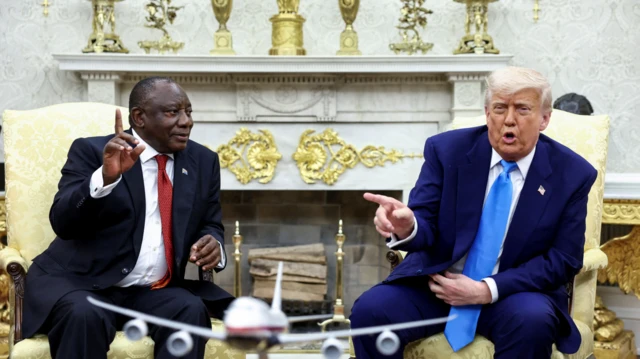
United States President Donald Trump announced on Friday that the nation will officially boycott the forthcoming G20 summit in South Africa.
The President publicly asserted that South Africa no longer deserves a place among the world’s major economies. This decision significantly heightens a diplomatic conflict between the two countries.
President Trump repeated his controversial public claims about the way white farmers are treated in South Africa. He labeled the selection of the country as the summit host “a complete disgrace.”
President Cancels All US Attendance
In a public statement, Trump declared that no U.S. representatives would participate in the meeting of world leaders, scheduled for November 22–23.
This withdrawal specifically includes Vice President J.D. Vance, whom Trump had initially designated to attend in his stead.
President Trump claimed that alleged “abuses” targeting Afrikaners formed the primary reason for the boycott. He alleged these abuses encompassed “violence, death, and the seizure of their land and farms.”
Pretoria Disputes Trump’s Claims
The South African government has firmly rejected these grave accusations. President Cyril Ramaphosa stated he personally informed Trump that the claims of persecution and discrimination were “entirely untrue.”
South African officials voiced surprise at the allegations. They highlighted that white South Africans generally enjoy a much higher standard of living than the Black majority. This economic reality persists over three decades after the dismantling of apartheid.
Escalating Diplomatic Friction
This G20 boycott is the latest instance in a series of diplomatic disagreements. Earlier this year, Secretary of State Marco Rubio chose to skip a G20 foreign ministers’ meeting. He objected to the meeting’s agenda items, specifically citing diversity and climate change issues.
The Trump administration has also aligned its refugee policy with this conflict. It suggested that white South Africans would receive the majority of the sharply reduced annual refugee intake.
The administration uses the term “discrimination” to describe the situation of these individuals.