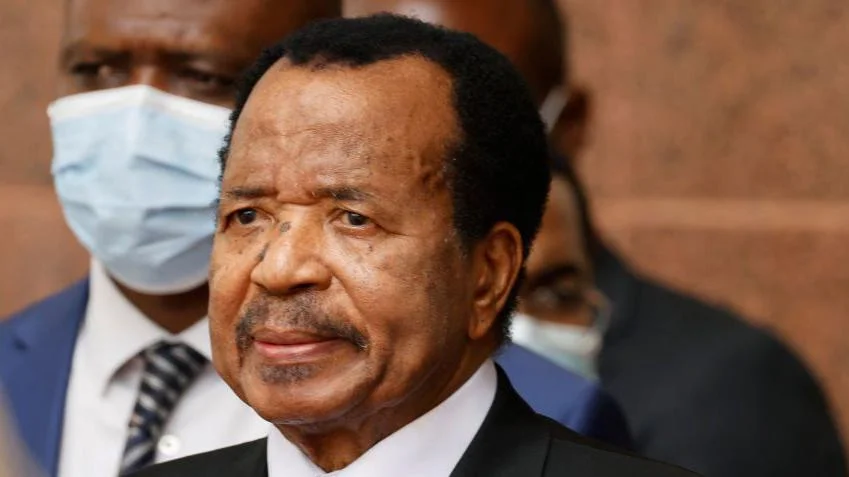
The saga of Cameroon’s contested presidential election reached its formal conclusion on Thursday. President Paul Biya was inaugurated, beginning his eighth term in office.
The 92-year-old ruler’s swearing-in followed several days of deadly nationwide protests that erupted after his highly disputed victory.
A Call for Calm and Warning to the Diaspora
President Biya immediately used his inauguration speech as a platform for reconciliation and warning. He pleaded directly with the public, urging “everyone’s sense of responsibility.”
He issued a stern message to those he considers external agitators:
“I’m addressing all those who are working to incite hatred and violence in our country, particularly some of our compatriots in the diaspora.”
Biya emphasized the severe threat posed by internal conflict. “Cameroon does not need a post-election crisis with potentially dramatic consequences, as has been seen elsewhere.”
Opponents accuse Biya’s administration of rigging the election. They hold him accountable for the country’s deep, long-standing national problems. The security forces’ violent suppression of the post-election demonstrations has drawn widespread international condemnation.
Contested Results and Disputed Death Toll
The world’s oldest sitting ruler took his oath of office at the parliament building in Yaounde. During the ceremony, the capital was heavily militarized and observers noted the streets were partially deserted.
The nation’s top court declared Biya the winner of the October 27 election, securing 53.66% of the vote. His primary rival, Issa Tchiroma Bakary, a former political ally, achieved 35.19%.
Casualty figures remain a volatile subject. Data collected from two United Nations sources estimates that 48 civilians were killed during the protests. Conversely, the government has publicly acknowledged only five fatalities.
Biya’s Long Shadow Over Cameroon
Biya first assumed the presidency in 1982 after his predecessor resigned. He has maintained his grip on power ever since. A constitutional amendment in 2008 eliminated term limits, effectively allowing his current longevity.
In his speech, Biya promised his loyalty to the Cameroonian people. He vowed to dedicate his work toward creating a “united, stable and prosperous” country. He attributed the unrest to what he called “irresponsible politicians” and the diaspora.
His nearly half-century tenure has produced a complex record. The country faces multiple ongoing issues: armed insurgencies in the west and north, and a stagnant economy.
Consequently, these persistent problems have generated widespread disillusionment among Cameroon’s young population.
Scare at the Summit: Guest Faints During President Trump’s Address