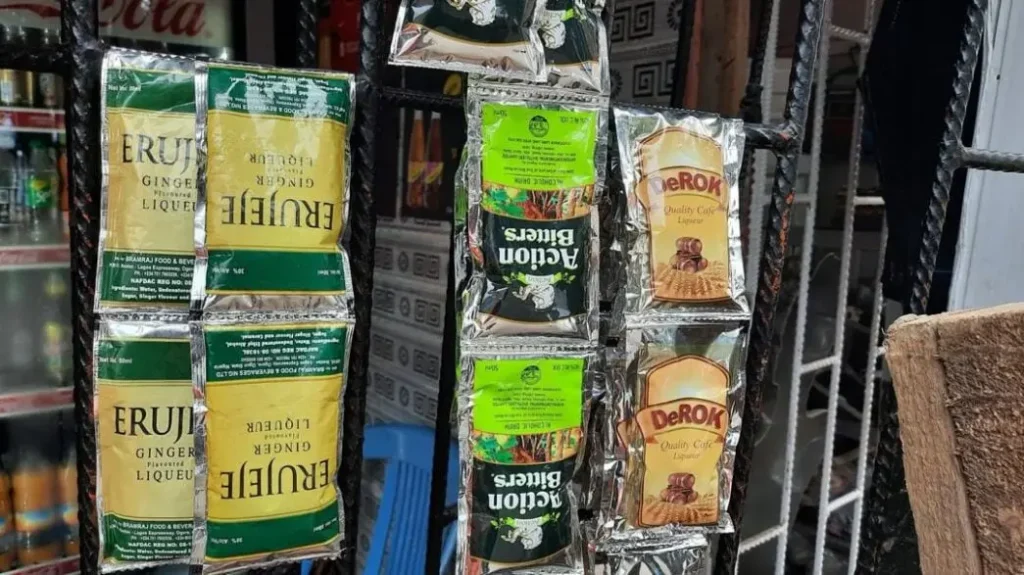
The Nigerian Senate has issued a strong directive to the National Agency for Food and Drug Administration and Control (NAFDAC). The legislative arm instructed NAFDAC not to extend the December 31, 2025, deadline for stopping the production of alcohol in small sachets.
This resolution was adopted after Senator Asuquo Ekpenyong (Cross River South) sponsored a motion concerning an urgent national issue during Tuesday’s plenary session.
Health and Standards Drive Enforcement
During his presentation, Senator Ekpenyong argued that fully enforcing the ban aligns with global regulatory requirements. He maintained the action meets international standards designed to significantly reduce the harm linked to alcohol consumption among Nigerians.
The lawmaker referred to an agreement established in 2018. At that time, key bodies, including the Federal Ministry of Health, the Federal Competition and Consumer Protection Commission, NAFDAC, and several industry groups, jointly signed a five-year Memorandum of Understanding (MoU). This MoU outlined a gradual elimination of alcoholic beverages packaged in small bottles and sachets.
Ekpenyong noted that producers had requested additional time. Consequently, the Federal Government approved a one-year grace period in 2024. This extension was intended solely to allow manufacturers to deplete their current stock and switch to new, compliant packaging.
The Fight Against Social Problems
However, the Senator voiced concern that some producers are currently attempting to persuade the agency for another delay. He stressed that granting an extension would diminish regulatory authority and jeopardize public health. It would also allow harmful alcoholic products to continue circulating in the market.
Ekpenyong emphasized the danger: “As the December 2025 deadline approaches, certain manufacturers are lobbying for another extension, thereby undermining the regulatory process and jeopardizing public health.” He added, “We cannot continue to expose our youths to cheap, easily accessible alcohol that destroys lives and endangers public safety.”
He warned that the availability of potent alcoholic beverages in sachets fuels numerous social crises. These problems include addiction, impaired cognitive development, high school dropout rates, domestic violence, and an increase in road accidents, particularly involving commercial drivers and young people.
Furthermore, Ekpenyong observed that compliant manufacturers are now facing unfair competition from those who disregard the phase-out agreement, creating an uneven business environment.
Akpabio Calls for Immediate Action
Following extensive discussion, lawmakers who contributed to the debate praised Senator Ekpenyong for raising the critical public health matter. They underscored the pressing need for robust enforcement and public awareness campaigns.
Senator Anthony Ani (Ebonyi South) supported the resolution. He labeled the ready availability of cheap alcohol as a growing societal menace. “The easy availability of cheap alcohol is fueling social vices. We must act now to save our young generation from self-destruction,” Ani stated.
In his concluding remarks, Senate President Godswill Akpabio affirmed the resolution as a necessary step for protecting youth welfare and public health. He urged NAFDAC to ensure the ban is fully implemented by December 2025. Akpabio warned that any further delay would severely compromise Nigeria’s efforts against substance abuse.
“This is a matter of urgency,” Akpabio said. “The agency must act decisively to protect Nigerians, especially our young people, from the dangers of unregulated alcohol consumption.”