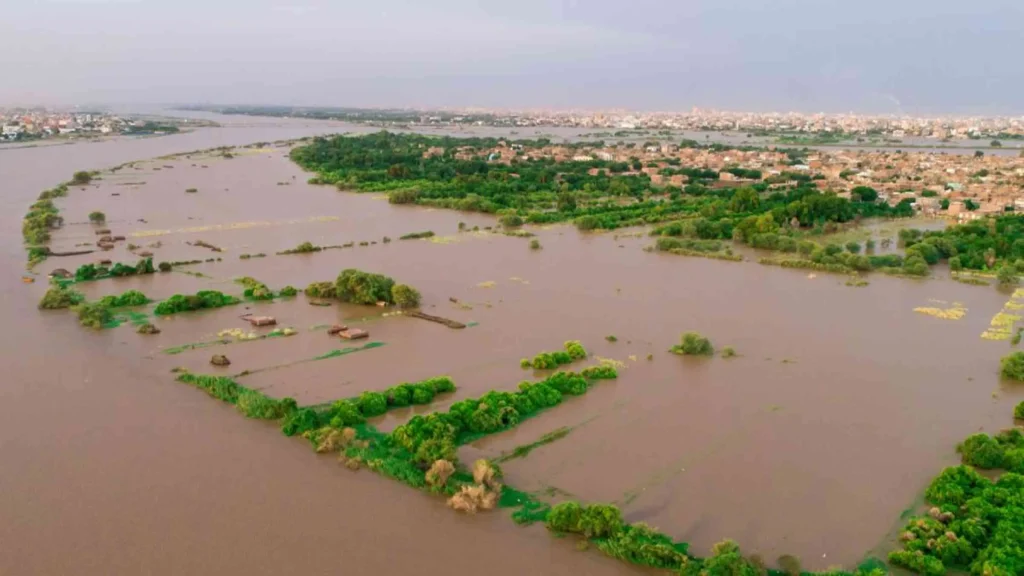
The Sudan flood crisis has claimed over 30 lives in Nile State as the Blue and White Nile rivers overflowed in October 2025.
Thousands remain stranded, with homes destroyed, worsening the nation’s humanitarian emergency.
Communities Battle Devastation
Local resident Ramadan Ali shared his ordeal. “Water flooded our home at 1:30 a.m.,” he said. “We couldn’t stop it.”
Limited equipment hampers rescue efforts, leaving families struggling to recover from the Sudan flood crisis.
Widespread Regional Impact
Flooding affects Blue Nile, Al Jazirah, and Khartoum states. Persistent rains slow aid delivery, particularly in low-lying areas. Scarce resources hinder recovery, deepening the crisis across multiple regions.
Poor Planning Sparks Outrage
Nile State’s Abdul Sami Hussein criticized authorities. “Shops and pens were built in flood zones,” he said.
Thus, poor urban planning intensified the Sudan flood crisis, fueling public anger over preventable losses.
Warnings Issued Early
Sudan’s Ministry of Agriculture and Irrigation warned of flood risks in six states, including Khartoum and Gezira. Despite alerts, many residents were caught unprepared, highlighting gaps in disaster readiness.
Regional Tensions Over Dam
Egypt blames Ethiopia’s new Blue Nile dam for rising waters, also affecting its Nile Delta. Ethiopia denies releasing excess water, insisting the dam reduces flooding. This dispute complicates Sudan’s crisis response.
Urgent Need for Relief
As rains continue, the Sudan flood crisis demands swift aid. Communities need urgent support to rebuild and survive ongoing threats from severe weather, with resources stretched thin.
Humanitarian Challenges Persist
The floods expose Sudan’s fragile infrastructure. With thousands displaced, aid agencies face logistical hurdles. The crisis underscores the need for stronger disaster preparedness and regional cooperation.
Call for Global Support
The Sudan flood crisis highlights a growing humanitarian emergency. International aid is critical to help affected families.
Relief efforts must address immediate needs and long-term recovery plans.
Path to Recovery
Sudan’s government faces pressure to improve planning and response. The crisis tests resilience, but unified action could mitigate future risks. Support for victims remains vital in 2025.