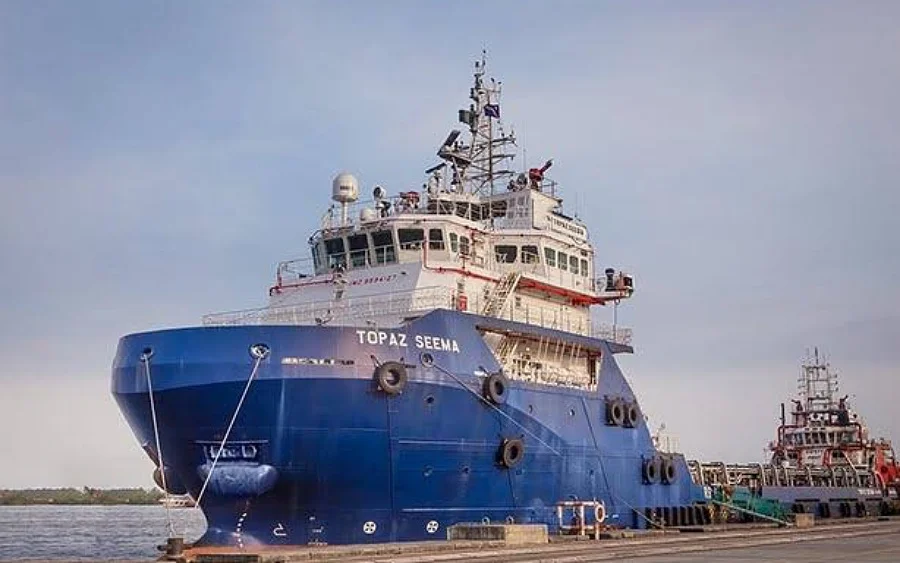
A fleet of up to 192 Iranian fishing vessels has been operating illegally in Somali waters since January 2019, depleting fish stocks critical to a nation where one in three people faces acute food insecurity.
The Somali government, hampered by years of instability and a 2,000-mile coastline, has called on Iran to investigate, sharing evidence with the Indian Ocean Tuna Commission (IOTC).
Analysis by Global Fishing Watch and Trygg Mat Tracking suggests this could be one of the world’s largest illegal, unreported, and unregulated (IUU) fishing operations.
Scale of the Crisis
Using Automatic Identification System (AIS) data and satellite imagery, the NGOs identified 175 Iranian vessels and 93 AIS-tracked fishing net buoys in Somali and Yemeni exclusive economic zones (EEZs) from January 2019 to April 2020.
Some vessels were spotted fishing close to shore, within areas reserved for Somalia’s artisanal fishers, logging 2,533 fishing days.
Charles Kilgour, director of fisheries analysis at Global Fishing Watch, noted, “Some of the vessels came very close to villages… It will have an impact on domestic fisheries.”
Duncan Copeland, chief analyst at Trygg Mat Tracking, described the scale as “staggering,” warning that the fishing effort “is way too much for the region” and risks depleting stocks.
The fleet, six times larger than the 31-vessel Chinese tuna fleet licensed to fish sustainably beyond 25 miles, likely uses driftnets, which the IOTC limits to 2.5 kilometers due to high bycatch of protected species like sharks and turtles.
Somalia’s Vulnerability
Somalia’s 15 million people face multiple threats, including a desert locust plague, droughts, floods, and Covid-19, with 2.7 million in crisis-level food insecurity and 2.9 million food-stressed, per UN estimates.
IUU fishing, costing Somalia $300 million annually, exacerbates these challenges, undermining food security, economic development, and maritime ecology.
Minister of Fisheries HE Abdillahi Bidhan Warsame stated, “Illegal fishing will not be tolerated by Somalia,” emphasizing its threat to sovereignty.
Years of civil war have weakened Somalia’s maritime enforcement, leaving its waters vulnerable.
Since 2018, Somalia has earned $1 million annually from licensing 31 Chinese vessels through FishiAfrica, a taskforce with the IOTC and NGOs.
However, unlicensed fleets, primarily Iranian, with smaller numbers from Pakistan, India, and Sri Lanka, operate unchecked.
IOTC’s Limited Role
The IOTC, responsible for managing tuna in the Indian Ocean, lacks enforcement powers, relying on flag states like Iran to investigate IUU allegations.
Iran, an IOTC member, lists 1,311 vessels for tuna fishing, but only 11 have individual names, obscuring transparency.
Christopher O’Brien, IOTC executive secretary, noted the matter lies between Somalia and Iran, with the IOTC obligated to relay third-party intelligence to flag states for investigation within 60 days.
Calls for Action
Somalia’s government, supported by the World Bank and FishiAfrica, has made strides in licensing and monitoring but lacks capacity to patrol its EEZ.
Satellite imagery suggests the Iranian fleet may exceed 192 vessels, as some evade AIS detection.
Copeland urged Iran and Pakistan to engage with Somalia and the IOTC to resolve the crisis, warning that unchecked fishing undermines Somalia’s sustainability efforts.
The operation not only threatens Somali livelihoods but also fuels piracy, as IUU fishing has historically justified such acts.
With global tuna stocks, including yellowfin, at risk—Planet Tracker warned of a potential collapse by 2026—urgent international cooperation is needed to protect Somalia’s marine resources and food security.